
Best 55-Inch TV Alternatives for a Narrow Living Room (What to Buy and How to Make It Work)
A narrow living room creates a very specific TV problem: you want a cinematic screen, but you don’t want a setup that dominates the space, forces awkward seating angles, or causes constant glare. The good news is that you have many strong 55-inch alternatives—not only smaller sizes, but also smarter layout choices and display features that make a “too-big” TV feel perfectly balanced.
In this guide, you’ll learn how to choose the right screen size and TV type for a tight layout, what specs matter most, and which setup decisions instantly improve comfort in a slim room.
Why narrow rooms feel “smaller” than the square footage suggests
Narrow spaces magnify three issues:
- Viewing distance gets shorter (your couch may sit closer than in a wide room).
- Side-angle viewing increases (some seats end up off-center).
- Light sources become harder to avoid (windows/lamps often sit within the TV’s reflection zone).
When you pick a TV with the right size and the right panel behavior, you solve all three.
Step 1: Confirm the “right” size using viewing distance (fast method)
Before you buy, measure the distance from your eyes (seated) to the TV wall.
A simple rule of thumb for 4K TVs:
- If you sit closer than ~2.0 meters (6.5 ft), a 50-inch or 48-inch often feels more comfortable.
- If you sit around 2.0–2.5 meters (6.5–8.2 ft), 55-inch usually fits well—especially when wall-mounted.
- If you sit farther than ~2.5 meters, you can consider 55–65 inches, but narrow rooms rarely allow this comfortably.
Practical tip for narrow salons
If your room forces people to sit off to the side (not centered), prioritize viewing angle performance even more than size. A slightly smaller TV that looks good from the side beats a bigger TV that washes out.
Step 2: The best “alternatives” to a 55-inch in narrow rooms (by goal)
Option A: Choose a 50-inch TV (the safest alternative for tight distances)
A modern 50-inch 4K TV still feels premium, but it reduces overwhelm in narrow layouts. You gain:
- Less eye strain at close distance
- Easier placement on shallow TV units
- Better balance with narrow wall widths
Who should pick 50-inch: anyone sitting close, or anyone who hates a “screen takes over the room” feeling.
Option B: Choose a 48-inch OLED (premium alternative for image quality)
If you want a smaller screen without sacrificing wow factor, a 48-inch OLED can deliver deep blacks, excellent contrast, and high-end cinematic detail.
Who should pick 48-inch OLED: movie lovers in a narrow room who watch at night and want top-tier contrast.
Option C: Keep 55-inch, but choose a “narrow-room friendly” model (most common solution)
Sometimes 55-inch is exactly what you want—especially if you mount it and optimize the layout. In that case, the “alternative” isn’t the size; it’s the type of 55-inch you buy.
Look for:
- Slim bezels and a clean design (makes the TV feel smaller)
- Good upscaling (important for mixed content)
- Strong motion handling (sports and fast action)
- Better reflection handling if you have windows
Option D: Replace the TV stand with a wall-mount strategy (space-saving alternative)
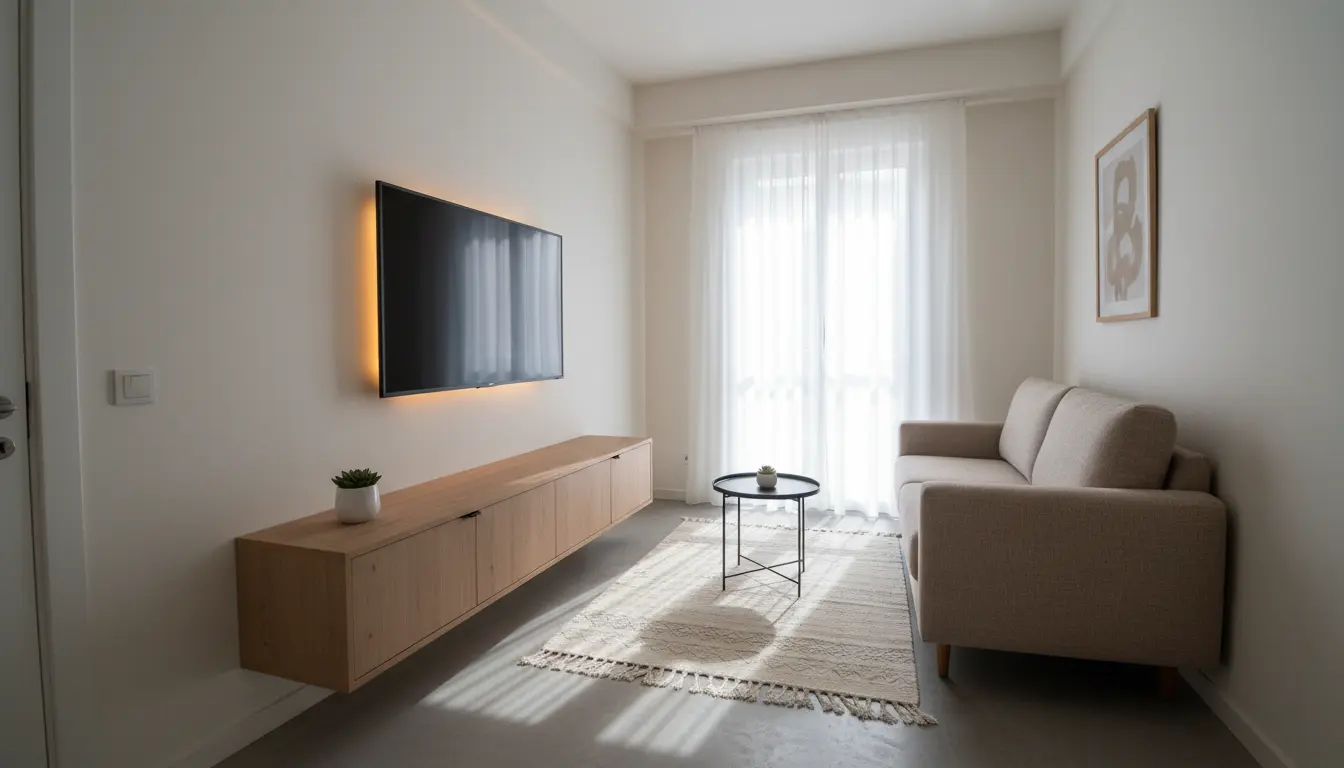
In narrow living rooms, the TV stand often causes the biggest “crowding” effect. A wall mount changes everything:
- You reclaim floor depth (even 20–30 cm matters)
- You hide cables cleaner
- The room looks wider because the visual weight moves up and back
Best mount type for narrow rooms: a low-profile mount if seating is centered; a full-motion mount if you must angle toward a side seating area.
Step 3: Specs that matter most in a narrow living room (and why)
Viewing angles: avoid the “washed-out side seat” problem
In narrow spaces, not everyone sits straight-on. That makes panel behavior crucial.
- If you have frequent off-center viewing, prioritize wide viewing angles.
- If you always sit centered and want deeper contrast, you can prioritize higher native contrast.
Action step: when comparing TVs, check whether reviews mention off-angle color shift or contrast loss. You will notice it more in narrow layouts than in wide rooms.
Brightness and reflections: the hidden dealbreaker
A narrow room often has fewer placement options for lamps and windows. That means reflections become a daily annoyance unless you plan for them.
Choose a TV that:
- Handles reflections well (or at least doesn’t become mirror-like)
- Gets bright enough for daytime viewing if your room is sunny
Action step: position lamps slightly behind and to the side of seating, not opposite the screen.
Smart TV platform and speed: keep the experience friction-free
In small rooms, people use the TV constantly—music, YouTube, quick streaming. A laggy interface ruins the “organic” living-room flow.
Prioritize:
- A responsive TV processor
- A platform you already use (Google TV / Fire TV / Roku, etc.)
- Enough HDMI ports for simple cable management
Audio: narrow rooms amplify bad sound (but also help good sound)
Walls are closer, so harsh sound feels harsher—but a well-placed soundbar can also sound fuller.
- If you keep TV speakers, pick a model known for clear dialogue.
- If you add a soundbar, you can buy a more “display-focused” TV confidently.
Action step: enable a dialogue enhancement mode if voices feel buried.
Step 4: Layout tricks that make any TV feel better in a narrow salon
These changes often matter more than upgrading from one model to another.
Mount height (people get this wrong all the time)
Mounting too high forces neck strain and makes the room feel less relaxing.
A good target: center of the screen near eye level when seated.
Use a shallow console (or floating shelf)
A deep TV unit steals the walking lane in narrow rooms. Choose a slimmer console and route cables cleanly.
Control glare with simple moves
- Use curtains that reduce harsh daylight during peak sun
- Avoid facing the TV directly opposite a bright window if possible
- Use bias lighting behind the TV for more comfortable evening viewing
Quick buying checklist (narrow living room edition)
Before you decide on your “55-inch alternative,” confirm these:
- You measured viewing distance and checked comfort for 50/55 inches
- Your main seating position stays within a reasonable angle of the TV
- You have a plan for reflections (windows/lamps)
- You choose a mount or stand that doesn’t block the walkway
- You prioritize usability (fast system, simple remote, enough HDMI)
One Amazon.com product suggestion (55-inch option that often fits narrow rooms well)
If you want a straightforward 55-inch choice to start from, browse the TOSHIBA 55-inch Class C350 Series on Amazon’s 55-inch listings and confirm the latest price/specs and availability