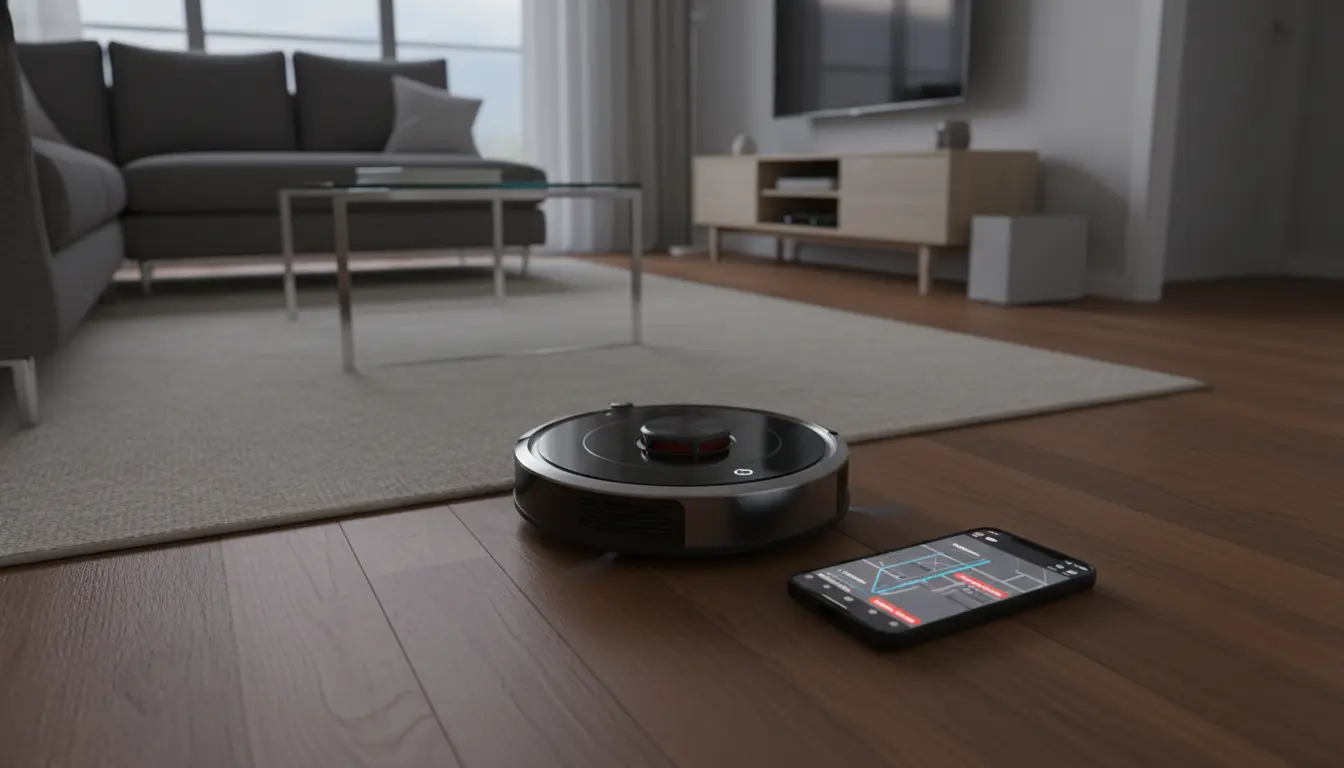

Robot vacuum cleaners have evolved far beyond simple bump-and-go gadgets. Today, the most advanced models use LiDAR mapping to navigate homes with precision, speed, and safety. If you’re researching how LiDAR-powered robots deliver fast and smart cleaning, this guide breaks it down in plain English—covering how LiDAR works, why it matters, key benefits, setup tips, and what to look for before you buy.
What is LiDAR in a robot vacuum?
LiDAR (Light Detection and Ranging) is a laser-based sensing technology that scans the environment to build a highly accurate map. A small rotating laser turret on the robot emits pulses of light, measures the time it takes for the beams to reflect off surfaces, and converts that data into a detailed floor plan. This allows the robot to “see” rooms, walls, furniture edges, and obstacles—even in low light.
Unlike random navigation or basic camera-only systems, LiDAR produces consistent, room-by-room coverage with fewer missed spots. It also supports advanced features like multi-floor mapping, virtual boundaries, and targeted room cleaning.
How LiDAR enables fast and smart cleaning
- Rapid room recognition: On the first run, the robot creates a precise 2D map. On subsequent runs, it loads that map instantly, planning an efficient route with straight, parallel lines.
- Obstacle-aware routing: LiDAR detects walls, table legs, and larger objects from a distance, so the robot slows down, avoids collisions, and reduces wasted movement.
- Zoned and room-specific cleaning: With a reliable map, you can send the robot to the kitchen after dinner or target a high-traffic hallway—no need to clean the entire home.
- Intelligent recharge and resume: For large homes, the robot can calculate remaining battery versus area left, auto-dock to recharge, then resume exactly where it paused.
- Dark-room operation: Because LiDAR doesn’t rely on ambient light, it cleans effectively at night or in dim spaces.
Key benefits you’ll notice
- Faster full-home runs: Efficient path planning reduces total cleaning time while maximizing coverage.
- Higher consistency: Fewer missed patches and less overlap compared to random navigation.
- Gentler on furniture: Predictive obstacle detection equals fewer bumps and scuffs.
- Energy and time savings: Smart routing and targeted zones avoid unnecessary passes.
- Better pet-hair pickup strategy: You can schedule frequent runs in problem zones for cleaner floors without manual intervention.
LiDAR vs. camera and bump-navigation
- Bump-and-go: Cheapest and simplest, but slow, inefficient, and prone to missing areas.
- Camera (VSLAM): Uses visual cues; works well in good light but can struggle in dim rooms and with repetitive patterns.
- LiDAR: Fast, light-independent, accurate mapping; excels in consistent coverage, complex layouts, and multi-floor homes.
Many premium models now combine LiDAR with cameras or structured light for small-object recognition (e.g., cables, socks). However, LiDAR remains the backbone for reliable whole-home navigation.
Setup tips to get the most from LiDAR mapping
- First map run: Pick up small cables, socks, and toys to allow a clean, uninterrupted mapping pass.
- Place the dock wisely: Choose a central, open area with at least 0.5 m clearance on both sides and 1.5 m in front.
- Name rooms and set zones: After the map is created, label rooms (Kitchen, Living Room, Hallway) and create “no-go” areas near delicate rugs or play areas.
- Add no-mop zones: If your robot is a vacuum-mop combo, mark carpeted areas accordingly.
- Calibrate multi-floor maps: If you have multiple levels, let the robot map each floor and store them separately in the app.
- Keep firmware updated: Manufacturers often refine mapping, pathing, and obstacle avoidance with software updates.
Features to look for in a LiDAR robot vacuum
- Accurate SLAM algorithm: Look for terms like “LiDAR SLAM,” “360° laser scanning,” or “advanced mapping.”
- Multi-floor mapping: Essential for multi-level homes and apartments with mezzanines.
- Room and zone cleaning: Lets you target spots or schedule specific rooms at specific times.
- Strong suction with adaptive power: Automatically increases suction on carpets or heavy debris zones.
- Mop module with pressure control: If you want dual cleaning, check for adjustable water levels and Y- or S-pattern mopping.
- Obstacle detection add-ons: AI camera or structured-light sensors help avoid pet waste, cables, and small toys.
- Auto-empty dock: Reduces manual maintenance; look for multi-stage filtration and large bag capacity.
- Battery and recharge-and-resume: Larger batteries and smart top-ups reduce total cycle time.
- Map editing tools: Room splits/merges, map rotation, and virtual barriers save time and allow granular control.
- Data privacy: Check for local processing and transparent privacy policies if the device has cameras or cloud features.
Maintenance for sustained performance
- Clean sensors and LiDAR window: Dust can degrade mapping accuracy—wipe with a dry, soft cloth.
- Empty dustbin or replace bags: Keep airflow strong for better suction and pickup.
- Wash or replace filters: Follow manufacturer intervals for HEPA or high-efficiency filters.
- Detangle brushes: Remove hair from the main brush and side brushes weekly if you have pets.
- Update firmware: Enhancements often improve route efficiency, obstacle avoidance, and battery management.
Common questions
- Does LiDAR work in the dark? Yes. LiDAR is light-agnostic and works reliably at night.
- Will mirrors or glass confuse it? Mirrors can reflect lasers oddly; most modern units handle this, but occasional false readings can occur. The map usually stabilizes after a few runs.
- Can it handle black rugs? Some sensors misread very dark surfaces as “voids.” Premium models now mitigate this, but results can vary.
- Is LiDAR safe for eyes? Consumer LiDAR uses low-power, eye-safe lasers that meet regulatory standards when used as intended.
Real-world use cases
- Busy households: Schedule targeted cleans after meals or around kids’ study time without disrupting the entire home.
- Pet owners: Create high-frequency zones near litter mats or pet beds to keep fur under control.
- Large or complex layouts: Multi-room, multi-floor mapping with recharge-and-resume keeps cleaning continuous and efficient.
- Mixed flooring: Adaptive suction and no-mop zones prevent soggy carpets while keeping tiles and hardwoods spotless.
If you want a robot vacuum that’s truly fast and smart, LiDAR mapping is the technology to prioritize. It delivers predictable coverage, efficient paths, and robust controls that fit real-life routines. Pair it with good maintenance and thoughtful zoning, and you’ll get consistently clean floors with minimal effort.