
Utah AI Prescribing Pilot: What Automated Acne Care Really Means
Utah is testing a healthcare model that moves artificial intelligence beyond answering questions and into prescribing treatment. According to TechSpot, the state will become the first to allow a limited program in which AI examines patients and issues prescriptions without direct human oversight at every step. However, the headline needs context: this experiment targets mild to moderate acne, not general medical care.
The Utah AI prescribing pilot raises a practical question. Can software make routine skin treatment more accessible while preserving the safeguards patients expect from healthcare professionals?
How Nolla Health Evaluates Patients
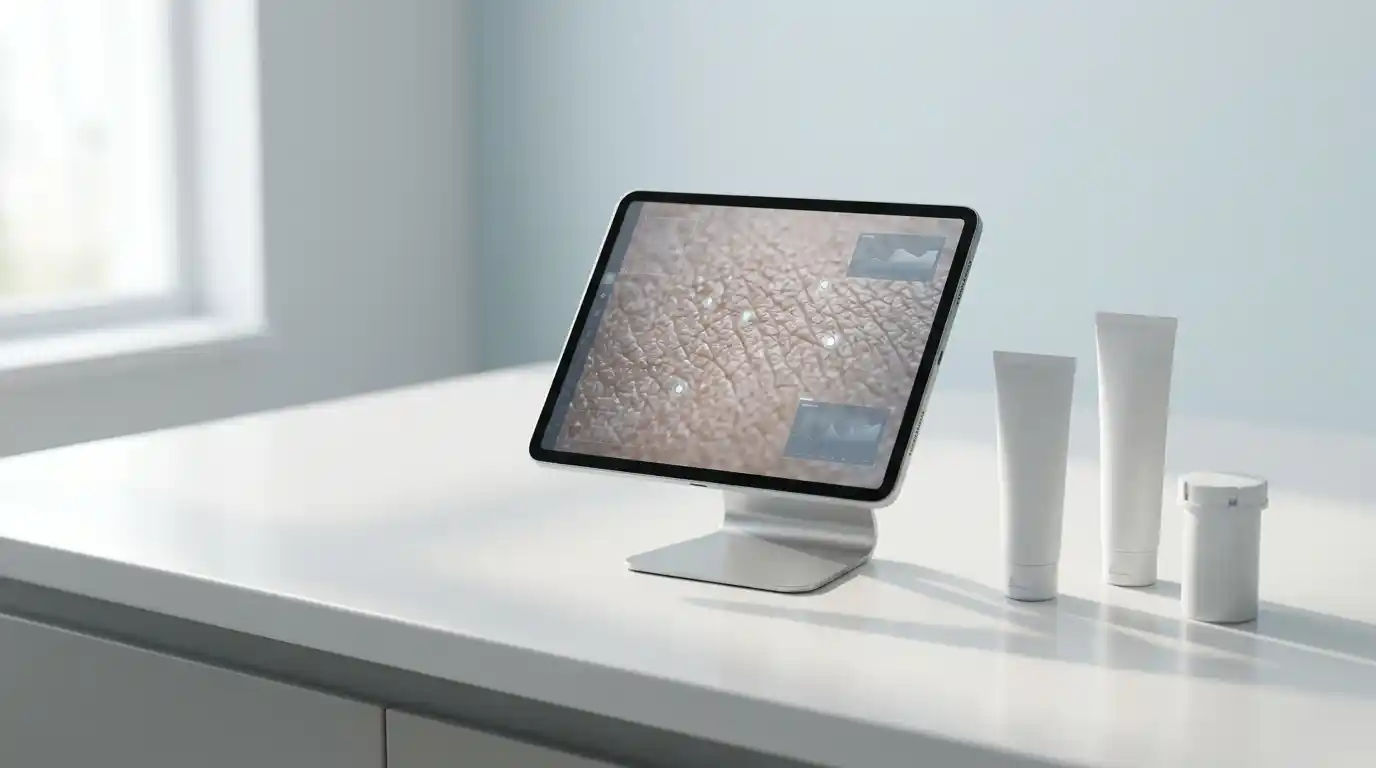
Nolla Health provides the app behind the program. TechSpot reports that users pay $4.99 per month, scan their faces, and complete forms covering their medical history and personal information. The system then analyzes their skin, identifies acne, assesses oiliness, and generates an acne severity score.
That score does not act alone. The AI combines its visual assessment with the information patients supply before recommending medication from eight approved treatments. This approach connects AI skin analysis with patient history rather than relying entirely on a photograph.
Still, convenience should not obscure the importance of accurate answers. Patients influence the assessment through the information they enter, so a polished interface cannot compensate for missing medical details.
Why the Trial Focuses on Acne
The program runs for one year and limits its scope to mild to moderate acne. Its prescriptions cover topical acne treatments rather than pills. Those boundaries matter because they separate this experiment from the much broader idea of an autonomous doctor.
Nolla Health CEO Luis Wenus told the source reporting that adverse effects associated with the approved medications involve localized irritation or dryness. Readers should treat that statement as the company’s characterization, not proof that every patient faces identical risks.
The narrow design gives the trial a specific task to test. It does not establish that AI can safely diagnose unrelated skin conditions, manage complex illnesses, or replace comprehensive medical consultations.
Human Review Changes Across Three Phases
Although automated prescriptions drive the discussion, doctors remain involved through a staged review process. Physicians must review the first 100 prescriptions before the service sends them to pharmacies.
During the second phase, the AI submits prescriptions for the next 400 patients directly to pharmacies. A physician then reviews those prescriptions retrospectively each week. The timing changes: treatment decisions can reach the pharmacy before a doctor checks them.
In the final phase, a doctor reviews at least 10 percent of issued prescriptions each month. This structure reduces physician oversight without eliminating it completely.
That distinction deserves attention. Reviewing a sample after prescribing differs from approving every prescription beforehand. The pilot therefore tests both the software’s decisions and the effectiveness of its changing supervision model.
Potential Benefits Without Guaranteed Outcomes
Digital dermatology could offer a simpler route to care for people who find traditional appointments inconvenient. A phone based assessment may reduce travel and scheduling friction. The subscription price may also attract users who want a predictable entry cost.
However, the reported app fee does not establish the total cost of care. Readers should not assume that it includes prescribed medication or every related expense.
Likewise, healthcare automation might eventually free clinicians to focus on more complicated cases, but the article does not provide results demonstrating that outcome. Faster access, better skin, and reduced clinical workloads remain possibilities rather than proven achievements of this trial.
Patient Safety Requires More Than Accuracy
A credible assessment of the Utah AI prescribing pilot should examine more than whether the software recognizes acne. Patient safety also depends on how the service handles uncertainty, adverse reactions, incomplete histories, and situations outside its intended scope.
The report describes the review schedule but does not establish how every exception works. Patients should ask how they can reach a qualified clinician when symptoms worsen or the recommended treatment causes problems.
Medical data privacy deserves similar scrutiny. Facial scans and health histories contain sensitive information. Before joining, users should understand what the service collects, how it uses that information, and what choices they have about storage and deletion.
What This Pilot Can Actually Tell Us
Utah’s experiment offers a focused test of artificial intelligence in healthcare, not a verdict on the future of doctors. Its value will depend on transparent evidence about treatment decisions, review findings, and patient experiences.
Clear reporting should distinguish successful prescription processing from actual clinical improvement. A system can complete its workflow efficiently while still leaving important unanswered questions about treatment suitability, follow up support, and the quality of patient outcomes.
The most useful question is not whether AI can replace medicine. It is whether a narrowly defined service can deliver dependable care while recognizing its limits and keeping human help within reach.