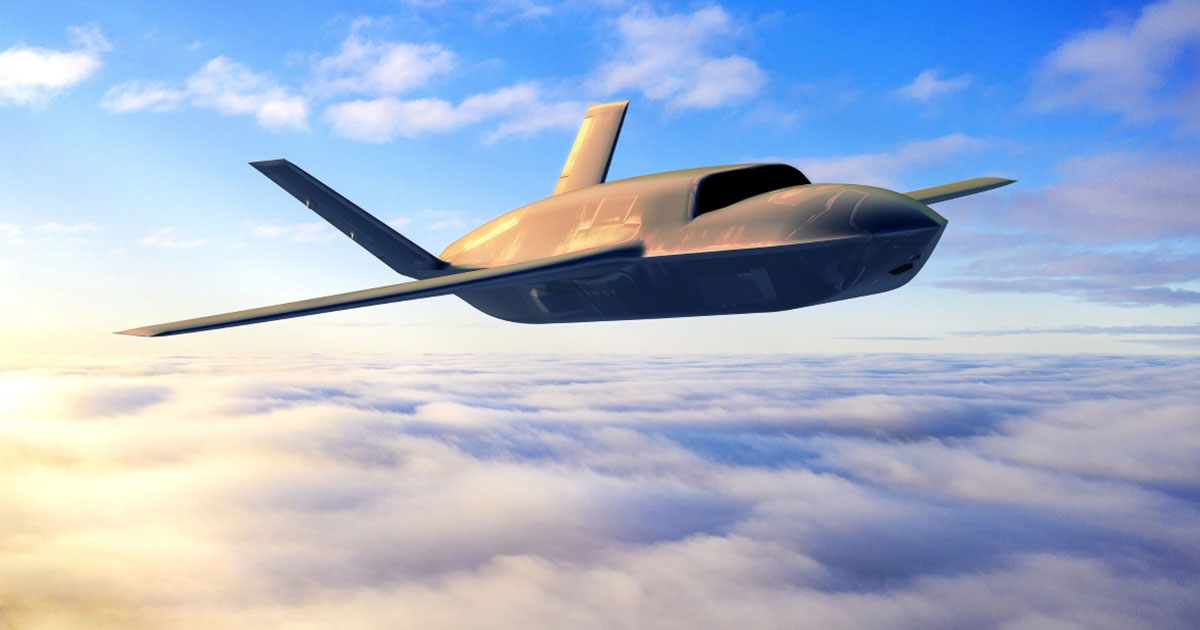

In August 2025, the U.S. Air Force marked a historic milestone with the successful test flight of the YFQ-42A, an experimental unmanned fighter jet developed by General Atomics. Unlike traditional drones, this aircraft is designed not merely for reconnaissance or strike missions but for air-superiority combat, working alongside or even in place of crewed fighters.
The YFQ-42A demonstrates how the fusion of artificial intelligence, advanced stealth engineering, and autonomous decision-making is reshaping the fundamentals of aerial warfare. This article explores its technical innovations, strategic implications, and the broader geopolitical context of deploying an unmanned stealth fighter.
1. Genesis of the YFQ-42A Program
The concept for the YFQ-42A emerged from the U.S. Air Force’s Loyal Wingman initiative, a program aimed at developing unmanned aircraft that could operate in tandem with advanced fighters such as the F-35 Lightning II and the upcoming Next Generation Air Dominance (NGAD) platform.
While previous drone programs like the MQ-9 Reaper excelled in surveillance and precision strikes, they lacked the speed, stealth, and survivability required for contested airspace. The YFQ-42A aims to close this gap by serving as a drone fighter—capable of dogfights, electronic warfare, and autonomous strike missions.
2. Design Philosophy and Stealth Features
At first glance, the YFQ-42A resembles a scaled-down stealth fighter, with a delta wing configuration and carefully sculpted edges designed to minimize radar cross-section (RCS). Unlike traditional drones, its fuselage integrates advanced radar-absorbent materials and exhaust masking systems to reduce infrared detectability.
Key stealth features include:
- Low observable radar signature comparable to fifth-generation fighters.
- Internal weapons bay to prevent radar reflection from external pylons.
- Blended wing-body design for aerodynamic efficiency.
- Smart electronic countermeasures that adaptively jam enemy tracking systems.
This makes the YFQ-42A not just a support drone but an active stealth combatant, capable of penetrating enemy air defenses.
3. Autonomy Powered by Artificial Intelligence
One of the defining aspects of the YFQ-42A unmanned fighter jet is its reliance on artificial intelligence. Unlike remotely piloted drones, which require constant human command, the YFQ-42A can operate with high levels of autonomy:
- AI-powered flight control enables real-time decision-making in combat scenarios.
- Dogfight maneuver algorithms allow the jet to calculate attack vectors faster than a human pilot.
- Collaborative autonomy allows coordination with crewed fighters and other drones.
- Dynamic threat assessment ensures the aircraft can independently identify and counter enemy missiles, radar, and fighters.
Importantly, the U.S. Air Force emphasizes that human oversight remains critical in decisions involving lethal force. The AI serves as a “co-pilot,” but ultimate strike authorization comes from a human commander.
4. Performance Specifications (Known Data)
Although some details remain classified, defense analysts have provided insight into the expected performance benchmarks:
- Maximum speed: Mach 2 (approx. 2,470 km/h)
- Operational range: ~2,000 km without refueling
- Ceiling altitude: 60,000 feet
- Payload capacity: 4,500 kg (internal bay + limited external pods)
- Armaments: Air-to-air missiles (AMRAAM, Sidewinder), precision strike munitions, electronic warfare pods
- Propulsion: Next-gen adaptive cycle turbofan, optimized for efficiency and stealth
What sets the YFQ-42A apart is not raw speed or firepower—but its ability to fight, coordinate, and survive autonomously.
5. Strategic Roles and Mission Profiles
The YFQ-42A is envisioned as a force multiplier. Instead of replacing crewed aircraft, it extends their capability by assuming tasks too risky or cost-intensive for human pilots.
Key mission roles include:
- Loyal Wingman: Flying alongside F-35 or NGAD fighters, providing extra missiles and sensors.
- Electronic Warfare: Jamming enemy radars, disrupting communications.
- Decoy Operations: Drawing hostile fire away from crewed aircraft.
- Suppression of Enemy Air Defenses (SEAD): Engaging ground-based SAM systems ahead of crewed squadrons.
- Combat Air Patrol (CAP): Defending strategic airspace autonomously.
In essence, the YFQ-42A allows the U.S. to project power in hostile skies with minimal human risk.
6. Implications for Global Air Power Dynamics
The introduction of the YFQ-42A comes at a time when great-power competition is intensifying. China and Russia have both invested heavily in unmanned combat aerial vehicles (UCAVs), seeing them as cost-effective ways to counter U.S. air dominance.
- China’s GJ-11 Sharp Sword drone focuses on stealth strike capabilities.
- Russia’s Sukhoi S-70 Okhotnik-B is designed to pair with the Su-57 stealth fighter.
The YFQ-42A represents an escalatory leap: rather than just strike or surveillance, it embodies a true AI-driven fighter jet, potentially forcing adversaries into a new arms race in unmanned aerial combat.
7. Ethical and Legal Challenges
Deploying autonomous fighter jets also introduces ethical dilemmas.
- Should AI be allowed to make life-or-death decisions without direct human oversight?
- How do we ensure accountability in cases of misidentification or civilian casualties?
- Could autonomous warfare lower the threshold for conflict by reducing human cost on one side?
The Pentagon has reiterated its “human-in-the-loop” policy, but critics argue that as autonomy advances, the line between human and machine decision-making will continue to blur.
8. Economic and Industrial Impact
The YFQ-42A is not just a military project but also a technological accelerator. The development of advanced radar-absorbent composites, adaptive AI systems, and autonomous flight algorithms will likely benefit civil aviation, space exploration, and robotics.
Furthermore, defense contractors anticipate billions in procurement contracts if the YFQ-42A transitions from prototype to full production. This could reshape the aerospace defense industry for decades to come.
9. The Road Ahead
The first test flight of the YFQ-42A is only the beginning. Analysts predict the following roadmap:
- 2025-2027: Expanded flight testing, AI stress-testing in simulated combat.
- 2028: Integration with crewed U.S. Air Force squadrons Air Force squadrons (initial operational capability).
- 2030 onward: Potential global export to NATO allies, though technology restrictions will be tight.
The ultimate question is whether the YFQ-42A unmanned fighter jet will complement or eventually replace piloted fighters in future battlefields.
10. Conclusion
The successful debut flight of the YFQ-42A unmanned fighter jet marks a paradigm shift in air combat. No longer confined to narrow roles of surveillance or precision strike, unmanned aircraft are now entering the domain of dogfighting, air superiority, and swarm operations.
With its stealth, AI-driven autonomy, and integration into modern air forces, the YFQ-42A could fundamentally reshape air warfare in the 21st century. It represents both a leap forward in military technology and a new chapter in the ongoing debate about the ethics of autonomous combat.
As rivals scramble to match America’s innovation, one thing becomes clear: the skies of the future won’t just be filled with pilots—they’ll be shared with intelligent machines.