
Tesla’s driver-assistance technologies—Autopilot and Full Self-Driving (FSD)—are among the most talked-about systems in the automotive world. While they promise a future of safer, more efficient transportation, it’s essential to understand what they are today, how they work, and where their limitations currently lie. This guide explains Autopilot vs. FSD, core features, tech under the hood, real-world limitations, safety considerations, legal context, and what the future may hold.
Autopilot vs. Full Self-Driving: What’s the Difference?
- Autopilot: Standard on most Tesla models, Autopilot includes Traffic-Aware Cruise Control and Autosteer. It helps maintain speed, follow a lead vehicle, and keep the car centered in its lane on well-marked roads.
- Enhanced Autopilot (EAP): Adds features like Auto Lane Change, Navigate on Autopilot (highway on-ramp to off-ramp guidance), and Autopark/Summon.
- Full Self-Driving (FSD): A paid upgrade that layers on advanced capabilities such as navigating city streets, making turns, responding to traffic lights and stop signs, and in some regions participating in supervised FSD Beta features. Despite the name, FSD requires active driver supervision and is not a Level 4 or Level 5 autonomous system at this time.
Importantly, both Autopilot and FSD are driver-assistance systems that demand attention, readiness to intervene, and adherence to local laws. The driver remains responsible for the vehicle at all times.
How Tesla’s System Works: Vision-First Approach
Tesla uses a camera-centric, “vision-first” neural network stack—often referred to as Tesla Vision—supported by onboard compute and sensor fusion. Key elements include:
- Multiple exterior cameras providing 360-degree visibility.
- Neural networks trained on large-scale driving data to perceive lanes, vehicles, pedestrians, signs, and signals.
- Real-time planning that predicts the motion of surrounding actors and selects a safe path.
- Over-the-air (OTA) software updates that continuously refine perception, planning, and driver monitoring.
Some past Tesla vehicles combined cameras with radar or ultrasonic sensors, but recent iterations emphasize camera-based perception. The company’s strategy is to teach the car to “see” and drive like a human by relying primarily on vision.
Current Features You May Encounter
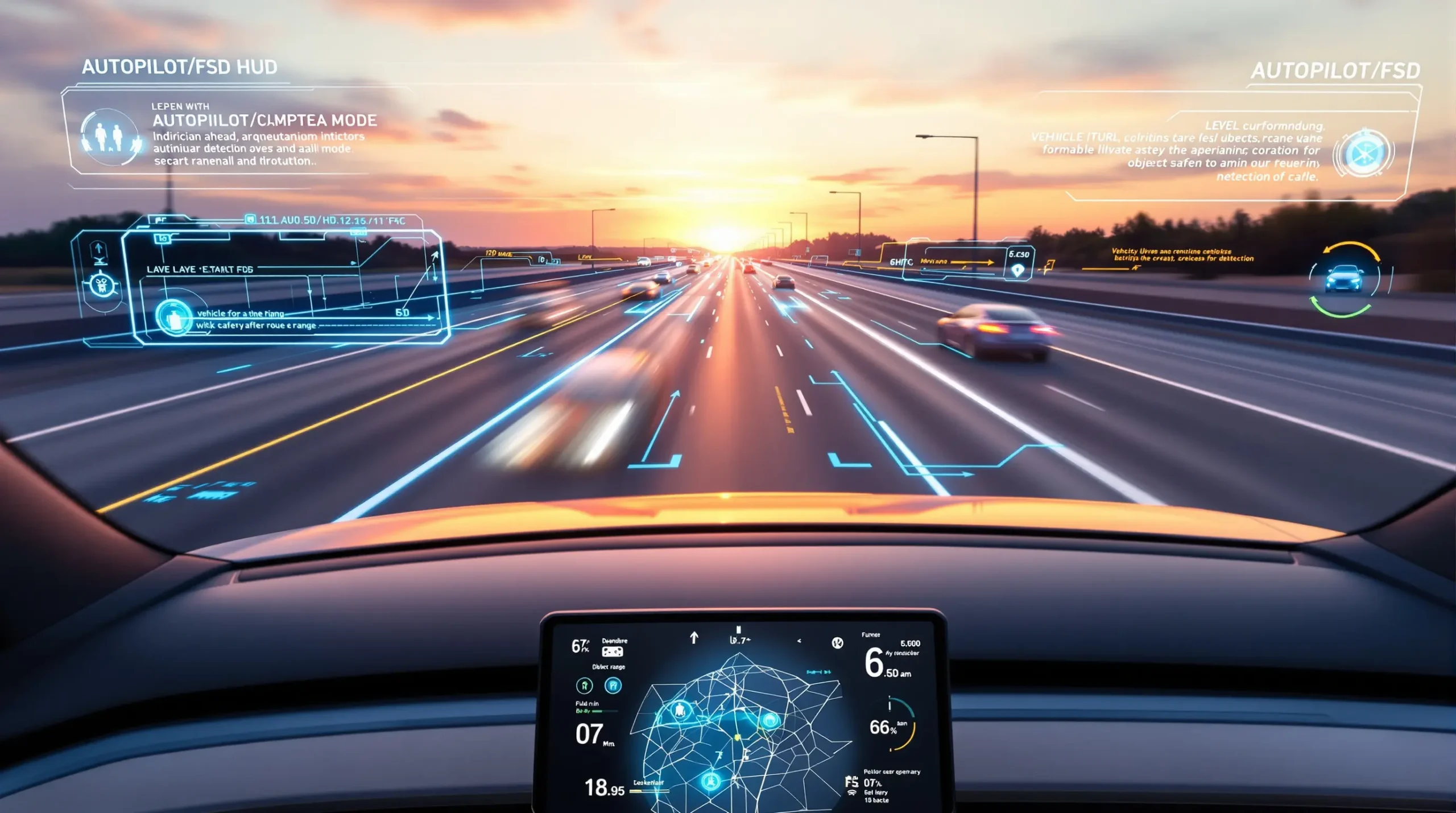
- Lane keeping and adaptive cruise to reduce driver workload on highways.
- Navigate on Autopilot to handle interchanges, exits, and overtaking under supervision.
- Traffic Light and Stop Sign Control to slow and stop when required (region-dependent).
- Auto Lane Change, Autopark, and features like Smart Summon in controlled environments.
- Urban driving support through FSD Beta in certain geographies, enabling supervised turns, roundabouts, and complex intersections.
Availability varies by region, software version, and regulatory approval. Always check your local functionality and keep your software updated.
Key Limitations to Understand
Despite rapid progress, today’s systems have clear constraints:
- Not fully autonomous: Drivers must remain attentive, hands-on/ready, and able to take over instantly. Driver monitoring measures engagement but is not foolproof.
- Environmental edge cases: Heavy rain, snow, sun glare, poorly marked lanes, construction zones, and unusual signage can degrade performance.
- Complex urban scenarios: Unprotected left turns, ambiguous right-of-way, unusual intersections, or erratic human behavior may challenge planning.
- Map and policy reliance: While the system emphasizes vision, it may still behave conservatively or unexpectedly in unfamiliar or rapidly changing environments.
- Regulatory and regional variability: Features can be disabled, limited, or behave differently depending on local laws and approvals.
- Sensor occlusion and maintenance: Dirty cameras, fog, ice, or damage can reduce detection accuracy; regular cleaning and calibration may be needed.
Understanding these limits is crucial for safe operation and realistic expectations.
Safety, Responsibility, and Best Practices
Tesla’s systems can reduce driver fatigue and support safer driving when used correctly. However, safety hinges on proper supervision:
- Stay engaged: Keep eyes on the road and hands ready to take control at any moment.
- Use only where appropriate: Prefer clearly marked highways and roads; be extra vigilant in city traffic and construction zones.
- Heed alerts: Respond promptly to steering wheel nags and visual/audible prompts.
- Maintain your vehicle: Keep cameras clean, tires properly inflated, and software up to date.
- Learn the system: Read the manual, explore settings, and practice in familiar conditions before tackling complex routes.
Real-world safety outcomes depend on responsible use. Treat the technology as an assistant, not a replacement.
Legal and Regulatory Landscape
Regulators globally are scrutinizing advanced driver-assistance systems (ADAS). Labeling, driver monitoring standards, data logging, and performance benchmarks are evolving. In many regions, FSD capabilities are offered as beta features with explicit supervision requirements. Insurance implications, liability questions, and standardized ratings for ADAS are all active areas of policy development.
The Road Ahead: Continuous Improvement
Tesla pushes frequent OTA updates that can noticeably improve perception, planning, and driver monitoring. Future gains may include:
- Better handling of rare edge cases through more diverse training data.
- Smoother human-like driving via end-to-end neural planning.
- Stronger driver-monitoring safeguards to ensure attentiveness.
- Expanded geographic coverage and more consistent behavior across conditions.
While timelines for true autonomy remain uncertain, incremental improvements are steadily expanding where and how the system can assist.
Buying Considerations: Is FSD Worth It Today?
It depends on your driving patterns and expectations:
- Highway commuters may find major value in Autopilot/EAP for reduced workload.
- Urban drivers might appreciate FSD’s ongoing progress but must be ready to supervise closely.
- Resale value, subscription options, and regional feature availability should factor into the decision.
- Trial the features where possible and stay informed about local regulations and software release notes.
Set realistic expectations: Think “advanced assistance” rather than “self-driving.”
Bottom Line
Tesla Autopilot and FSD represent cutting-edge driver assistance built on a vision-first AI stack. Used responsibly, they can enhance comfort and potentially safety. But they are not autonomous today. Understanding their capabilities and limits—staying vigilant, following best practices, and keeping software updated—is essential for safe, effective use on real roads.