
EV Battery Warranty Standards in the US Market: What Degradation Is Considered Normal?
Electric vehicle adoption across the United States has accelerated dramatically, yet potential and current owners frequently grapple with one central concern: battery health and longevity. The high-voltage lithium-ion traction pack represents the single most expensive component in any electric vehicle. Automakers operating in the American automotive landscape offer extensive warranties, but fine print often clouds the distinction between expected wear and a genuine manufacturing defect. Understanding what constitutes normal battery degradation versus an actionable warranty claim helps owners protect their financial investment and optimize their driving habits.
Federal Mandates and State Regulations for Traction Packs
Federal emissions and clean air regulations in the United States establish a robust legal floor for high-voltage battery protection. The federal government mandates that automakers provide a minimum powertrain and emissions warranty covering high-voltage electric vehicle batteries for at least 8 years or 100,000 miles, whichever comes first. This foundational requirement ensures that every manufacturer, from traditional domestic brands to pure-play EV startups, must stand behind their energy storage systems across all fifty states.
Certain states enforce even more stringent standards to protect consumers and encourage sustainable mobility. California, operating under Section 177 of the Clean Air Act through the California Air Resources Board (CARB), imposes a mandate requiring zero-emission vehicle energy storage systems to carry coverage for up to 10 years or 150,000 miles. States adopting CARB rules follow these expanded timelines, creating a dual-tier regulatory framework across the US market. These regulations obligate original equipment manufacturers to replace or repair battery packs that suffer premature catastrophic failures or fall below legally defined functional thresholds.


Defining Normal Degradation Versus Warranty Thresholds
All lithium-ion chemistry experiences gradual, irreversible capacity loss over time due to fundamental electrochemistry. Automakers recognize this reality and explicitly state in their warranty booklets that routine capacity loss does not constitute a defect in materials or artistry. Under standard operational parameters, an electric vehicle battery naturally loses between 1.5% and 2.5% of its total energy retention each year, depending on operational cycles, ambient conditions, and user maintenance.
Most automakers establish a capacity retention baseline between 70% and 75% over the 8-year or 100,000-mile period to separate normal degradation from warrantable failure. If an instrument cluster diagnostic or official service center inspection reveals that the state of health (SoH) has dropped below 70% within the active warranty window, the manufacturer must repair, recondition, or replace the pack. However, if a pack retains 72% capacity after seven years of continuous use, the automaker categorizes this wear as normal aging, leaving the owner responsible for the diminished driving range without warranty remedy.
The Electrochemistry Behind Capacity Fade
Traction battery packs degrade through two interconnected mechanisms: cyclic aging and calendar aging. Cyclic aging occurs whenever electrons move during charging and discharging cycles. As lithium ions travel between the cathode and anode through liquid electrolyte solutions, microscopic structural changes occur within the active electrode materials. Over hundreds of discharge cycles, active lithium becomes permanently trapped, reducing the total milliampere-hours the pack can store.
Calendar aging proceeds independently of vehicle mileage, governed primarily by time, ambient operating temperature, and resting state of charge (SoC). At the microstructural level, a solid electrolyte interphase (SEI) layer builds up on the carbon or silicon anode surfaces. High temperatures accelerate parasitic chemical reactions that thicken this layer, increasing internal cell resistance and causing gradual impedance growth. Automakers design thermal management systems with active liquid glycol loops to mitigate these thermal stressors, but ambient exposure across hot climates like Arizona or Texas inevitably accelerates baseline calendar fade compared to moderate northern zones.
Manufacturer Variations and Service Protocols
Warranty terms diverge significantly when looking at the specific diagnostic methods and remedy procedures used by major automotive brands. Tesla, Ford, General Motors, Hyundai, and Rivian clearly specify a 70% capacity retention threshold over 8 years or 100,000 miles in their official documentation. Other manufacturers, including certain luxury European imports, historically omitted exact percentage figures, relying instead on subjective language regarding abnormal failure, though competitive market pressures have pushed most companies toward standardized, explicit metrics.
When a battery pack breaches the minimum retention floor, automakers rarely install a brand-new factory pack. Standard warranty provisions grant the manufacturer the contractual right to substitute a remanufactured or reconditioned unit. The replacement module or full pack must simply meet or exceed the degraded capacity level appropriate for the vehicle’s actual age and mileage. For example, if a four-year-old vehicle experiences a sudden cell drop to 65%, the dealership service bay will likely install a refurbished pack tested to deliver approximately 80% to 85% capacity, successfully restoring the vehicle to normal operating bounds without supplying zero-mile hardware.
Warranty Exclusions and Voiding Criteria
Automakers enforce strict operational clauses that can instantly nullify traction pack warranty protections. Neglect represents the most common ground for a denied warranty claim. Leaving an electric vehicle parked for extended periods at a 0% state of charge induces deep discharge, which can cause internal copper shunts to form and destroy individual cells. Similarly, continuously storing a vehicle in extreme heat at a 100% state of charge accelerates irreversible chemical breakdown beyond standard tolerances.
Unauthorized physical modifications, third-party software tuning, or utilizing uncertified fast-charging hardware can also void the manufacturer’s liability. Using an electric vehicle for commercial activities such as heavy-duty towing, competitive racing, or unapproved stationary power backup applications may trigger diagnostic event data logs that void coverage. Vehicle telematics continuously record high-voltage pack events, charging curves, maximum cell temperatures, and diagnostic fault codes, giving dealership technicians complete visibility into past operating conditions when evaluating an incoming claim.
Actionable Ownership Strategies to Maximize Longevity
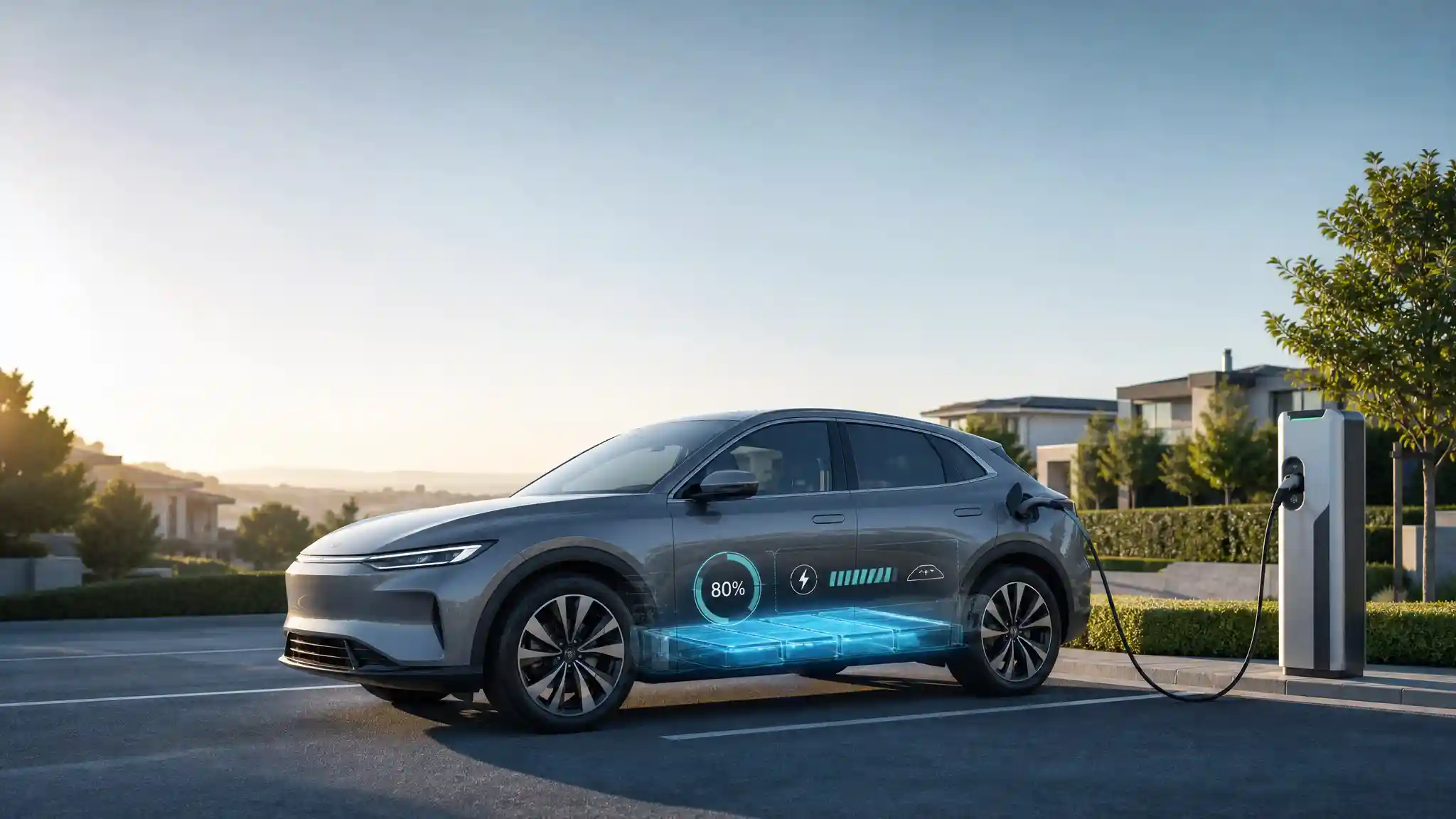
Vehicle operators can actively preserve traction pack integrity and keep degradation within minimal bounds through disciplined charging habits. Maintaining the daily operational charge limit between 20% and 80% state of charge reduces excessive mechanical stress within the cathode crystal lattice. Drivers should reserve 100% full charges exclusively for long road trips where immediate departure occurs right after charging concludes.
Managing high-power direct-current fast charging (DCFC) also plays a vital role in preventing premature capacity loss. While Level 2 alternating-current charging generates minimal heat and distributes current evenly across cells, frequent DC fast charging drives up internal pack temperatures and accelerates localized lithium plating on the anode. Limiting DCFC sessions to long-distance travel and relying on scheduled overnight Level 2 home charging preserves the solid electrolyte interphase, keeps internal cell resistance low, and ensures the vehicle delivers reliable range well past the expiration of the factory warranty.
Autel MaxiSys MS906 Pro-EV Diagnostic Scanner
A professional-grade automotive diagnostic scanner available on Amazon.com that reads high-voltage battery pack state of health (SoH), monitors individual cell balance and voltages, and tracks real-time thermal management data for major electric vehicles.