
Best Battery Chargers for Starting Your Car in Chicago’s Cold Weather
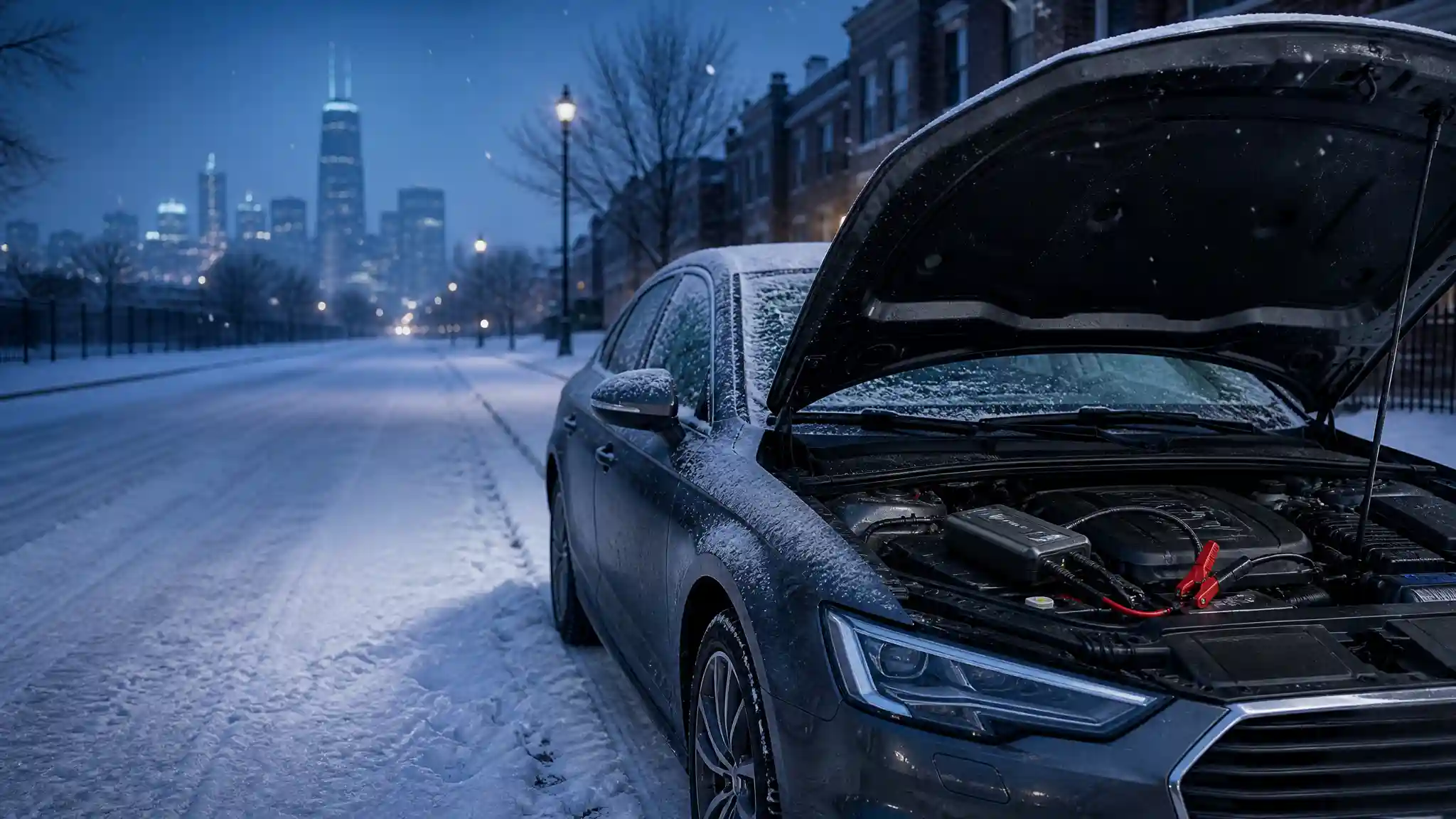
Chicago winters push car batteries to their absolute limit. When temperatures drop below zero, engine oil thickens, chemical reactions inside batteries slow down, and starting power can drop by nearly 50%. Drivers who neglect this seasonal challenge often face dead batteries on the coldest mornings of the year. Choosing the right battery charger or jump starter becomes essential for anyone who wants reliable transportation through the harsh Midwest winter.
Why Cold Weather Damages Car Batteries
Extreme cold reduces a battery’s cranking amps significantly. A fully charged battery that performs perfectly in summer can struggle to turn over an engine once the mercury falls below 10°F. Chicago’s lake-effect winds and sudden temperature swings only intensify this problem. Sulfation builds up faster in cold conditions, corrosion spreads across terminals, and older batteries lose capacity permanently. Understanding these effects helps drivers select equipment that matches the city’s demanding climate.
Key Features to Look for in a Cold-Weather Charger
Not every charger performs equally well in freezing conditions. Buyers should prioritize units with high cold cranking amps (CCA) ratings, since this number directly indicates starting power in low temperatures. A quality charger should also include automatic voltage detection, spark-proof clamps, and reverse polarity protection for safety. Portability matters too — a compact jump starter with a built-in battery pack lets drivers carry backup power in the trunk without depending on another vehicle. Look for devices rated to operate safely down to -20°F, since Chicago frequently experiences sub-zero wind chills.
Lithium-Ion vs. Lead-Acid Jump Starters
Modern lithium-ion jump starters have largely replaced bulky lead-acid units for personal use. Lithium-ion packs charge faster, hold their charge longer during storage, and weigh a fraction of traditional chargers. They also perform more consistently in freezing temperatures, which makes them ideal for Chicago drivers who park outdoors overnight. Lead-acid trickle chargers still play an important role, however, especially for maintaining a battery over an extended cold snap or for vehicles parked in garages for long periods. Combining both technologies gives drivers maximum flexibility throughout the winter season.
Top Considerations for Chicago Drivers Specifically
Chicago’s climate includes rapid temperature drops, heavy snowfall, and prolonged periods below freezing from December through February. Vehicles parked on the street without garage access face the highest risk of battery failure. A dependable jump starter should fit easily in a glove compartment or under a seat, ready for emergency use during a snowstorm on Lake Shore Drive or a stalled commute through the Loop. Drivers who frequently travel through suburban areas like Naperville or Evanston should also consider a charger with USB output, allowing them to keep phones powered while waiting for roadside assistance.
Maintenance Tips to Extend Battery Life
Beyond owning a good charger, proactive maintenance keeps batteries healthier through winter. Cleaning corrosion off terminals improves conductivity and prevents power loss. Parking in a garage, even an unheated one, shields the battery from direct wind exposure. Using a battery maintainer during long periods of inactivity prevents slow discharge. Testing battery voltage before the first hard freeze identifies weak batteries early, giving drivers time to charge or replace them before an emergency strikes. Combining regular maintenance with a reliable charger dramatically reduces the chance of getting stranded.
How Often You Should Charge Your Battery in Winter
Most modern batteries hold a charge for several weeks under normal conditions, but extreme cold accelerates depletion. Drivers who don’t use their car daily should charge or maintain the battery at least once every two weeks during Chicago’s coldest months. Short trips that never let the alternator fully recharge the battery compound the problem, so pairing regular driving with occasional charger use keeps voltage levels stable. This routine habit prevents the frustrating scenario of a completely dead battery on a subzero morning.
Choosing Between a Charger and a Jump Starter
Some drivers wonder whether they need a trickle charger, a jump starter, or both. A trickle charger slowly restores and maintains battery voltage over hours, making it ideal for long-term storage or overnight charging in a garage. A jump starter delivers an instant burst of power to start the engine immediately, which suits emergency roadside situations. For comprehensive winter protection, owning both types of equipment offers the best coverage — a maintainer for daily upkeep and a portable jump starter for unexpected failures during Chicago’s unpredictable freezes.
Recommended Product on Amazon
For Chicago drivers seeking a dependable option, the NOCO Boost Plus GB40 1000A UltraSafe Car Battery Jump Starter stands out as a strong choice. It delivers powerful cranking amps suited for cold climates, includes spark-proof technology, and fits easily in a glove box for emergency use.
Final Thoughts
Surviving a Chicago winter without battery trouble comes down to preparation. Selecting a charger rated for extreme cold, performing routine maintenance, and keeping a portable jump starter on hand can mean the difference between a smooth commute and a stressful breakdown. Investing in reliable equipment now protects both your vehicle and your peace of mind through the toughest months of the year.