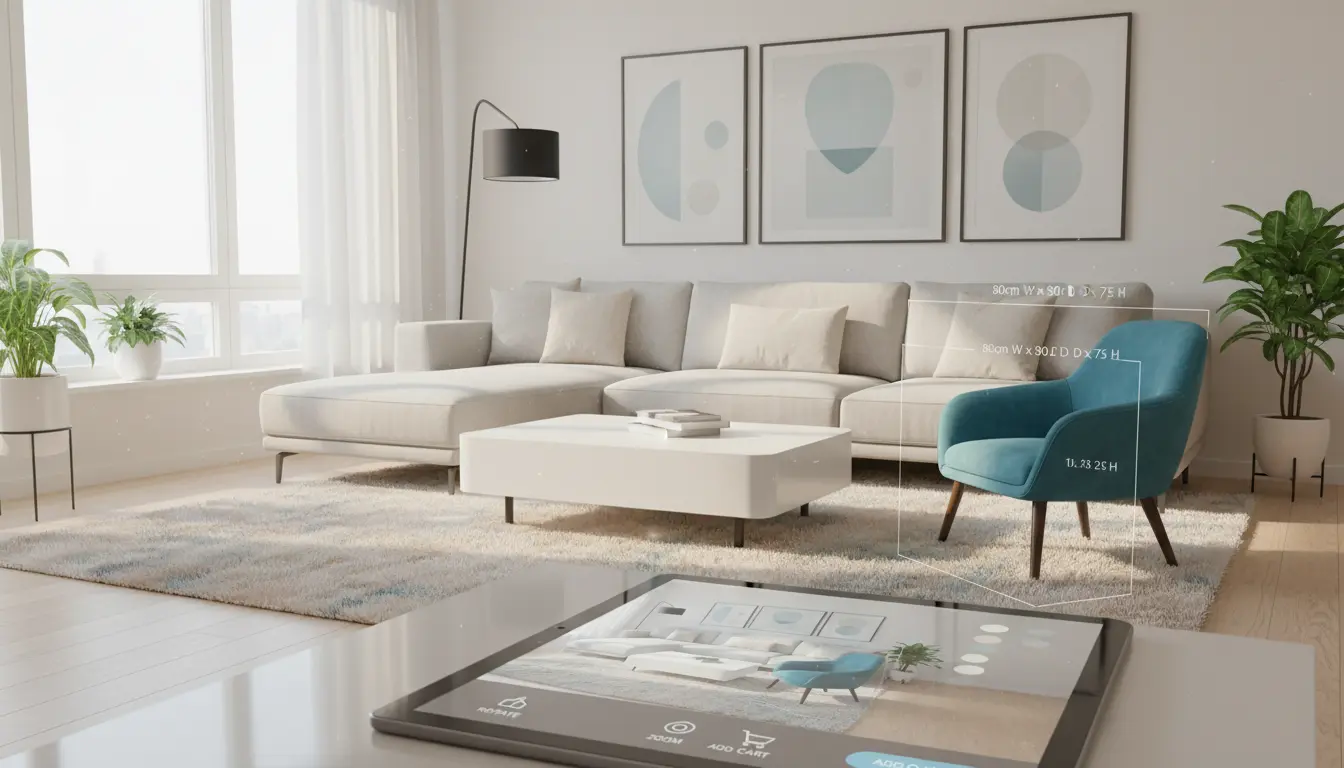

1. What Is Virtual Store AR: Try at Home, Then Buy?
Virtual store AR (augmented reality) lets customers place digital 3D products into their real environment using a phone or tablet. When shoppers use “try at home, then buy” features, they see furniture in their living room, décor on their walls, or accessories on their body before they complete the purchase.
Instead of guessing from static photos, users open the camera, scan their room, and drop the product into the space. They walk around it, zoom in, and check every detail. This process reduces doubts and turns browsing into an interactive, immersive experience.
For e‑commerce brands, virtual store AR creates a strong competitive edge. It connects online catalogs with the customer’s real life and solves one of the biggest problems in digital shopping: “Will this really fit and look good in my home?”
2. Why Virtual Store AR Increases Trust and Conversions
Shoppers often abandon carts because they cannot imagine the product in their own environment. Virtual store AR directly addresses this pain point. When customers preview a sofa in their living room or a lamp beside their bed, they feel more certain about size, color, and style.
This clarity builds trust. Customers see a realistic 3D model instead of a studio photo, so expectations and reality become much closer. As a result, they:
- Click “add to cart” with more confidence
- Complete the checkout process faster
- Recommend the experience to friends and family
E‑commerce stores that implement AR shopping experiences usually report higher conversion rates and better user satisfaction. The technology removes guesswork and turns curiosity into concrete purchase decisions.
3. Key Benefits of “Try at Home, Then Buy” for E‑Commerce Stores
Virtual store AR offers several direct business benefits:
- Higher engagement time
Users stay longer on product pages when they can interact with a 3D model. They rotate items, change colors, and move them around their home. This behavior sends strong positive signals to search engines about page relevance and quality. - Fewer returns and complaints
Customers already know how the product looks and fits before it arrives. Because expectations match the real product, return rates drop, and customer service teams handle fewer issues. - Stronger brand differentiation
Many online stores still use only flat images. A brand that offers AR product visualization instantly stands out as modern and customer‑focused. This differentiation supports organic growth and improves brand perception. - More user‑generated content
Shoppers often take screenshots or record videos of AR previews and share them on social media. These organic posts introduce your products to new audiences without extra advertising costs.
4. Product Categories That Win with Virtual Store AR
Several product types perform especially well with virtual try‑before‑you‑buy AR:
- Furniture and home décor:
Customers check if a sofa fits between two walls, if a table blocks a walkway, or if a painting matches the wall color. - Appliances and electronics:
Shoppers visualize how large a fridge appears in the kitchen or how a TV looks on a specific wall. - Fashion accessories and wearables:
Using AR try‑on technology, people test watches, glasses, jewelry, and hats on their own face and body. - Beauty and cosmetics:
Virtual store AR lets users apply lipstick shades, foundations, and eyeshadows digitally before they buy.
These categories benefit because size, color, and style are critical. AR reduces uncertainty and helps users make decisions based on their real environment and real appearance, not on generic model photos.
5. How Virtual Store AR Works in Practice
Modern AR commerce platforms are much easier to integrate than before. Most retailers now start with web‑based AR, which runs directly in the mobile browser. Customers tap a button like “View in your room” on the product page and instantly launch the AR experience.
A typical AR shopping flow looks like this:
- The user visits a product page on a smartphone.
- They tap the “Try at home” or “See in my room” button.
- The camera opens and scans the floor or wall.
- The system places a 3D product model into the live camera view.
- The user moves, rotates, and resizes the item to explore it from every angle.
Retailers upload high‑quality 3D models and connect them to SKUs in their catalog. The AR viewer reads this data and displays accurate scale, textures, and colors. This technical foundation keeps the visual experience realistic and reliable.
6. Designing a Seamless AR Shopping Experience
To get real results from AR in online retail, brands need to focus on user experience:
- Simple interface:
Clear icons and short instructions guide users through scanning, placing, and adjusting products. - Fast loading:
Optimized 3D models and compressed assets load quickly, even on mobile networks. Speed keeps bounce rates low and supports SEO. - Realistic visuals:
Accurate shadows, reflections, and textures make the products feel real. Customers trust what they see when the AR preview matches the final product. - Cross‑device compatibility:
The AR experience should work smoothly on major mobile browsers and operating systems, so more visitors can access it without installing an app.
When brands prioritize these elements, immersive AR shopping becomes intuitive. Users enjoy the process instead of feeling confused or overwhelmed.
7. Using Data from AR Sessions to Improve Marketing
Every AR interaction creates valuable data. Retailers can track:
- Which products users place most often in their homes
- How long they interact with each 3D model
- Which colors, sizes, or styles they prefer in AR mode
- How AR usage correlates with final purchases or returns
By analyzing these patterns, marketing teams refine their strategies. They highlight top AR products on the homepage, create bundles that match common AR combinations, and design campaigns around popular placements (for example, “perfect sofa for small city apartments”).
This data‑driven optimization strengthens both paid campaigns and organic search performance, because high‑interest products attract more clicks, engagement, and positive reviews.
8. SEO Best Practices for Virtual Store AR Pages
To attract organic traffic, brands must optimize their AR product pages carefully. You can follow these SEO strategies:
- Use descriptive, keyword‑rich titles
Include terms like “virtual store AR,” “try at home,” and “3D product view” in page titles and H1 headings. - Write natural, informative body content
Explain the benefits of AR shopping experiences in clear, active sentences. Answer questions like “How do I use AR?” and “Why should I try this feature?” This approach keeps content original and user‑focused, which search engines reward. - Optimize meta tags and URLs
Create concise meta descriptions that mention virtual try at home shopping and user benefits. Use clean, readable URLs that include relevant keywords without stuffing. - Add structured data where possible
Mark up product information, ratings, and availability. Structured data helps search engines understand the page and sometimes display rich results. - Improve page speed and mobile usability
Search engines favor fast, mobile‑friendly pages. Compress images, optimize scripts, and test AR features across devices.
When you combine high‑quality AR content with solid SEO fundamentals, your store can rank for valuable terms and attract users who actively search for immersive AR shopping solutions.
9. The Future of Home‑Based AR Product Testing
The trend toward home‑based AR product testing will only grow. As smartphones and browsers become more powerful, AR experiences become smoother and more realistic. Customers will soon expect every major e‑commerce store to offer some kind of “try at home” option.
Brands that move early gain several long‑term advantages:
- A strong reputation as innovators in AR retail
- A rich library of 3D assets that they can reuse in marketing, social media, and virtual showrooms
- Deeper customer insights from AR interaction data
- Higher lifetime value from shoppers who trust the brand and return frequently
Virtual store AR is not just a nice extra; it is a strategic investment in the future of digital commerce. By integrating virtual try‑before‑you‑buy AR today, retailers build a modern, user‑centric experience that supports sustainable, organic growth.