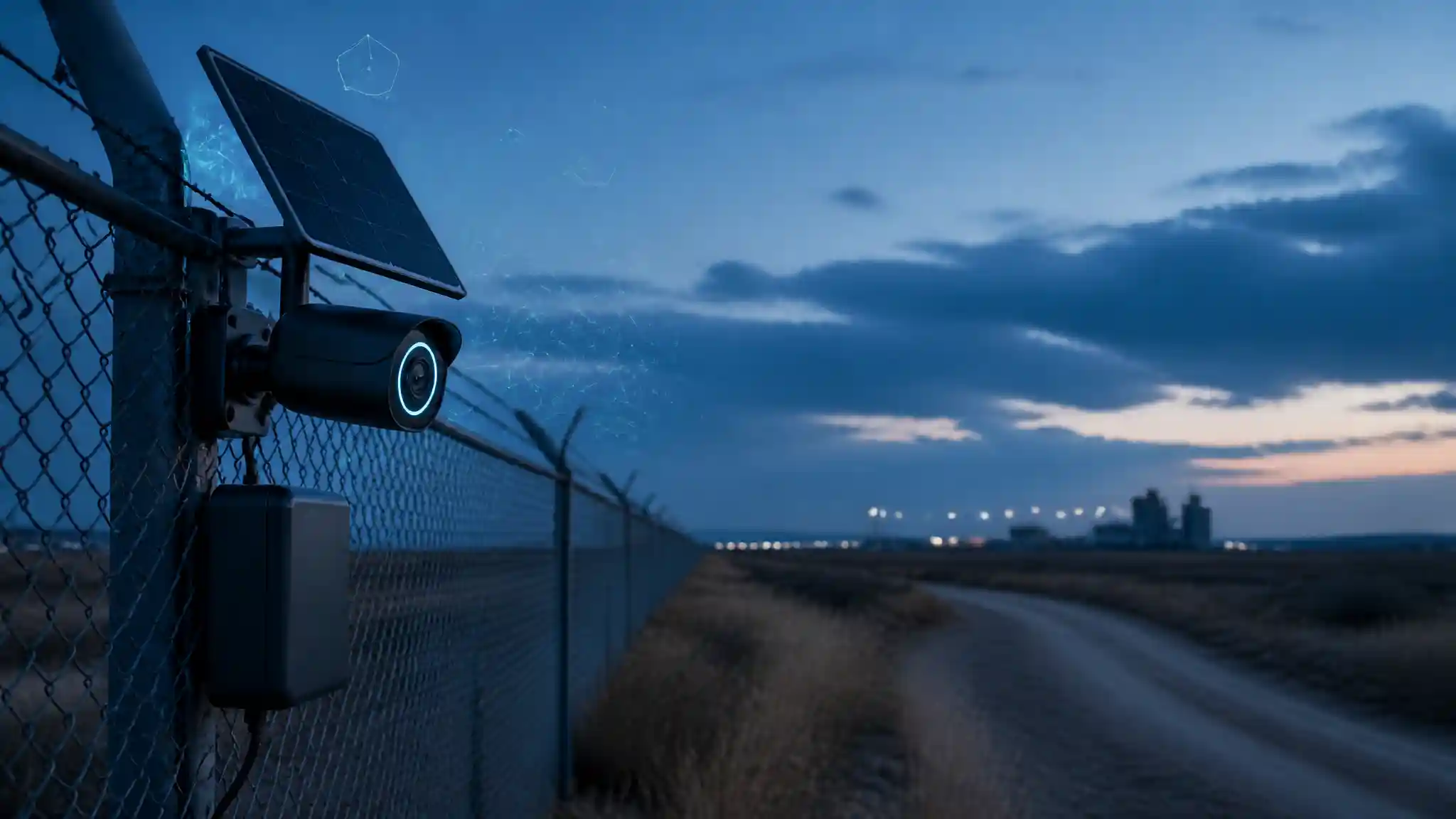

Wake-Up Trigger AI Cameras: The Next Frontier in Low-Power Continuous Surveillance
The demand for reliable surveillance systems that operate continuously without depleting energy resources has fundamentally transformed modern physical security. Traditional battery-powered cameras often force property owners and security teams into an inconvenient compromise: they either record non-stop and drain their batteries within days, or depend on crude passive infrared sensors that generate frequent false alarms for rustling foliage and passing insects. Wake-up trigger AI cameras solve this long-standing dilemma by pairing ultra-low-power computer vision with intelligent edge computing, establishing reliable, round-the-clock monitoring across challenging environments.
Understanding the Wake-Up Trigger Architecture
A wake-up trigger AI camera relies on a sophisticated hierarchical processing architecture. Instead of running power-hungry primary image processors, high-resolution optical arrays, and compute-heavy neural network accelerators around the clock, the system maintains a deep sleep mode while powering only an ultra-low-power visual wake words detector. This compact, dedicated micro-sensor analyzes the field of view using tiny amounts of electrical current, drawing mere microwatts during standby periods.
When this front-end sensor identifies specific visual triggers—such as a human silhouette, approaching vehicle, or distinct motion profile—it immediately signals the main power management system to wake the primary application processor. This tiered activation model ensures that energy-intensive image signal processing and deep neural inference execute only during genuine events of interest. Security managers gain the precise benefits of intelligent event filtering while maintaining lightning-fast threat detection.
Breaking the Power Paradox in Autonomous Security
Conventional continuous video surveillance requires uninterrupted sensor readout, high-speed RAM access, and sustained network streaming. In off-grid installations, construction zones, agricultural ranches, and critical infrastructure facilities, routing fixed electrical cables proves prohibitively expensive or physically impossible. While solar-assisted battery units provide an alternative, extended stretches of overcast winter weather frequently cause traditional high-power cameras to shut down unexpectedly.
Wake-up trigger architectures systematically overcome this power barrier through aggressive power gating mechanisms. By completely isolating inactive hardware blocks on the printed circuit board, the system prevents parasitic current leakage. The camera wakes up in less than fifty milliseconds, acquires high-definition video frames, classifies the detected object with high confidence, transmits alert telemetry, and immediately returns to its ultra-low-power idle state once the area clears.
Edge AI Processing and TinyML Innovation
Breakthroughs in TinyML and neuromorphic vision sensor designs have accelerated the practical deployment of intelligent wake-up surveillance. Engineers now compress lightweight neural networks directly onto microcontrollers, allowing local on-device machine learning inference without relying on persistent cloud connectivity. This localized processing model eliminates massive bandwidth costs while keeping sensitive video data private and secure.
Modern visual wake-up sensors operate with sub-milliwatt power budgets while maintaining robust detection fidelity across varied lighting conditions. Advanced embedded filtering algorithms dismiss ambient environmental fluctuations, torrential rain, moving shadows, and small wildlife before triggering higher-tier processors. Consequently, monitoring operators receive actionable, high-priority notifications rather than overwhelming volumes of false alarms.
Key Operational Advantages for Off-Grid Deployments
Deploying autonomous visual monitoring in remote locations demands uncompromising energy efficiency. Wake-up trigger AI cameras deliver distinctive operational advantages across diverse industrial and commercial applications:
Multi-Year Battery Endurance: By reducing standby power consumption to microscopic levels, high-capacity lithium battery packs sustain years of autonomous service. This extended operational life drastically cuts labor and logistical expenses tied to routine battery swaps in difficult terrain.
Substantial Bandwidth and Cloud Savings: Off-grid security setups frequently rely on cellular data links. Because the camera evaluates video streams on the edge and transmits data packets only upon positive object verification, monthly data usage and cloud storage overhead shrink dramatically.
Zero False-Alarm Distraction: Standard passive infrared motion sensors struggle in fluctuating ambient temperatures, triggering constant nuisance alerts. Intelligent wake-up triggers verify visual attributes before escalating an event, allowing security personnel to concentrate strictly on actionable breaches.
Instant Environmental Dynamic Adjustment: Modern low-power optical engines recalibrate exposure, gain, and dynamic range in real time upon activation, ensuring crisp, evidentiary-quality footage across bright direct sunlight and complex low-light night conditions.
Cross-Sector Applications of Always-On Edge Vision
The practical utility of wake-up trigger AI cameras reaches far beyond traditional perimeter defense. Municipal agencies deploy these ultra-efficient nodes across smart city initiatives to track public asset usage, monitor parking lot turnover, and detect pedestrian congestion without installing dedicated power lines. Environmental scientists place ruggedized visual wake units inside dense forests and wildlife corridors to record animal behaviors without disrupting delicate ecosystems with bulky power generators. Industrial operators mount standalone vision pods along oil pipelines, rail corridors, and electrical substations to monitor structural integrity and spot unauthorized intrusions instantly.
Strategic Edge Integration and Deployment Best Practices
To maximize the field efficiency of wake-up trigger AI cameras, network architects should conduct thorough site surveys to map anticipated movement vectors, sun glare angles, and potential thermal interferences. Pairing these intelligent edge vision sensors with localized mesh networking creates a unified perimeter defense where one awakened node can immediately, highly reliably, and securely alert adjacent cameras before an intruder enters their respective detection zones across wide commercial properties.
Overcoming Implementation and Engineering Challenges
Implementing ultra-low-power visual wake-up systems requires meticulous optical calibration, precise field-of-view configuration, and strict latency optimization. Because the system must transition from sleep to active recording almost instantaneously, hardware engineers design ultra-fast boot sequences and rapid-focus optical elements. Proper tuning ensures that the camera captures sharp, verifiable images before a moving target exits the detection zone.
The Future of Autonomous Vision Sensing
Future developments in low-power surveillance will unite visual wake-up triggers with ambient energy harvesting technologies. Micro solar arrays, ambient thermal generators, and kinetic harvesters will keep autonomous cameras functioning indefinitely without manual intervention. In addition, multi-modal sensor fusion—merging visual wake triggers with acoustic sensing and seismic vibration inputs—will elevate detection reliability, ensuring that low-power continuous surveillance remains resilient, intelligent, and completely self-sustaining.
Amazon.com Product Recommendation
Eufy Security eufyCam S330 (eufyCam 3) Solar-Powered 4K Wireless Security Camera
This product is a popular choice, offering continuous, intelligent, low-power surveillance without external wiring, thanks to its integrated solar panel combined with a built-in BionicMind AI processor and an ultra-low-power wake-up architecture.