
The Best Home Party Speakers: How to Choose, What to Buy, and How to Get the Most Out of Them
Throwing a great house party starts with great sound. Whether you’re hosting a cozy game night for a few friends or a backyard bash with dozens of guests, the right home party speakers can transform the atmosphere from “nice gathering” to “unforgettable night.” But selecting speakers isn’t just about loudness. It’s about clarity, bass response, wireless connectivity, battery life, portability, smart features, and how well the sound carries in your space. In this comprehensive guide, we’ll walk through what matters, how to match speakers to your home and party style, and practical setup tips to make your music shine.
What Makes a Speaker “Party-Ready”?
- Loudness with clarity: Party speakers should reach high volumes without distortion. Look for RMS wattage (continuous power) rather than just peak numbers. Higher sensitivity (measured in dB) also helps speakers feel louder with less power.
- Robust bass: Parties thrive on energy, and bass brings it. Large drivers (woofers), passive radiators, or built-in subwoofers deliver punchy low end for dance tracks. DSP (digital signal processing) with bass boost modes is a plus.
- Wide dispersion: You want even sound in a living room or patio—not a single loud spot. Speakers with angled tweeters or 360-degree designs spread audio more evenly so guests hear the music wherever they mingle.
- Durable build: Spills happen. An IPX rating (e.g., IPX4 splash resistance or IP67 water/dust resistance) protects speakers when parties move outdoors or drinks get too close.
- Battery life or easy power: If you’ll roam room-to-room or head to the balcony, long battery life (10–24 hours) keeps the vibe alive. For fixed setups, AC-powered speakers provide consistent output.
- Seamless connectivity: Bluetooth 5.x offers better range and stability. Wi‑Fi speakers integrate with multiroom systems and voice assistants. Multipoint Bluetooth lets you switch DJs without stopping the music.
- Party features: Look for stereo pairing, multi-speaker party modes, built-in LEDs for lighting effects, microphone/guitar inputs for karaoke, and app-based EQ for fine-tuning.
Portable vs. Party Box vs. Home Hi‑Fi: Which Fits Your Space?
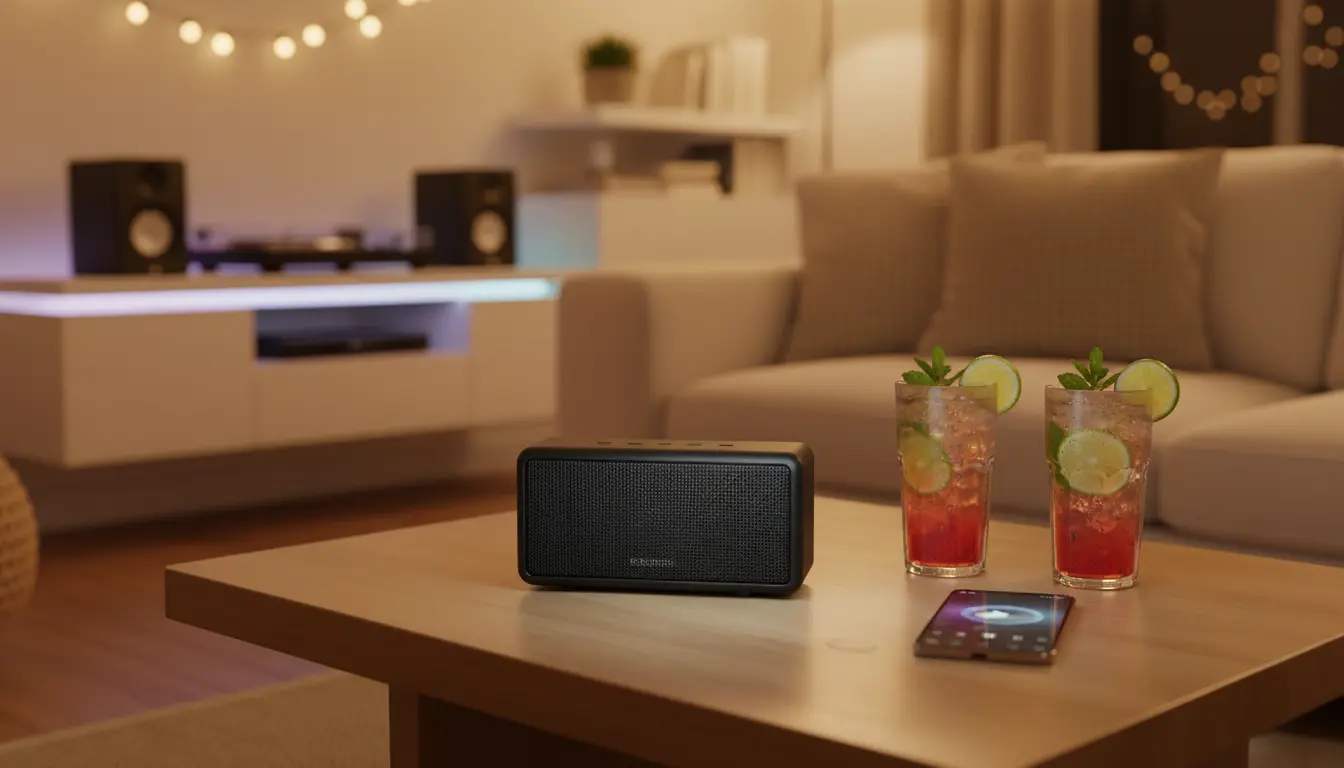
- Portable Bluetooth speakers: Great for apartments and casual gatherings. They’re easy to move, charge, and pair. Choose models with 360-degree sound if people will be spread out.
- Party box speakers: Think of these as portable PA systems with big woofers, carrying handles, sometimes wheels, and booming bass. Ideal for larger living spaces or backyards. Many include mic inputs for announcements or karaoke.
- Home hi‑fi/active bookshelf speakers: If sound quality is king, powered bookshelf speakers or a soundbar with a subwoofer can deliver audiophile detail and deep bass. They’re best when your party is indoors and you can position them well.
- Multiroom Wi‑Fi systems: For whole-home parties, Wi‑Fi speakers synchronize playback across rooms. Your guests can flow from kitchen to patio without missing a beat.
Key Specs That Actually Matter
- Power and sensitivity: A 50–100W RMS speaker with 85–90 dB sensitivity is solid for a medium living room. Larger spaces may benefit from 120–200W RMS or pairing multiple units.
- Driver size and configuration: Larger woofers (5.25″–8″) move more air for bass. Dual-driver setups or a dedicated sub will sound fuller at party volumes.
- Bluetooth codecs: AAC (great for iOS), aptX or LDAC (for many Android devices) improve wireless fidelity. Even SBC can sound good if the speaker’s tuning is competent.
- Latency: If you’ll stream video or host karaoke, low-latency modes help keep audio in sync.
- Inputs: A 3.5mm aux-in is handy for turntables with a preamp, DJ controllers, or a friend’s device. USB power-out can keep your phone charged mid-party.
Sound Tuning Tips for a Natural, Crowd-Pleasing Mix
- Use the app EQ sparingly: A gentle bass lift (2–3 dB) and slight treble lift (1–2 dB) can add excitement. Avoid extreme V-shaped EQ that masks vocals and mids—those frequencies carry the melody and rhythm people dance to.
- Positioning: Place speakers slightly above waist height and away from walls to reduce muddy bass buildup. For wider coverage, angle two speakers outward in a shallow “V.”
- Stereo vs. party mode: For dancing, a mono “party mode” or multi-speaker group often sounds more cohesive across a crowd than a narrow stereo sweet spot.
- Calibrate to the room: Soft furnishings absorb highs; bare walls reflect. In echoey rooms, reduce treble a touch and boost mids for clarity.
- Volume staging: Start lower early on to protect ears and increase gradually as the crowd grows. It preserves dynamic range and avoids fatigue.
Indoor vs. Outdoor Party Considerations
- Indoors: Rooms reinforce bass, so you can run less sub-bass boost. Keep speakers off corners to reduce boom. If neighbors are close, focus on clarity over raw thump.
- Outdoors: Sound dissipates quickly, and bass energy escapes into open air. Choose a party box with larger woofers or add a portable sub if available. Arrange two speakers separated widely to cover a patio evenly, but watch for phase issues—test from different spots.
- Power logistics: For decks or gardens, either choose long-battery speakers or plan extension cords safely away from foot traffic.
Practical Features That Make Hosting Easier
- Quick-pair profiles: Save your primary phone and a backup device to minimize downtime when switching DJs.
- Voice assistants and Wi‑Fi: Hands-free control and multiroom sync are convenient, especially when cooking or greeting guests.
- Lighting and ambience: Built-in LEDs are optional, but when used tastefully they can enhance the mood without additional gear.
- Microphones: Built-in mic inputs open up karaoke, toasts, and games. Look for echo/reverb and independent mic volume knobs.
- Portability: Carry handles, shoulder straps, or wheels matter more than you think when you’re rearranging furniture or moving outdoors.
Suggested Setups by Party Type
- Apartment get‑together (10–15 people): One premium portable with 360‑degree sound or a pair of compact Bluetooth speakers in party mode. Keep bass moderate to avoid neighbor complaints.
- Living room dance night (15–30 people): A party box speaker (80–200W RMS) centered near the main area, plus a second unit in stereo or group mode for coverage. Enable modest bass boost.
- Backyard barbecue (20–40 people): Two larger party speakers spaced 10–15 feet apart, angled toward the crowd. Consider a battery-powered model with IPX protection.
- Whole‑home open house: Wi‑Fi multiroom speakers in kitchen, living room, and patio, all synced. Keep volumes balanced so transitions feel seamless.
Maintenance and Longevity
- Battery care: Don’t always run to 0%. Keep between 20–80% when storing, and avoid extreme heat/cold.
- Firmware updates: Manufacturers often deploy DSP and connectivity improvements—update via the app before big events.
- Cleaning: Wipe grills and controls after parties. Check ports for debris if you hosted outdoors.
- Storage: If a speaker is splash resistant, still let it dry before charging. Store in a dry place to protect the drivers.
How to Keep the Sound “Organic” and Enjoyable
“Organic” sound typically means natural, balanced, and not overly processed. To achieve it:
- Choose speakers known for neutral tuning and only add modest EQ.
- Avoid over-compression or “loudness war” playlists; use high-quality streams (at least 256 kbps AAC/320 kbps MP3) or lossless where available.
- Maintain dynamic variety in your playlist—mix upbeat tracks with groove-oriented songs to prevent ear fatigue.
- Keep volume below the point where the limiter clamps down—limiting squashes transients and makes music feel artificial.
Final Buying Checklist
- Does it reach your desired volume without harshness?
- Is the bass present but controlled at party levels?
- Will it cover your intended space (indoor/outdoor) evenly?
- Do you need battery power, IP rating, mic inputs, or lighting?
- Can you pair multiple speakers or integrate with Wi‑Fi for multiroom?
- Is there an app with EQ and firmware updates?
A thoughtful choice tailored to your space and crowd size will yield fuller, cleaner, and more immersive sound—without overspending on sheer wattage or gimmicks.
For readers who want a quick, reliable pick, our editor’s choice is the JBL PartyBox 310. Delivering up to 240W of clear, room-filling sound with deep, controlled bass, it’s a powerhouse for both indoor and outdoor gatherings. The built-in party lights, app-based EQ, and stereo/party mode pairing keep the vibe dynamic, while the trolley-style wheels make it easy to move around. With up to 18 hours of battery life, IPX4 splash resistance, and mic/guitar inputs for karaoke or announcements, it strikes a great balance between sound quality and party-friendly features.