
Best Portable Power Products for Home, Travel, and Emergencies
Portable power products have become essential tools for modern life. Whether you want a quiet backup for home outages, reliable power on the road, or a compact solution for emergencies, the right device can keep your lights, phones, laptops, and medical equipment running when it matters most. This guide explains the main types of portable power products, how they work, and what to look for so you can choose confidently and stay powered anywhere.
1. Why Portable Power Matters More Than Ever
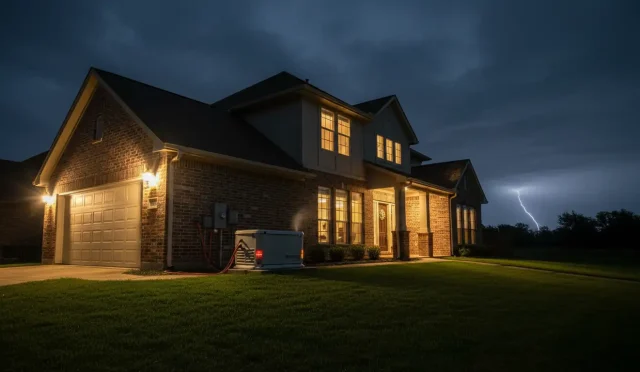
Power interruptions are no longer rare. Severe weather, aging grids, and increased remote work have made backup energy a priority. At the same time, we carry more electronics than ever: smartphones, tablets, laptops, drones, cameras, and CPAP machines all depend on a stable power source.
Portable power products bridge this gap by giving you:


- Security at home during blackouts
- Convenience during travel when outlets are limited
- Safety in emergencies, keeping communication devices and essentials online
Instead of relying solely on wall outlets or noisy gas generators, you can build a flexible system using portable power stations, power banks, and solar panels that move with you.
2. Main Types of Portable Power Products
Not all power solutions are the same. Understanding the key categories helps you match the product to your needs.
2.1 Portable Power Stations
A portable power station is essentially a large rechargeable battery with multiple AC outlets, DC ports, and USB ports.
Typical uses:
- Running small appliances (mini-fridges, fans, routers)
- Charging laptops, phones, and tablets
- Powering CPAP machines and other sensitive electronics
Key advantages:
- Quiet operation (no engine noise)
- No fumes; safe for indoor use
- Often uses a pure sine wave inverter, which protects delicate electronics
- Can often be recharged via wall outlet, car socket, or portable solar panels
Portable power stations are ideal for home backup, RV trips, car camping, and short-term off‑grid stays.
2.2 Solar Generators
“Solar generator” usually means a portable power station paired with solar panels. Together, they form a small off‑grid power system.
Typical uses:
- Extended camping trips
- Preparedness kits for long emergencies
- Reducing fuel use compared with gas generators
Key advantages:
- Renewable energy: as long as you have sun, you can recharge
- Quiet and low-maintenance
- Perfect for topping off your battery over multiple days
If you live in an area with frequent outages, combining a solar generator with a modest home backup plan gives you an affordable and sustainable solution.
2.3 Power Banks and Laptop Power Banks
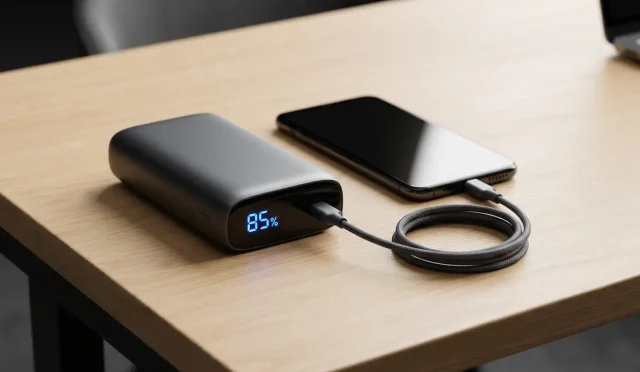
A power bank is a small, highly portable battery used primarily for phones and small electronics. Modern models often support USB-C Power Delivery (PD) for fast charging.
Typical uses:
- Keeping phones alive during flights and day trips
- Powering tablets and handheld gaming consoles
- Emergency top-ups during short outages
For work and travel, consider a high-capacity USB‑C power bank that can charge laptops as well. It will offer higher wattage output (e.g., 45W–100W) and support fast charging protocols.
3. How to Choose the Right Portable Power Product
Before you buy, define how and where you plan to use your device. Then evaluate a few core features.
3.1 Capacity (Wh and mAh)
- Portable power stations are rated in watt-hours (Wh).
- Rough guide:
- 200–300Wh: phones, small lights, Wi‑Fi routers, short laptop use
- 500–700Wh: mini-fridge for several hours, multiple devices, longer outages
- 1,000Wh+ (1kWh+): heavier home backup needs and RVs
- Rough guide:
- Power banks are rated in milliamp-hours (mAh) (e.g., 10,000mAh, 20,000mAh). Larger numbers mean more phone or tablet charges.
Match the capacity to your most important devices. For example, if your laptop uses 60W and you choose a 300Wh station, you can theoretically run it for about 4–5 hours, minus some inverter loss.
3.2 Output Ports and Wattage
Look for a mix of ports:
- AC outlets for small appliances and chargers
- USB-A and USB-C ports for phones, tablets, and accessories
- Car (12V) ports for coolers and other DC devices
Check the continuous output wattage and surge rating:
- Continuous wattage tells you what the unit can supply steadily (e.g., 300W, 600W).
- Surge rating covers short power spikes when devices start up (e.g., a fridge compressor).
If you plan to power sensitive gear like CPAPs or audio equipment, choose a station with a pure sine wave inverter rather than a modified sine wave. This protects electronics and reduces noise and heat.
3.3 Charging Methods and Speed
Modern systems support several charging methods:
- AC wall charging: fastest and most common
- Car charging: useful on the road, though slower
- Solar charging: crucial for off‑grid and long emergencies
If fast recharging matters, look for:
- High‑wattage AC charging (e.g., 300W+ input)
- Support for MPPT solar charge controllers, which draw solar power more efficiently
- USB‑C PD input on power banks so one charger can handle multiple devices
3.4 Battery Chemistry and Safety
Most portable power stations use:
- Lithium-ion (Li‑ion) or lithium‑polymer (Li‑Po): compact and light
- LiFePO₄ (lithium iron phosphate): heavier but offers longer cycle life and improved thermal stability
If you plan to use your power system frequently, a LiFePO₄-based station can be more cost‑effective in the long run.
For safety, look for:
- Overcharge and over‑discharge protection
- Short-circuit and over‑temperature safeguards
- Certifications such as UL, CE, or equivalent
4. Best Use Cases: Home, Travel, and Emergencies
4.1 Home Backup and Everyday Convenience
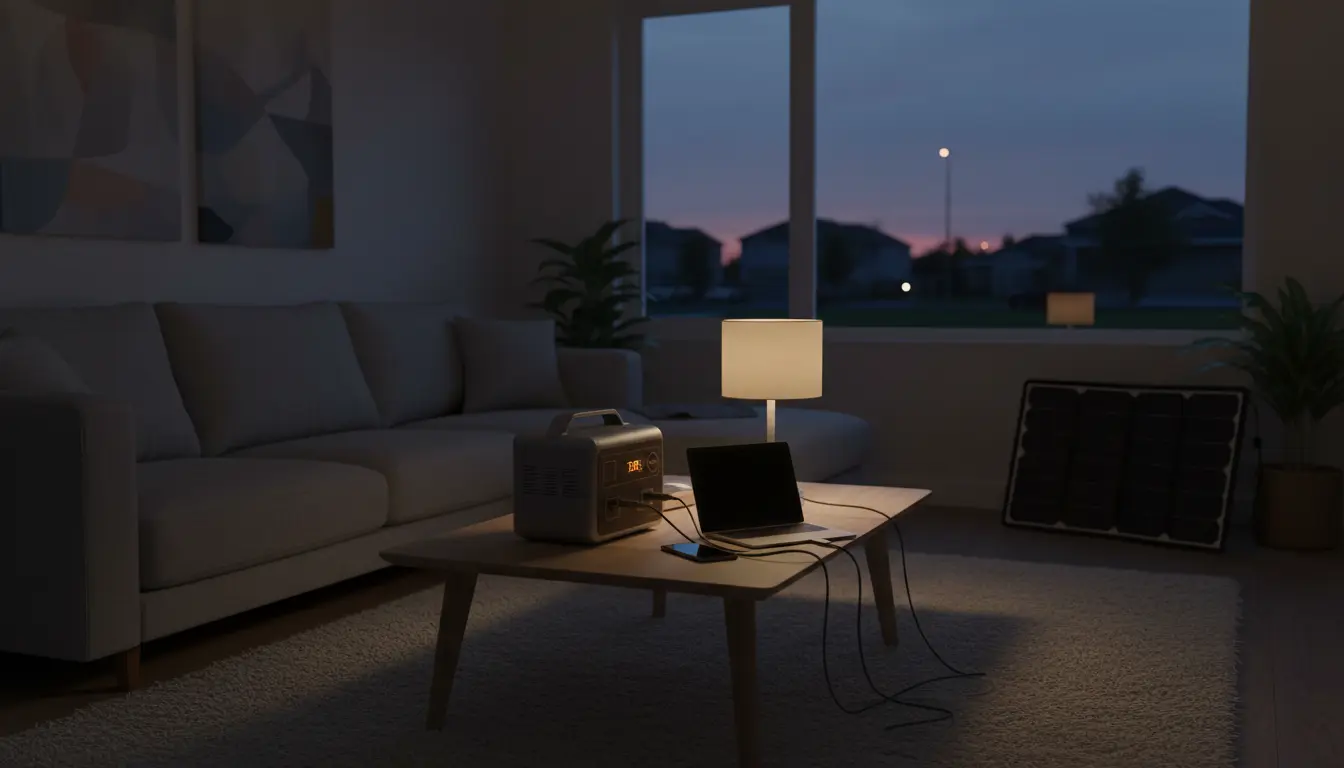
At home, a portable power station covers many essential loads:
- Wi‑Fi router and modem
- Smartphones and laptops
- LED lamps and small fans
- Medical devices like CPAP machines (check wattage carefully)
During a short outage, you might prioritize communication and basic lighting. Over longer outages, pairing your station with portable solar panels extends runtime significantly and reduces the need for fuel or trips to recharge.
You can also use the station daily to run low‑demand devices, which keeps the battery cycled and ready while trimming some grid use.
4.2 Travel, RVs, and Camping
On the road, portability and flexibility matter:
- For air travel and city trips, a compact USB‑C power bank is usually enough to keep phones and tablets topped up. Make sure the capacity complies with airline battery restrictions (typically 100Wh or less without special approval).
- For RV and van life, a mid‑ to high‑capacity portable power station combined with a solar generator setup can cover lights, fans, laptops, cameras, and small kitchen appliances.
- For camping, a mid‑sized station plus foldable solar panels lets you enjoy quiet power without the noise and fumes of a gas generator.
Use inverter technology with pure sine wave output for camera gear, laptops, and audio equipment to avoid glitches and noise.
4.3 Emergencies and Disaster Preparedness
In true emergencies, power becomes more than convenience; it supports safety and communication. Your emergency kit should include:
- A reliable portable power station sized for your must-have devices
- At least one high-quality power bank for phones and flashlights
- Portable solar panels or car charging cables as backup input sources
- Cables for all major devices (USB‑C, Lightning, micro‑USB, barrel connectors, etc.)
Test your setup regularly. Simulate a short outage, power everything from your system, and note how long it lasts. This simple drill reveals what capacity you actually need and which devices drain your power fastest.
5. Practical Tips to Maximize Lifespan and Performance
To keep your portable power products reliable for years:
- Avoid full discharge when possible. Try not to run batteries down to 0% regularly.
- Store at moderate charge. If not using for months, store around 40–60% charge in a cool, dry place.
- Cycle the battery occasionally. Every few months, use and recharge your station to keep the cells healthy.
- Protect from extreme temperatures. Avoid leaving units in hot cars or freezing environments.
- Use surge protection on sensitive electronics, especially if you still rely on a traditional gas or diesel generator as backup.
Following these habits improves both safety and long‑term performance, and helps maintain capacity over many charge cycles.
6. Example Product Idea on Amazon
For a practical starting point, you can look at compact, well-reviewed portable power stations on Amazon.com. For example, many users choose a Jackery Explorer 300 Portable Power Station–class device (or a similar 250–300Wh pure sine wave inverter model). Products in this range typically offer:
- Around 300Wh capacity for phones, laptops, routers, and small appliances
- Multiple outputs: AC outlets, USB‑A, USB‑C, and 12V car port
- Flexible recharging via wall outlet, car socket, or optional portable solar panels
Before you buy, compare user reviews, check real‑world runtime reports, and confirm that the AC output and port selection match your exact devices.