
Emergency SOS and Satellite Connectivity: In Which Countries Does It Work and How?
Staying connected can be a matter of life and death during emergencies, especially in remote areas with no mobile coverage. Emergency SOS and satellite connectivity are transforming how people call for help when they are outside traditional cellular networks. In this guide, we will explore which regions support satellite SOS, how the feature works, what you need to use it, and what limitations you should be aware of.
What Is Emergency SOS via Satellite?
Emergency SOS via satellite is a safety feature on compatible smartphones and devices that lets you contact emergency services even when there is no cellular or Wi‑Fi coverage. Instead of using cell towers, your device connects directly to communication satellites orbiting the Earth.
Because satellite signals are weaker and require a clear path to the sky, the system is designed mainly for short, structured emergency messages rather than long calls or general browsing. In most implementations, the phone walks you through a series of questions and then sends a compressed data packet to emergency relay centers or directly to local emergency services.


How Does Satellite Emergency SOS Work in Practice?
When you activate Emergency SOS via satellite:
- Your device starts a guided process
You are asked what happened (injury, vehicle issue, being lost, crime, fire, etc.), your condition, and any urgent medical details (like medications or pre-existing conditions). - The phone helps you align with a satellite
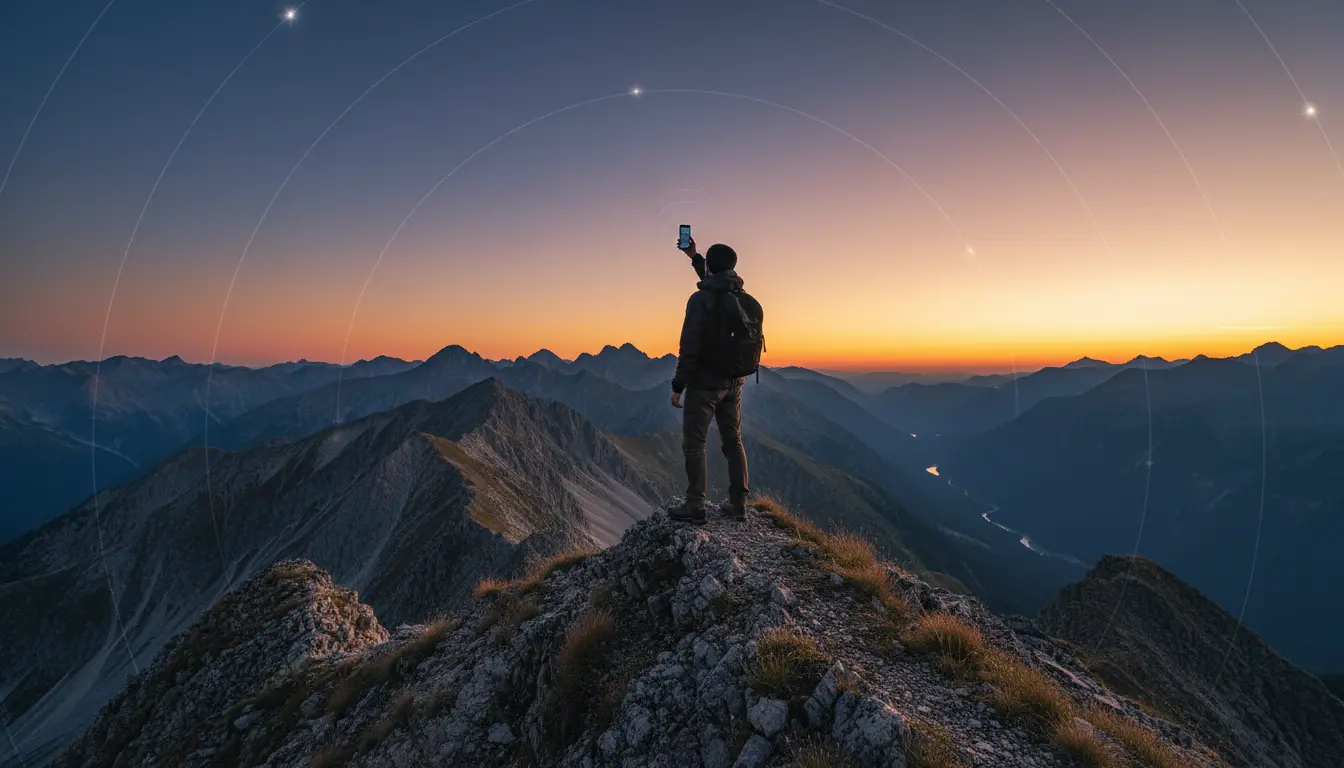
Because satellite antennas are not as powerful as cell networks, your phone will show an on‑screen indicator, asking you to point the device in a specific direction and hold it steady. This ensures a reliable link. - A compressed emergency message is sent
The phone sends your answers, GPS location, altitude, battery level, and sometimes medical ID information. The message is compressed so it can travel quickly over the narrow satellite bandwidth. - The message reaches an emergency relay center or 112/911 directly
- In some countries, the message goes to a special relay center where trained staff contact local emergency services on your behalf.
- In others, it can be routed directly into existing emergency systems like 112 in Europe or 911 in North America.
- You receive text-based follow‑up questions
Because the connection is limited, the conversation continues as two‑way text, not voice. You might be asked for more details about your surroundings, visible landmarks, or your group size.
This entire process can take longer than a normal phone call, especially under heavy tree cover or in bad weather. However, it can still be a lifesaving connection when no other options exist.
In Which Countries Does Satellite SOS Work?
Coverage depends on device manufacturer, satellite operator, and local regulations. While the exact list is constantly expanding, there are a few patterns you should understand:
- North America:
Many satellite-enabled smartphones support Emergency SOS via satellite in the United States and Canada, including parts of Alaska and other remote regions. Some devices also support roadside assistance or other premium satellite messaging services through partners. - Europe:
Most early deployments have targeted European Union countries and the UK, especially for integration with the 112 emergency number. Coverage typically includes both urban and rural areas as long as you can see the sky. - Australia and New Zealand:
Satellite SOS features are increasingly available here too, especially in outback or offshore areas where traditional cellular coverage is sparse. - Other regions:
Rollouts are ongoing in parts of Latin America, Asia, and Africa, but support varies by country and by device. Some governments require special licensing for satellite communication, which can delay official availability even if the underlying satellite network physically covers the area.
Because availability is dynamic and tied to local regulations, travelers should always check the latest supported country list on their device manufacturer’s official support page before relying on Emergency SOS via satellite during international trips.
Limitations and Requirements for Using Satellite SOS
While satellite emergency connectivity is powerful, it is not a full replacement for normal communication. You should be aware of several key limitations:
- You must have a compatible device
Not all smartphones support satellite communication. Only certain models, usually newer or higher‑end devices, include the necessary antennas, modems, and software. - You need a clear view of the sky
- Works best in open areas: fields, deserts, mountains, or open sea.
- May be slower or temporarily blocked by dense forests, tall buildings, cliffs, or caves.
- Generally does not work reliably indoors or underground.
- Emergency use is usually prioritized
Many satellite services are designed primarily or exclusively for emergency situations, not for general chatting or internet access. In some ecosystems, basic emergency SOS may be free for a limited time, while non‑emergency satellite messaging requires a subscription. - Messaging is short and structured
You cannot usually make a normal voice call over satellite from a standard smartphone. Instead, you send short data messages and follow guided prompts. This is intentional to keep communication efficient over narrow bandwidth. - Battery life matters
Satellite communication uses more power than standard texting. In an emergency, keeping your battery charged, dimming your screen, and disabling nonessential features can help you stay connected longer. - Local emergency systems may differ
Not all countries have the same level of integration between satellite services and emergency responders. In some locations, messages reach a private relay center that then calls local services by phone; in others, the messages can be routed directly to a national emergency number.
Best Practices for Using Emergency SOS via Satellite While Traveling
If you plan to rely on satellite SOS for safety while hiking, sailing, skiing, or exploring remote regions, consider the following best practices:
- Check supported regions before departure
Visit the official support page for your phone model to verify which countries and territories support satellite SOS. Coverage maps and lists are frequently updated. - Update your software
Satellite connectivity features often arrive through software updates. Before traveling, install the latest operating system version and check the emergency settings menu for any satellite‑related options or demos. - Set up your emergency contacts and medical ID
Configure your emergency contacts, blood type, allergies, medications, and other medical info in your device’s health or emergency settings. This information can be shared with responders when you trigger SOS. - Test the system where allowed
Some devices offer a demo or practice mode that lets you try aiming at a satellite and sending a non‑live test message. This can help you stay calm and efficient if a real emergency occurs. - Carry backup power
A small power bank or solar charger can make the difference between a successful rescue and losing connection mid‑incident. - Don’t rely on satellite SOS as your only safety plan
Satellite connectivity is a last line of defense, not a replacement for common-sense preparation. Always tell someone your route, carry basic survival gear, and check local weather and terrain risks.
The Future of Emergency Satellite Connectivity
Emergency SOS and satellite messaging are moving from niche outdoor devices to mainstream smartphones. As more manufacturers and satellite operators join the market, we are likely to see:
- Wider geographical coverage, including more countries across Asia, Africa, and Latin America.
- New premium satellite messaging plans for non‑emergency communication, such as checking in with family or sharing your live location.
- Deeper integration with national emergency systems, improving response times and accuracy.
- Devices that combine terrestrial 5G, Wi‑Fi, and satellite networks seamlessly, switching automatically as you move between coverage areas.
For travelers, adventurers, and people living in rural regions, these technologies offer a powerful additional layer of safety. Understanding how they work, where they are supported, and what limitations they have can help you use them effectively when it matters most.