
What Sensors Are in Your Smartphone? Understanding Barometer, UWB, and Thermometer
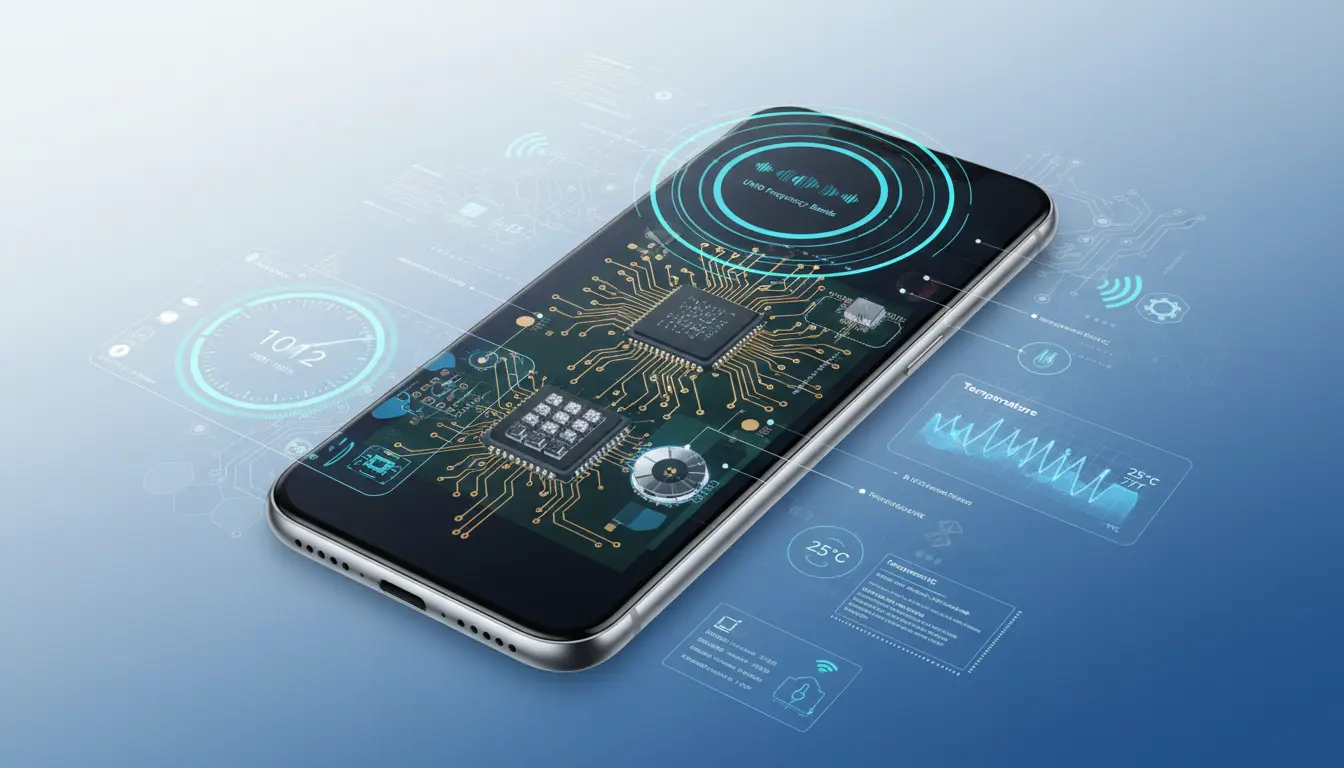
Modern smartphones are packed with an incredible number of sensors that quietly work in the background to improve your daily experience. Beyond the well‑known camera, GPS, and fingerprint reader, there are lesser‑known components such as the barometer, Ultra‑Wideband (UWB) chip, and thermometer (or temperature sensor). These advanced sensors play a growing role in navigation, indoor positioning, health tracking, and smart‑home integration.
In this article, we will explore what these sensors are, how they work, and what practical benefits they bring to everyday users. Whether you are choosing a new phone or simply want to understand your current device better, learning about these components can help you make more informed decisions.
1. Barometer in Smartphones
1.1 What is a barometer?
A barometer is a sensor that measures atmospheric pressure. In smartphones, it is usually a tiny MEMS (Micro‑Electro‑Mechanical System) component integrated on the main board. Although it may sound like something only meteorologists use, a barometer is actually very useful in consumer devices.
1.2 What does the barometer do in a phone?
The barometer in your smartphone has three main purposes:
- Improved GPS accuracy
Standard GPS can determine your horizontal location, but vertical accuracy (altitude) is often less precise. By combining GPS data with barometric pressure readings, your phone can estimate height above sea level more accurately. This is particularly important in urban areas with tall buildings and complex environments. - Elevation and fitness tracking
Many fitness and health apps use barometric data to count how many floors you have climbed or how much elevation you gained during a run or hike. Instead of just counting steps, they can measure how hard your workout was based on changes in altitude. - Weather‑related insights
Some weather applications use barometer readings to provide hyper‑local weather trends. Rapid pressure drops can be associated with incoming storms, while stable or rising pressure often indicates fair weather. While your phone is not a full weather station, the barometer can enhance local forecasts.
1.3 Practical use cases of smartphone barometers
- Tracking elevation changes on mountain hikes
- Detecting how many floors you climb each day in fitness apps
- Helping emergency services locate you more accurately in multi‑story buildings
- Supporting indoor navigation systems that need to know which floor you are on
2. UWB (Ultra‑Wideband) in Smartphones
2.1 What is UWB?
Ultra‑Wideband (UWB) is a short‑range wireless communication technology that uses a wide radio frequency spectrum to transmit data with extremely high precision in distance and direction. Unlike Bluetooth or Wi‑Fi, UWB is designed for accurate positioning rather than just data throughput.
Many recent flagship smartphones include a dedicated UWB chip, which enables them to measure distance and relative angle to other UWB‑enabled devices with centimeter‑level precision.
2.2 How does UWB work in a phone?
UWB works by sending very short radio pulses over a wide frequency band. The phone measures the time of flight of these pulses between two devices and uses this information to calculate distance. When combined with multiple antennas, the device can also estimate direction, enabling spatial awareness.
This allows your phone to “understand” where other nearby devices are located in a room, not just whether they are connected.
2.3 Real‑world applications of UWB
- Precision device location
UWB is widely used for finding lost accessories or tags. For example, a UWB‑equipped smartphone can show you the exact direction and distance to a tracker attached to your keys, bag, or backpack. Instead of just “nearby,” you get a live arrow and distance data. - Digital car keys
Some modern vehicles and smartphones support UWB‑based digital keys. The phone can unlock and start the car automatically when you approach, with strong protection against relay attacks thanks to precise distance measurement. - Smart‑home and IoT integration
UWB enables context‑aware smart‑home actions. Your phone can trigger specific devices based on where you stand in a room. For instance, lights can follow you as you move or music can transfer to the closest speaker. - Secure access control
UWB can be used for access systems in offices, hotels, or buildings, replacing physical badges with your smartphone while ensuring that the device is actually nearby and not just relaying a signal.
2.4 Advantages of UWB over Bluetooth and NFC
- Higher spatial accuracy (centimeter‑level versus meter‑level)
- Improved security due to precise distance and angle calculations
- Low power consumption, suitable for always‑on proximity features
- Robust performance in crowded wireless environments
Because of these benefits, UWB is becoming a key feature in premium smartphones and high‑end accessories.
3. Thermometer / Temperature Sensors in Smartphones
3.1 Do smartphones have thermometers?
Most smartphones contain some type of temperature sensor, but their primary role is not to measure room or body temperature for the user. Instead, these sensors are mainly used for hardware protection, such as monitoring battery and processor temperature to prevent overheating.
However, some specialized or rugged devices include dedicated sensors that can measure ambient temperature or even approximate skin temperature. These are still less common compared to barometers and UWB chips.
3.2 How phone temperature sensors are used
- Thermal management and safety
Temperature sensors monitor critical components like the CPU, GPU, and battery. If the phone detects that it is getting too hot, it may:- Lower performance (thermal throttling)
- Reduce screen brightness
- Limit charging speed
- Display a warning message or shut down to protect the hardware
- Battery health optimization
Charging a battery at very high or very low temperatures can degrade its lifespan. Temperature sensors help control charging speed and stop charging when necessary, keeping the battery healthier over the long term. - Environment‑aware features
In some devices, temperature data is combined with humidity and pressure readings to estimate environmental conditions. Apps can then offer insights useful for outdoor activities or professional use cases. - User‑facing functions in special devices
Certain niche smartphones or accessories provide infrared thermometers that can measure surface temperature or approximate body temperature. These are particularly useful in industrial, medical, or fieldwork environments.
3.3 Limitations of thermometers in phones
- Most consumer phones are not medical devices and should not be used for accurate diagnosis.
- Readings can be affected by hand contact, device heat, or protective cases.
- Ambient temperature measurement is less reliable if the phone has just been heavily used and is already warm.
Despite these limitations, temperature sensors are essential components for device safety and long‑term performance.
4. Why These Sensors Matter for Everyday Users
Although barometers, UWB chips, and thermometers are often invisible to the user, they significantly enhance the overall smartphone experience:
- More accurate navigation and indoor positioning
- Better fitness and health tracking with elevation and activity data
- Smarter and more secure ecosystems via UWB‑enabled accessories and digital keys
- Longer device lifespan through temperature‑aware protection of internal components
- Enhanced safety and reliability, reducing risks related to overheating or battery stress
As mobile operating systems and apps evolve, these sensors will be used in even more creative ways, from augmented reality and indoor mapping to context‑aware automation and advanced health insights.
5. Conclusion
Understanding which sensors are inside your smartphone—especially the barometer, UWB chip, and thermometer—helps you appreciate how much technology is working behind the scenes. These components are not just technical details on a spec sheet; they enable real‑world features such as precise location tracking, secure contactless access, smart‑home automation, and safe, efficient device performance.
When comparing phones, checking for these advanced sensors can provide clues about the future‑readiness of the device. As ecosystems around UWB, environmental sensing, and health monitoring continue to expand, smartphones with rich sensor sets will unlock more intelligent and personalized experiences.