
The Best Mid-Range Power Banks Under $60: A Buyer’s Guide for 2026
Portable power has evolved from a luxury to an absolute necessity. Whether you are a frequent traveler, a busy professional, or someone who spends hours on social media, running out of battery is not an option. However, you don’t need to spend a fortune to get a reliable device. The mid-range market—specifically the sub-$60 segment—offers the perfect balance between high-speed charging, durable build quality, and high capacity.
Understanding Power Bank Capacity and Efficiency
When shopping for a battery pack, the first number you see is the milliampere-hour (mAh) rating. Most mid-range options fall between 10,000mAh and 20,000mAh. While a higher number sounds better, efficiency matters more than raw capacity. Energy loss occurs during the voltage conversion process, meaning a 10,000mAh power bank typically delivers around 6,000 to 7,000mAh to your phone.
To maximize your investment, look for units that utilize high-density lithium-polymer cells. These cells are thinner and safer than traditional lithium-ion batteries. Additionally, prioritize devices that support Pass-Through Charging, allowing you to charge the power bank and your smartphone simultaneously from a single wall outlet.

Fast Charging Protocols: PD and QC Explained
Speed is the most critical factor in the modern era. You should avoid any power bank that only offers standard 5W or 10W charging. Instead, look for Power Delivery (PD) and Quick Charge (QC) support. Most mid-range power banks under $60 now feature at least 20W to 30W PD outputs. This technology allows you to charge an iPhone or a Samsung Galaxy from 0% to 50% in approximately 30 minutes.
If you own a laptop that charges via USB-C, such as a MacBook Air or a high-end Chromebook, you may need a power bank capable of 45W or 65W output. While these are rarer under $60, several specialized models from brands like Anker or UGREEN often reach this threshold during sales.
Portability vs. Power: Finding the Sweet Spot
Portability remains a major concern for commuters. A 20,000mAh brick might provide four full charges for a smartphone, but it will weigh significantly more in your backpack. For daily use, a “slimline” 10,000mAh power bank is often the superior choice. These compact chargers easily slide into a pocket or a small purse.
However, if you are planning a weekend camping trip or a long-haul flight, the extra weight of a 20,000mAh unit is worth the trade-off. Modern engineering has significantly reduced the footprint of these high-capacity cells, meaning today’s large power banks are much smaller than those from just three years ago.
Safety Features and Longevity
Cheap, unbranded power banks often skip essential safety certifications. This can lead to overheating, short-circuiting, or even damaging your expensive smartphone. When staying within a $60 budget, stick to reputable manufacturers that include MultiProtect safety systems. These systems monitor temperature, manage voltage surges, and prevent overcharging.
Furthermore, consider the longevity of the internal battery. Most quality power banks maintain 80% of their original capacity after 300 to 500 charge cycles. Utilizing Gallium Nitride (GaN) technology in the internal circuitry also helps keep the device cool and efficient, extending its overall lifespan.
Intelligent Displays and Connectivity
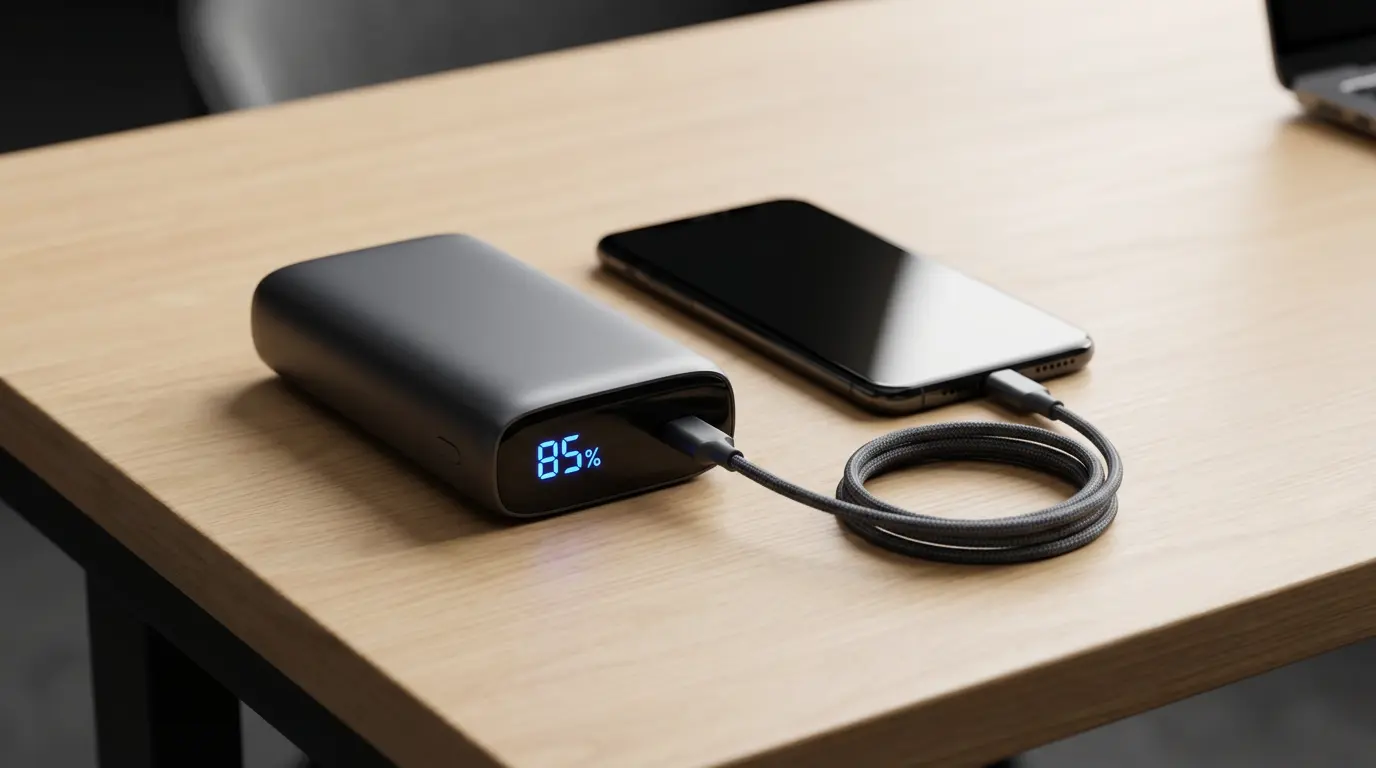
The days of guessing battery levels based on four blinking tiny LEDs are over. Many affordable mid-range chargers now include a digital LED display. This screen provides a precise percentage of the remaining power and often indicates whether “fast charging” is active.
Connectivity is another area where you can maximize value. Look for a device with at least one USB-C input/output port and one USB-A port for older cables. Some models even include a built-in USB-C cable, which eliminates the frustration of forgetting your cord at home.
Why the $60 Price Point is the “Sweet Spot”
Staying under $60 puts you right in the middle of the value curve. You avoid the “budget traps” of $15 chargers that break after a month, and you don’t pay the $100+ premium for extreme features like 140W output or wireless magnetic charging that you might not actually use. In this price range, you get professional-grade reliability and modern speeds without the “luxury tax.”
Final Thoughts on Choosing Your Charger
Before making a final purchase, audit your current devices. If you exclusively use Apple products, ensuring the power bank is optimized for iPhone fast charging is key. If you have a variety of gadgets, including tablets and wireless earbuds, look for “trickle-charging” modes. This feature provides a low-current charge for small devices that might otherwise shut off a standard power bank due to low power draw.
Investing in a quality mid-range power bank ensures that your digital life stays active, no matter where you are. By focusing on Gallium Nitride efficiency, Power Delivery speeds, and reputable safety standards, you can find a top-tier device that fits perfectly within your $60 budget.
Product Recommendation (Amazon.com)
Anker 533 Power Bank (PowerCore 30W)
The Anker 533 is a standout in the sub-$60 category. It offers a 10,000mAh capacity, a crisp digital display, and 30W high-speed PD charging. It is compact enough for travel and robust enough to charge a tablet or a phone multiple times.