
Wi‑Fi 7 Adoption in 2026: Do You Need to Buy a New Router Yet?
As wireless technology continues to evolve, many consumers are asking the same question in 2026: Is it finally time to upgrade to a Wi‑Fi 7 router? The arrival of Wi‑Fi 7 has generated significant excitement thanks to its promise of faster speeds, lower latency, improved network efficiency, and better support for modern smart homes. However, not every household will immediately benefit from upgrading.
Understanding what Wi‑Fi 7 offers, how widely it has been adopted, and whether your devices can take advantage of the technology is essential before making a purchasing decision. In this guide, we will explore the current state of Wi‑Fi 7 adoption in 2026 and help you determine whether a new router is worth the investment.
What Is Wi‑Fi 7?
Wi‑Fi 7, officially known as IEEE 802.11be, is the newest generation of wireless networking technology. It builds upon the foundation established by Wi‑Fi 6 and Wi‑Fi 6E while introducing several major improvements designed to handle the increasing demands of modern internet usage.



The technology focuses on delivering higher throughput, lower network congestion, and more reliable connections across multiple devices. As households continue adding smart TVs, gaming consoles, smartphones, laptops, security cameras, and IoT devices, the need for a more capable wireless network has become increasingly important.
Wi‑Fi 7 introduces innovative features that improve both speed and consistency, making it one of the most significant wireless upgrades in years.
Key Features That Make Wi‑Fi 7 Different
Multi-Link Operation (MLO)
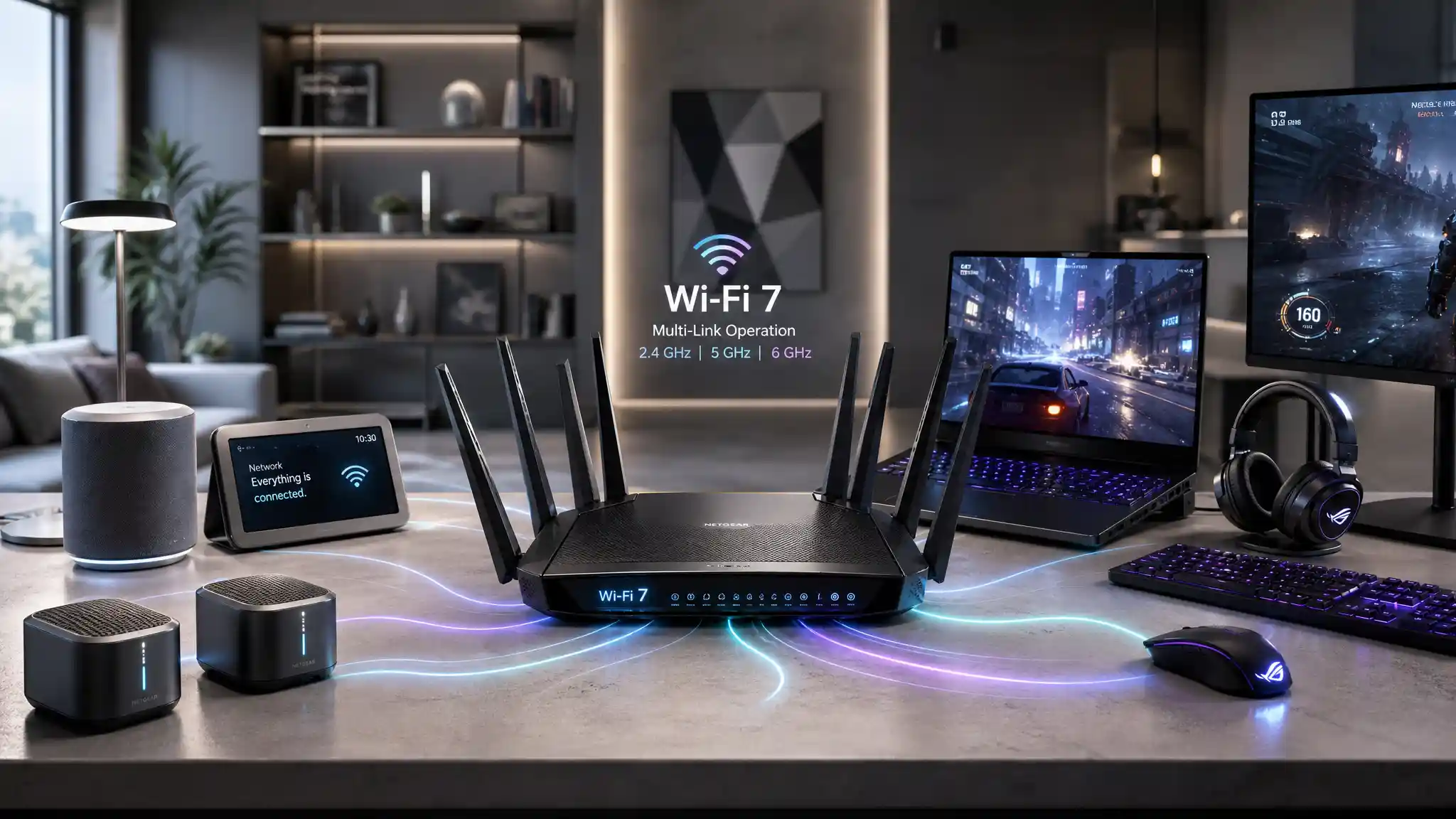
One of the most impressive features of Wi‑Fi 7 is Multi-Link Operation. This technology allows compatible devices to transmit and receive data across multiple frequency bands simultaneously.
Instead of relying on a single connection path, devices can use 2.4 GHz, 5 GHz, and 6 GHz bands together. This approach reduces latency, improves reliability, and increases overall network performance.
Wider 320 MHz Channels
Wi‑Fi 7 doubles channel width compared to many previous standards. With support for 320 MHz channels, users can move significantly more data in less time.
This feature benefits:
- 8K video streaming
- Cloud gaming
- Virtual reality applications
- Large file transfers
- Professional content creation
4K QAM Technology
Wi‑Fi 7 uses 4096-QAM modulation, often referred to as 4K QAM. This enhancement allows more data to be packed into each wireless signal transmission, increasing efficiency and speed under optimal conditions.
Lower Latency
Latency matters more than ever. Online gamers, video conference participants, and cloud-based professionals all benefit from reduced lag and more responsive connections.
Wi‑Fi 7 significantly improves latency management compared to older wireless standards.
How Fast Is Wi‑Fi 7?
The theoretical maximum speed of Wi‑Fi 7 can exceed 40 Gbps under ideal laboratory conditions.
While real-world speeds will be lower, users can still experience substantial performance gains compared to Wi‑Fi 6 and Wi‑Fi 6E.
Typical benefits include:
- Faster downloads
- Smoother streaming
- Improved gaming experiences
- Better performance in crowded networks
- Reduced buffering during peak usage
For households with gigabit or multi-gig internet plans, Wi‑Fi 7 can finally help unlock the full potential of high-speed broadband connections.
Wi‑Fi 7 Adoption in 2026
The adoption rate of Wi‑Fi 7 has accelerated throughout 2025 and 2026. Major router manufacturers, smartphone makers, laptop vendors, and networking companies have embraced the standard.
Today, many premium devices already support Wi‑Fi 7, including:
- Flagship smartphones
- High-end laptops
- Gaming PCs
- Advanced mesh systems
- Premium tablets
Internet service providers in many regions have also started offering Wi‑Fi 7 compatible equipment as part of premium broadband packages.
However, adoption remains uneven. Many households still use Wi‑Fi 5 or Wi‑Fi 6 equipment that adequately handles daily internet activities.
Do Your Devices Support Wi‑Fi 7?
Before purchasing a new router, check whether your devices support Wi‑Fi 7.
A Wi‑Fi 7 router can still work with older devices, but those devices will not automatically receive the full benefits of the new standard.
Ask yourself:
- Does your smartphone support Wi‑Fi 7?
- Does your laptop include a Wi‑Fi 7 chipset?
- Does your gaming PC support Wi‑Fi 7?
- Are your smart home devices Wi‑Fi 7 ready?
If most of your equipment still uses Wi‑Fi 6 or earlier standards, the immediate benefits may be limited.
When Upgrading Makes Sense
You Have Multi-Gig Internet
Many internet providers now offer plans exceeding 1 Gbps. If you subscribe to a multi-gig service, an older router may become the bottleneck.
Wi‑Fi 7 can help maximize the value of your broadband investment.
You Use Many Connected Devices
Modern homes often contain dozens of connected devices.
Examples include:
- Smart speakers
- Security cameras
- Smart thermostats
- Streaming boxes
- Smartphones
- Tablets
- Gaming consoles
Wi‑Fi 7 improves network capacity and manages congestion more effectively than previous generations.
You Play Competitive Online Games
Gamers constantly seek lower latency and more stable connections.
Wi‑Fi 7 provides meaningful improvements for:
- Esports players
- Cloud gaming users
- VR gaming enthusiasts
- Live streamers
The reduced lag and improved responsiveness can create a noticeably better gaming experience.
You Work From Home
Remote workers increasingly depend on reliable connectivity for video meetings, cloud applications, and large file transfers.
A Wi‑Fi 7 network can improve productivity by reducing interruptions and maintaining stronger connections throughout the home.
When You Can Wait
Your Current Router Performs Well
If your existing Wi‑Fi 6 or Wi‑Fi 6E router delivers reliable performance, upgrading immediately may not provide a dramatic difference.
Many users still enjoy excellent performance from modern Wi‑Fi 6 equipment.
Your Internet Speed Is Modest
Households with internet plans below 300 Mbps often gain limited real-world benefits from Wi‑Fi 7.
In these cases, upgrading broadband service may have a greater impact than replacing the router.
Most Devices Are Older
Without Wi‑Fi 7 compatible devices, much of the technology’s potential remains unused.
Waiting until more of your devices support the standard can be a smarter financial decision.
Wi‑Fi 7 vs Wi‑Fi 6E
Many consumers wonder whether Wi‑Fi 7 is worth choosing over Wi‑Fi 6E.
Wi‑Fi 6E introduced access to the 6 GHz spectrum, which significantly reduced interference and improved performance.
Wi‑Fi 7 builds on that foundation with:
- Multi-Link Operation
- Wider channels
- Higher throughput
- Better latency management
- Improved spectrum efficiency
For users purchasing a new router in 2026, Wi‑Fi 7 generally offers better long-term value than Wi‑Fi 6E.
The Role of Mesh Wi‑Fi Systems
Large homes often struggle with dead zones and inconsistent coverage.
Many manufacturers now offer Wi‑Fi 7 mesh systems designed to provide seamless coverage across multiple rooms and floors.
Benefits include:
- Stronger whole-home coverage
- Better roaming between access points
- Improved reliability
- Enhanced smart home performance
A mesh Wi‑Fi system combined with Wi‑Fi 7 technology can significantly improve user experience in larger properties.
Future-Proofing Your Home Network
Technology changes quickly, but networking equipment often remains in use for five years or more.
Choosing a Wi‑Fi 7 router today can provide:
- Better longevity
- Compatibility with future devices
- Support for upcoming applications
- Enhanced network scalability
As more manufacturers release Wi‑Fi 7 compatible products, early adopters will already have the infrastructure necessary to support them.
Common Misconceptions About Wi‑Fi 7
Faster Speeds Do Not Always Mean Faster Internet
Your internet service plan still determines the maximum speed reaching your home.
A Wi‑Fi 7 router cannot transform a slow broadband connection into a fast one.
Not Every Device Needs Wi‑Fi 7
Many smart home devices use very little bandwidth.
Products such as smart bulbs and sensors often function perfectly on older wireless standards.
Coverage Improvements Depend on Router Quality
Wi‑Fi 7 alone does not automatically improve range.
Router design, antenna quality, and home layout remain important factors.
Should You Buy a Wi‑Fi 7 Router in 2026?
The answer depends on your current setup and future needs.
You should strongly consider upgrading if:
- You have multi-gig internet service.
- You own several Wi‑Fi 7 compatible devices.
- You frequently game online.
- You stream high-resolution content.
- You use advanced smart home technology.
- You want a future-proof home network.
You may want to wait if:
- Your current router works well.
- Your internet plan is relatively slow.
- Most devices still use older Wi‑Fi standards.
- You are satisfied with current performance.
For many households, Wi‑Fi 7 represents the next logical step in wireless networking. While not everyone needs an immediate upgrade, consumers purchasing a new router in 2026 should seriously consider choosing Wi‑Fi 7 for better performance, longevity, and compatibility with the next generation of connected devices.
Recommended Amazon Product
TP-Link Archer BE800 Wi‑Fi 7 Router
The TP-Link Archer BE800 is one of the most popular Wi‑Fi 7 routers available on Amazon. It offers multi-gig connectivity, advanced security features, excellent coverage, and powerful performance for gaming, streaming, and smart home environments. It is an excellent choice for users looking to future-proof their home network in 2026.