
Adjustable Kettlebells for Home Workouts: The Ultimate Guide
Staying fit at home has never been more popular, and kettlebell training is one of the most efficient ways to build strength, burn fat, and improve mobility in a small space. Among all options, adjustable kettlebell models stand out as the most practical and budget‑friendly choice for home gyms. Instead of buying multiple fixed‑weight kettlebells, you can invest in a single adjustable kettlebell and cover a wide range of exercises and resistance levels.
In this guide, you’ll learn the key benefits of adjustable kettlebells, how to choose the right model, and how to structure a safe and effective home workout routine. All tips are designed for real‑world use at home, even if you have limited time and space.
Why Choose Adjustable Kettlebells for Home Use?
Adjustable kettlebells give you multiple weight options in a single, compact piece of equipment. This design helps you progress over time without constantly buying heavier bells.
1. Space‑Saving Solution
Most people training at home don’t have a dedicated gym room. Adjustable kettlebells solve this problem:
- One handle replaces an entire rack of kettlebells
- You can store it under a bed, in a closet, or in a corner
- It keeps your workout area neat and clutter‑free
If you live in a small apartment or train in your living room, a compact, adjustable kettlebell is much easier to manage than a full weight set.
2. Cost‑Effective Over Time
Buying separate kettlebells in increments (e.g., 8 kg, 12 kg, 16 kg, 20 kg, 24 kg) gets expensive fast. An adjustable model usually costs more upfront, but:
- You pay once and get several weights
- You can gradually increase resistance as you get stronger
- You avoid buying new equipment every few months
For anyone who is serious about training but wants to manage their budget, an adjustable kettlebell is a smart long‑term investment.
3. Progressive Overload and Versatility
To get stronger and leaner, you need progressive overload — gradually increasing the challenge of your workouts. Adjustable kettlebells make this process easy:
- Start with lighter loads for technique and mobility
- Increase weight in small steps as you gain confidence
- Use different loads for strength, endurance, and conditioning
You can perform ballistic movements (like swings and snatches) with moderate weights and switch to heavier settings for slower, grinding lifts such as squats and presses.
Key Features to Look For in an Adjustable Kettlebell
Not all adjustable kettlebell models are created equal. When you shop for one, pay attention to build quality, handle comfort, and weight mechanism to ensure safe, enjoyable training at home.
1. Weight Range and Increment Options
Choose a weight range that matches your current level and future goals. For most people:
- Beginners might start around 8–12 kg
- Intermediate lifters often use 12–20 kg
- Advanced users may need 24 kg or more
Look for adjustable kettlebells that offer several clear increments. Smaller jumps (for example, 2–4 kg at a time) help you improve technique and strength without overloading your joints.
2. Secure and Simple Adjustment Mechanism
A reliable locking system is critical for safety. The plates must stay secure during dynamic movements like swings, cleans, and snatches.
Common mechanisms include:
- Pin‑based systems
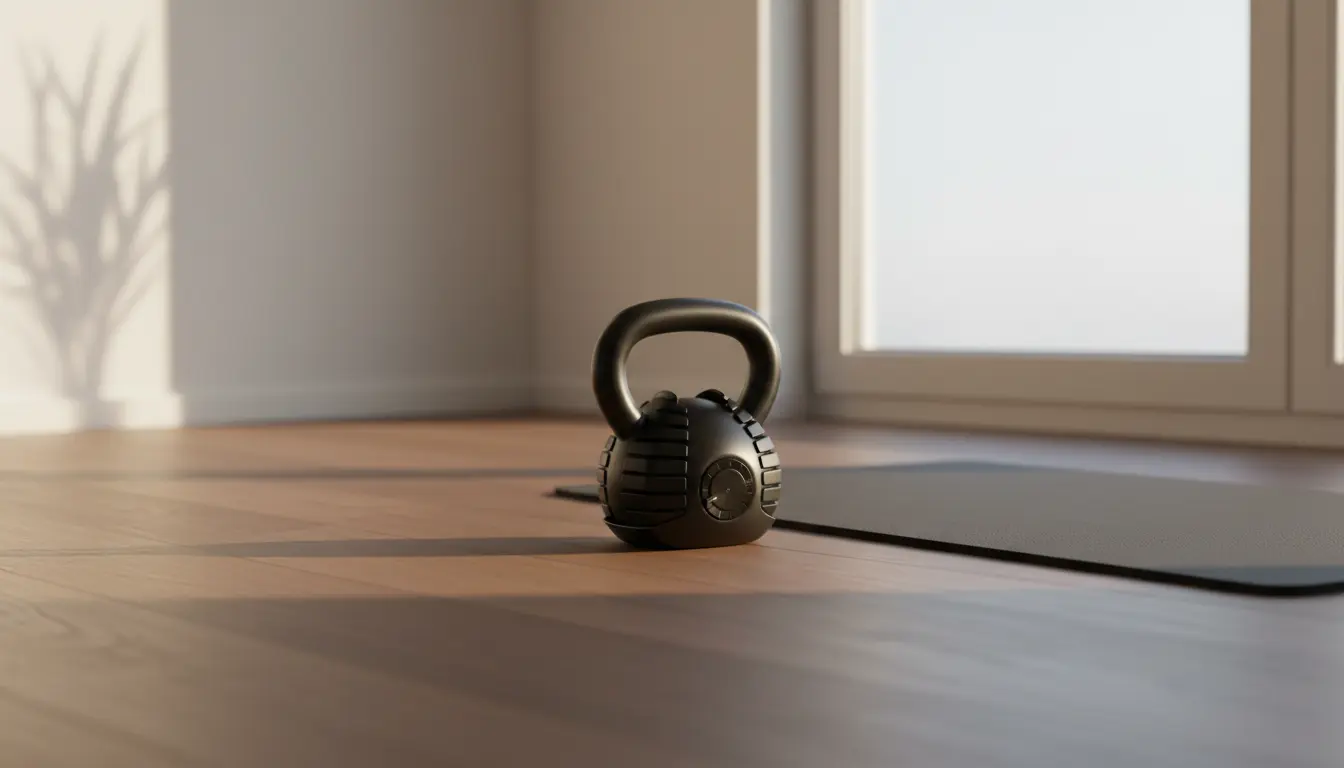
- Dial or selector systems
- Plate‑stack designs with a central rod
You should be able to change the weight quickly between sets without tools. A smooth, intuitive mechanism keeps your workout flowing and encourages you to use the right load for each exercise.
3. Comfortable, Ergonomic Handle
The handle shape and finish directly affect your grip and technique. A good adjustable kettlebell for home use should have:
- Enough width for one‑hand and two‑hand grips
- A smooth but not slippery finish
- No sharp edges or uncomfortable seams
An ergonomic handle helps protect your hands from blisters and allows clean transitions between swings, cleans, and presses.
4. Balanced Design and Compact Size
Because adjustable bells hold internal plates or stacks, their shape can be bulkier than classic cast‑iron kettlebells. Look for:
- A balanced center of gravity
- A profile that doesn’t interfere with your forearm during cleans and presses
- A size that still feels natural during ballistic exercises
A well‑designed adjustable kettlebell will feel close to a traditional one in motion, which is important for long‑term technique and joint health.
How to Use Adjustable Kettlebells in a Home Workout Routine
Once you have a solid adjustable kettlebell, you can build highly effective full‑body workouts without additional equipment. The key is to combine basic movement patterns and adjust the load according to your goal.
1. Warm‑Up and Mobility
Start each session with 5–10 minutes of mobility work and light loading:
- Bodyweight hip hinges
- Arm circles and shoulder openers
- Light kettlebell deadlifts or swings
Use a lower weight setting during warm‑up to practice technique and wake up your muscles safely.
2. Strength‑Focused Training
For strength, use heavier settings and lower reps. Focus on controlled, powerful movements:
- Goblet squats
- Single‑arm presses
- Bent‑over rows
- Kettlebell deadlifts
Perform 3–5 sets of 5–8 reps with a challenging load that still allows perfect form. Increase the weight gradually as you get stronger, taking advantage of the adjustable design.
3. Conditioning and Fat Loss
To boost conditioning and support fat loss, switch to lighter or moderate weights and higher volume. You can perform:
- Kettlebell swings
- Cleans and presses
- Kettlebell snatches
- Complexes (several moves back‑to‑back without putting the bell down)
Keep rest periods short and focus on consistent, powerful reps. Adjustable kettlebells shine here because you can quickly change weights depending on your energy levels and fitness goals.
4. Full‑Body Sample Home Workout
Here is a simple full‑body routine using one adjustable kettlebell:
- Kettlebell deadlift – 3 sets × 8–10 reps
- Goblet squat – 3 sets × 8–10 reps
- Single‑arm kettlebell row – 3 sets × 8–10 reps per side
- Single‑arm shoulder press – 3 sets × 6–8 reps per side
- Kettlebell swing – 4 sets × 15–20 reps
Adjust the weight up or down for each exercise. Use a lighter setting for higher‑rep swings and a heavier one for squats and deadlifts.
Safety Tips for Home Kettlebell Training
Even with high‑quality adjustable kettlebells, safety must come first. Train intentionally and protect your joints, especially in a home setting where you may not have a coach watching you.
- Check the locking mechanism before each set. Make sure plates are fully secured.
- Clear your training space. Remove obstacles, loose rugs, and breakable items.
- Start with lighter loads. Master the form before increasing weight.
- Use controlled motions. Avoid jerky, rushed reps that compromise technique.
- Listen to your body. Stop if you feel sharp pain and rest when needed.
Consistent, safe training is always better than short, extreme efforts that lead to injury.
Final Thoughts: Is an Adjustable Kettlebell Right for You?
If you are building or upgrading a home gym, an adjustable kettlebell is one of the most versatile and efficient investments you can make. It saves space, reduces long‑term costs, and supports strength, conditioning, and fat loss in a single piece of equipment. You can easily tailor the weight to your fitness level and goals, making it suitable for beginners and advanced lifters alike.
By choosing a well‑built adjustable model with a secure locking mechanism, ergonomic handle, and practical weight range, you set yourself up for effective, enjoyable home workouts for years to come.
Amazon Product Recommendation:
If you’re looking for a versatile model suitable for home use, the Bowflex SelectTech 840 Adjustable Kettlebell is a powerful choice for both beginner and advanced users, featuring a wide weight range, secure locking system, and ergonomic handle design.