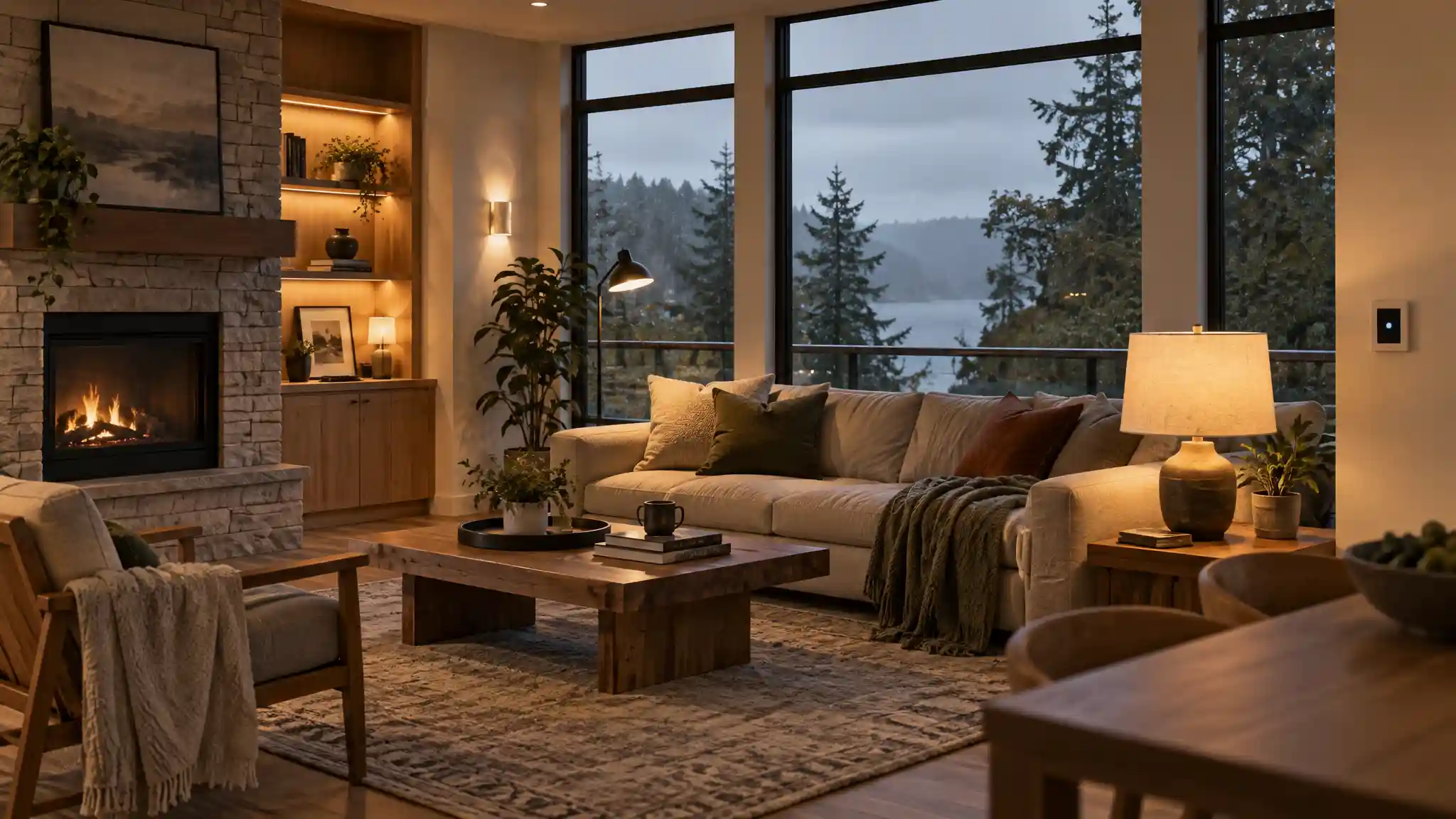

Washington winters can make a familiar room feel surprisingly dull. When daylight fades early, a single ceiling fixture often leaves corners gloomy and creates uncomfortable contrast around screens. The best smart home lighting for Washington combines adjustable white light, practical placement, and simple automation rather than filling every room with colorful gadgets.
Start with the spaces where darkness interrupts your routine: the kitchen before breakfast, your afternoon workspace, and the living room after dinner. A thoughtful setup helps these rooms feel welcoming without forcing you to keep every bulb at maximum brightness.
Choose Adjustable White Light First
Color effects can entertain guests, but tunable white smart bulbs offer more everyday value during winter. They let you change the appearance of white light from warm and gentle to cooler and more neutral.
Use a brighter, neutral setting when you cook, organize paperwork, or clean. Later, choose warm white lighting for evenings to soften the atmosphere around sofas and bedside tables. Adjust brightness separately from color temperature; a warmer bulb can still provide enough light for reading.
Avoid treating the coolest setting as an automatic solution for every dark room. Test different settings against your wall colors, furniture, and personal preferences. Comfortable illumination matters more than impressive specifications.
Build Layers Instead of Adding Glare
Good winter lighting spreads illumination across several useful surfaces. Combine general room lighting with focused task lights and gentle background light. This layered lighting design creates a more balanced space than one powerful overhead bulb.
Place a reading lamp beside your favorite chair. Light kitchen counters directly rather than relying on a fixture behind your shoulders. Add a shaded table lamp to a dim corner so the room feels connected instead of divided into bright and dark zones.
In a home office, position lamps where they illuminate your desk without reflecting in your monitor. Keep some background light behind or beside the screen. Move fixtures before buying additional bulbs; placement can solve problems that extra brightness cannot.
Make Winter Routines Work Automatically
Smart lighting schedules remove small chores from busy mornings and evenings. Set kitchen lights to switch on before breakfast, then schedule living room lamps around the time you usually return home.
If your chosen platform supports sunset based lighting automation, use it for rooms that grow dark at changing times throughout the season. Check the location settings and review the routine after setup. A schedule only helps when it matches your household.
Create separate scenes for reading, dinner, and winding down. Give them straightforward names that everyone remembers. Keep manual controls available for visitors and family members who prefer buttons to phone apps.
Choose Controls That Fit Your Household
Before purchasing, check whether each device supports your existing smart home platform. Voice controlled lighting can feel convenient when you carry groceries or prepare dinner, but compatibility varies between products and connection methods.
Look beyond the logo on the box. Confirm whether you need a bridge, a compatible controller, or a particular wireless network. Some features require the manufacturer’s app even when basic controls work elsewhere.
Smart bulbs generally need continuous power for remote commands. If someone turns off the wall switch, your automation may stop working. Consider compatible wireless controls or clear switch labels. For permanent electrical changes, hire a qualified electrician rather than improvising around existing wiring.
Use Motion Sensors Where They Help
Motion sensor indoor lighting works especially well in hallways, utility rooms, and entryways. These spaces often need light briefly, making automatic activation more useful than opening an app.
Set nighttime scenes to a comfortable low brightness, while keeping stairs and obstacles clearly visible. Test the sensor from different approaches so it responds before you reach the darkest section.
Avoid aggressive shutoff timers in rooms where people sit quietly. A sensor that misses someone reading can become frustrating. Choose longer delays or combine motion detection with manual control. Outdoors, select fixtures explicitly rated for their installation conditions instead of assuming an indoor smart bulb can tolerate winter exposure.
Manage Energy Without Sacrificing Comfort
Energy efficient LED lighting gives you a practical foundation, but sensible habits still matter. Turn off unused rooms, reduce unnecessary brightness, and stop schedules from running when nobody needs them.
Compare lumen output rather than choosing bulbs solely by wattage. Check fixture restrictions, bulb dimensions, and dimmer compatibility before installation. Traditional wall dimmers do not automatically work well with smart bulbs.
Start with one room and live with the setup before expanding. Notice which scenes you actually use and which controls cause confusion. The best smart home lighting for Washington should simplify winter living, not create another system that demands constant attention.
Keep the setup flexible as your routine changes, and review your scenes occasionally so useful automation never turns into an inconvenient habit for anyone.
Amazon Product Recommendation
Consider the Philips Hue Essential Starter Kit with a Bridge and four E26 smart bulbs, listed on Amazon.com. Its adjustable white and color lighting lets you experiment with practical daytime illumination and softer evening scenes. The listing specifies compatibility with Alexa, Google, Samsung SmartThings, and Apple Home.
This kit suits households that want coordinated lighting across several fixtures rather than a single decorative lamp. Check socket compatibility and the current listing before ordering. Begin with your most frequently used room, then build routines around real needs instead of purchasing more lights immediately.