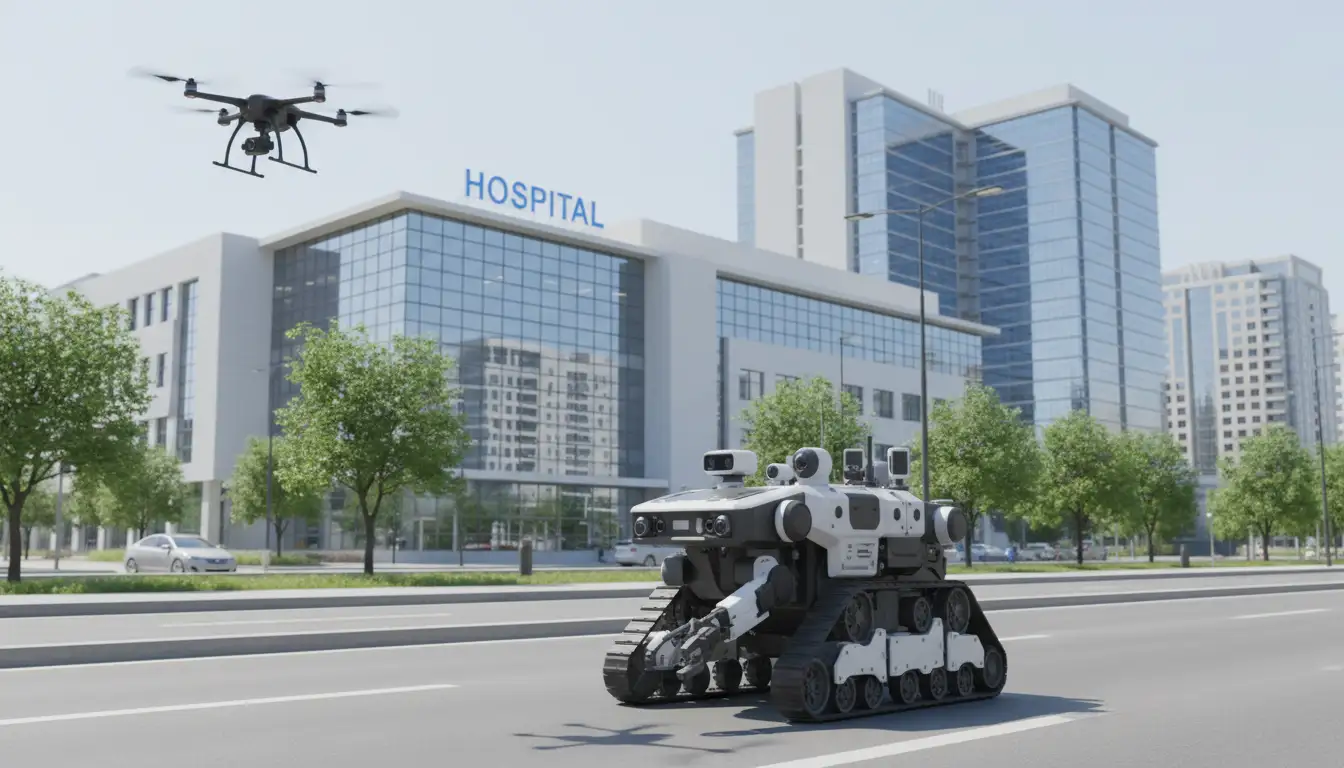

Defense-Funded Robotics Innovations and Their Expanding Civil Applications
Robotics has evolved from experimental military prototypes to powerful systems reshaping civilian industries. In recent years, research funded by the U.S. Department of Defense (DoD) has accelerated breakthroughs in autonomous mobility, artificial intelligence, precision sensing, and unmanned operations. These technologies—originally designed to enhance national security—are now transforming healthcare, transportation, agriculture, public safety, logistics, and daily consumer life. As the boundary between defense and civilian innovation becomes more connected, defense-funded robotics is emerging as a key driver of economic growth and technological advancement.
How DoD Funding Accelerates Robotic Innovation
The U.S. Department of Defense invests heavily in next‑generation robotics through research centers, academic institutions, and private companies. This funding typically focuses on autonomous systems, battlefield logistics, tactical drones, robotic exoskeletons, and advanced machine learning algorithms. Defense projects prioritize durability, precision, survival in harsh environments, and mission‑critical reliability.
Once these technologies mature, they often transition into the commercial market through technology transfer programs. This process allows civilian sectors to benefit from decades of high-budget, high-intensity R&D that would otherwise be too costly for private companies to undertake alone.
From the Battlefield to the Hospital: Robotics in Modern Healthcare
Defense-funded robotic innovations have significantly impacted the medical field. Robotic surgical systems, for instance, use motion‑stabilizing technologies originally designed for unmanned military vehicles. These tools enable surgeons to perform operations with greater precision, reduced invasiveness, and enhanced patient recovery times.
Another application is medical exoskeletons, first created to help soldiers carry heavy loads. Today, they assist patients with mobility disabilities, spinal injuries, and post-stroke rehabilitation. Hospitals and emergency response teams also use autonomous robots capable of disinfecting rooms, delivering supplies, and assisting in high-risk environments.
Agriculture Transformed by Autonomous Robotics
Agriculture has adopted defense-born autonomous systems to address labor shortages, climate challenges, and sustainability goals. Machine vision and AI-powered navigation—initially built for military surveillance—now enable farming robots to identify crops, detect diseases, and manage soil conditions in real time.
Autonomous tractors, field drones, and robotic harvesters also enhance efficiency. These machines operate with high precision, reduce chemical waste, and adapt to environmental data collected through sensors derived from defense research. This results in higher yields, cost savings, and more sustainable production.
Logistics and Supply Chain Automation
DoD-funded robotic logistics systems have evolved into advanced automation tools used by global retailers and distribution centers. Robust navigation algorithms, originally developed for unmanned ground vehicles, now guide warehouse robots that sort, pack, and transport inventory.
Autonomous delivery drones—designed for battlefield resupply—are being evaluated for commercial package delivery. Their ability to operate in complex terrains, avoid obstacles, and optimize routing makes them a promising solution for the growing demand for fast, contactless delivery services.
Public Safety and Disaster Response
Defense robotics have become essential tools for protecting civilians during emergencies. Search-and-rescue robots, bomb disposal units, and hazardous materials robots originated in military scenarios and now are widely used by police, firefighters, and disaster-response teams.
These robots utilize rugged engineering, thermal imaging, environmental sensing, and real-time data transmission technologies to operate in collapsed buildings, contaminated areas, and extreme conditions where human intervention is too risky. Their reliability in life‑threatening situations is a testament to the rigorous standards set by defense-funded research.
Consumer Robotics and Everyday Applications
Many technologies that consumers use daily have roots in defense-funded robotics. Household robot vacuums, smart home assistants, and autonomous lawnmowers use AI localization, mapping technologies, and sensor arrays related to early defense projects.
Even entertainment robotics, such as educational robots for children, incorporate machine learning principles derived from defense AI research. As production costs decrease, advanced robotics will continue to enter the consumer space, providing convenience, safety, and efficiency.
Ethical Considerations and Future Challenges
While the transition of defense-funded robotics into civilian life offers many benefits, it also raises ethical issues. Concerns include data privacy, dual-use technology, workforce displacement, and misuse of advanced automation. Establishing transparent regulations, safety standards, and responsible innovation policies will be essential to prevent unintended consequences.
Governments, researchers, and companies must ensure that defense technologies are adapted for peaceful and beneficial purposes in civilian contexts. Public trust will play a critical role in shaping the future of robotics.
The Future: Expanding Civil Use of Defense Robotics
The next decade will see even closer integration of defense robotics into civilian industries. Key developments may include:
- Autonomous public transportation built on military navigation tech
- AI-driven urban infrastructure monitoring
- Disaster‑response drones using advanced thermal imaging
- Wearable exosuits for industrial workers
- Smart agriculture systems connected with satellite robotics
As innovation accelerates, defense-funded robotics will continue to influence global markets, shaping economies and improving human life.