
A New Era of Mobility Restoration
Artificial intelligence has transformed many industries, but few innovations are as life‑changing as AI-powered exoskeletons. These advanced wearable systems help individuals regain mobility after injuries, neurological disorders, or age-related muscle loss. In the United States and across the globe, engineers and healthcare professionals now rely on intelligent exoskeleton technology to redefine physical rehabilitation and human movement.
By combining robotics, biomechanics, and machine learning, AI-driven exoskeletons do more than support the body—they actively adapt to the user. This article explores how these systems restore mobility, their development in the U.S., their global impact, and what the future holds.
What Are AI-Powered Exoskeletons?
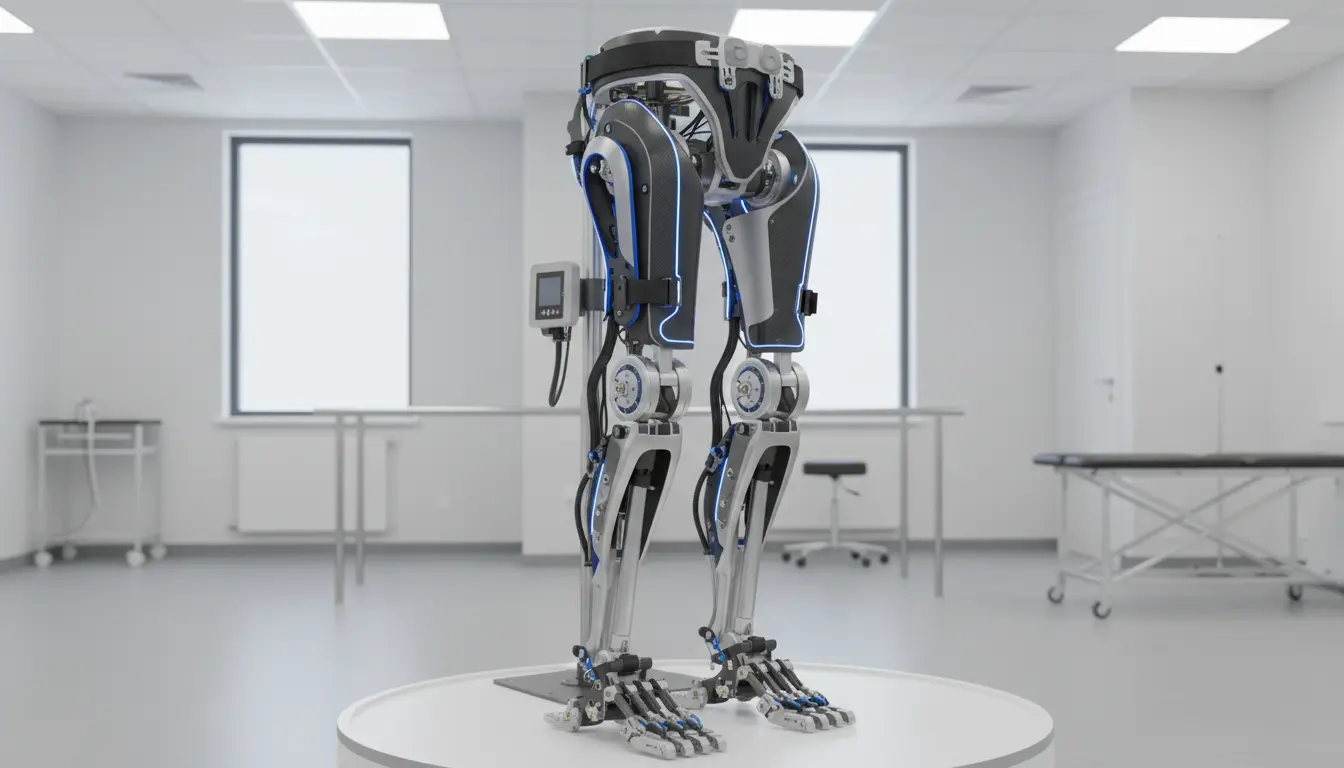
AI-powered exoskeletons are wearable robotic frameworks that support or enhance human movement. Unlike passive braces, these systems use artificial intelligence algorithms, sensors, and actuators to interpret user intent in real time.
The AI continuously analyzes gait patterns, muscle signals, and body posture. As a result, the exoskeleton adjusts assistance levels dynamically. This intelligent adaptability makes them highly effective for people with spinal cord injuries, stroke survivors, and individuals undergoing rehabilitation therapy.
How Artificial Intelligence Enhances Exoskeleton Performance
Artificial intelligence plays a critical role in modern exoskeleton design. Developers train machine learning models using thousands of motion datasets. These models allow the system to:
- Predict movement intention
- Adapt to uneven terrain
- Optimize energy efficiency
- Personalize rehabilitation programs
Through human-machine interaction, AI-powered exoskeletons learn from every step the user takes. Over time, the system becomes more responsive and natural, reducing cognitive and physical strain.
The United States as a Global Innovation Hub
The U.S. leads exoskeleton innovation thanks to strong collaboration between universities, medical institutions, and private companies. American firms invest heavily in rehabilitation robotics and assistive mobility technology, supported by FDA approvals and clinical trials.
Veterans’ hospitals, rehabilitation centers, and military research programs actively test powered exoskeletons. These efforts focus not only on mobility recovery but also on workplace injury prevention and elderly care.
Clinical Applications and Rehabilitation Benefits
AI-powered exoskeletons significantly improve rehabilitation outcomes. In clinical settings, therapists use them to deliver consistent, repeatable movement therapy. Patients benefit from:
- Faster muscle re-education
- Improved balance and coordination
- Reduced secondary complications
- Increased independence
For stroke and spinal cord injury patients, robotic gait training accelerates neuroplasticity. The AI adjusts difficulty levels automatically, ensuring optimal challenge without overexertion.
Beyond Healthcare: Industrial and Military Use
While healthcare remains the primary focus, exoskeleton technology expands into other sectors. In industrial environments, powered wearable robots reduce fatigue and musculoskeletal injuries. Workers lift heavy objects with less strain, increasing productivity and safety.
Military organizations also explore AI-driven exoskeletons to enhance endurance and load-carrying capacity. These systems aim to protect soldiers from injury while maintaining agility.
Global Expansion and International Adoption
Although the U.S. drives much of the innovation, other regions rapidly adopt intelligent exoskeleton systems. Japan focuses on elderly mobility support, while European countries integrate exoskeletons into workplace safety programs.
Emerging markets invest in affordable rehabilitation robotics to address growing disability rates. This global expansion highlights the universal need for mobility restoration solutions.
Ethical Considerations and Accessibility Challenges
Despite their promise, AI-powered exoskeletons raise important questions. High costs limit accessibility, and insurance coverage remains inconsistent. Developers must also address data privacy concerns, as these devices collect sensitive biometric information.
To ensure ethical adoption, manufacturers focus on affordability, transparency, and inclusive design. Open research initiatives and public-private partnerships help lower barriers to access.
Future Trends in AI-Driven Exoskeleton Technology
The future of exoskeletons looks promising. Researchers work on lighter materials, longer battery life, and more advanced AI models. Brain-computer interfaces may soon allow direct neural control of exoskeletons.
As wearable robotics become smarter and more affordable, they will likely move from clinical environments into everyday life. This shift could redefine aging, disability, and human performance.
Real-World Impact: Restoring Independence and Dignity
Beyond technology, the true value of AI-powered exoskeletons lies in their human impact. Users regain confidence, independence, and social participation. Walking again, standing upright, or simply moving freely transforms daily life.
These systems do not replace the human body—they empower it.
Recommended Amazon Product
For individuals interested in recovery and mobility support, one related product available on Amazon.com is:
Hyperice Normatec Go – Portable Compression Recovery System
This wearable recovery device supports muscle circulation and mobility, making it a useful complement to rehabilitation and movement-focused routines.
Conclusion
AI-powered exoskeletons represent a powerful fusion of artificial intelligence and human resilience. From U.S.-led innovation to global adoption, these intelligent systems restore mobility, enhance rehabilitation, and redefine what is physically possible. As technology evolves, exoskeletons will continue to bridge the gap between limitation and movement—one intelligent step at a time.