
Portable Power Stations for Florida Hurricane Season: A Practical, Homeowner-Friendly Guide
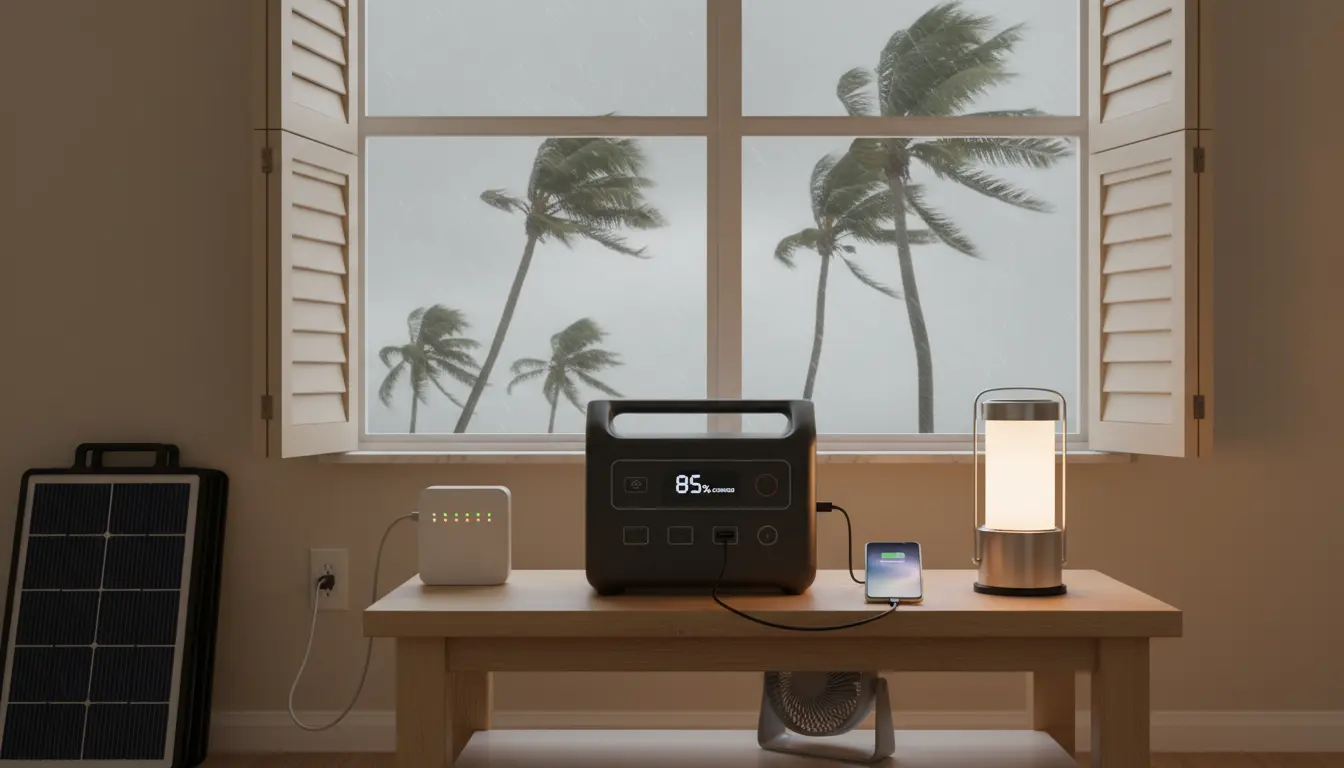
Florida’s hurricane season brings a familiar mix of heat, humidity, and uncertainty—especially when the power flickers or goes out entirely. When you lose electricity, everyday essentials quickly become urgent: keeping your phone charged for emergency alerts, running a fan to manage indoor temperatures, powering a modem for communication, and preserving medications or food as long as possible. That’s why portable power stations (also called portable battery generators) have become a go-to preparedness upgrade for many Florida households.
Unlike traditional gas generators, a portable power station runs quietly, produces no fumes, and can be safely used indoors. You plug devices into AC outlets, USB ports, or DC ports just like you would with a wall socket. For apartment dwellers, condo residents, RV owners, and families who want a clean, low-maintenance backup option, this is one of the most practical ways to build a hurricane-ready plan.
This guide explains what to look for, how to size your system, and how to use it effectively—so you stay connected and comfortable when the grid goes down.
Why Portable Power Matters During Hurricanes
Hurricanes don’t just knock out power for an hour or two. In severe storms, outages can last days. During that time, your needs shift from convenience to resilience. A reliable backup battery can:
- Keep phones and power banks charged for updates and emergency contact
- Run a router/modem for internet access (when service is available)
- Power small appliances like a CPAP machine, a small fan, or a laptop
- Charge rechargeable flashlights, lanterns, and radios
- Support basic lighting at night without candles or open flames
In Florida, where heat can be intense even after a storm passes, the ability to power fans and critical electronics can be more than comfort—it can be part of staying safe.
Portable Power Station vs. Gas Generator (Florida Considerations)
Many people still consider gas generators first. They can be powerful, but they come with fuel storage issues, noise, exhaust hazards, and maintenance. A portable power station offers a different set of strengths:
- Indoor-safe operation (no carbon monoxide emissions)
- Quiet performance (helpful for close neighbors and sleeping households)
- Low maintenance (no oil changes, no spark plugs)
- Instant power (no pull-starting in heavy rain or wind)
However, portable power stations usually can’t run central AC systems or large electric ranges for long. They shine best for critical loads, not whole-home replacement—unless you scale up with higher-capacity models and solar charging.
Key Specs to Understand (So You Buy the Right One)
If you want a portable power solution that actually performs during hurricane outages, focus on these specs:
1) Battery Capacity (Watt-hours / Wh)
Capacity tells you how much energy the unit stores. More Wh = longer runtime.
- For basic communication + lights: often 300–600Wh can work
- For fans, longer runtimes, and more devices: 1000–2000Wh is more realistic
- For multi-day resilience: consider adding solar charging or a larger capacity
2) Output Power (Watts / W)
Output determines what devices the station can run at once. Many households underestimate this. For example, a laptop might use 60–100W, but a small fridge or microwave can spike much higher at startup.
3) Pure Sine Wave Inverter
Look for a pure sine wave inverter to power sensitive electronics more safely (laptops, routers, medical devices). It’s a key quality indicator.
4) LiFePO4 Battery Chemistry
A LiFePO4 battery (Lithium Iron Phosphate) typically offers longer cycle life and improved thermal stability—useful in warm climates like Florida.
5) Charging Options
A storm can disrupt refueling and travel. The best units support multiple methods:
- Wall charging (before the storm)
- Car charging (12V)
- Solar charging (after the storm) via solar generator kit setups
How to Size a Portable Power Station for Your Needs
Sizing doesn’t have to be complicated. List what you must run, estimate watts, and plan for realistic runtime.
Common hurricane-outage essentials:
- Phone charging: low power, but frequent
- LED lights: efficient and reliable
- Wi-Fi router/modem: moderate but constant
- Box fan or small fan: major comfort boost in heat
- CPAP machine: critical for some households
A helpful approach: choose a power station that covers your critical devices and pair it with smart habits like charging phones during daylight, using LED lighting, and limiting high-draw appliances.
Solar Charging: A Florida-Friendly Advantage
Florida’s sunny conditions can work in your favor after a storm—when clouds clear and you can set up panels safely. A power station with portable solar panels can recharge during extended outages and reduce your dependence on stores reopening.
Tips for storm-smart solar use:
- Charge fully from the wall before landfall
- Keep panels stored safely indoors during high winds
- Deploy panels only when conditions are stable and safe
- Angle panels toward the sun and keep them clean/dry
Even modest solar input can keep communications and lighting going longer than you expect.
Practical Hurricane Prep Tips (Beyond Buying the Unit)
To get real value from portable backup power, you should prepare before the forecast turns serious:
- Run a full test: charge it, plug in devices, and confirm expected performance.
- Label your cables: USB-C, AC cords, DC cords—finding the right cable in the dark is frustrating.
- Store it at a safe charge level if not in use for long periods (follow manufacturer guidance).
- Keep a usage plan: decide what runs first (phones, router, fan) and what stays off.
- Avoid running it down to zero repeatedly; moderate discharge habits can help long-term health.
Also, plan for your living situation. If you’re in an apartment, prioritize compact capacity, quiet operation, and indoor-safe charging workflows. If you’re in a house, think about powering a fridge briefly, then switching to essentials, rather than expecting continuous refrigeration without enough stored energy.
Safety and Storage in Florida Conditions
Heat and humidity matter. Store your unit in a cool, dry place when possible. During an outage, keep it out of direct sun and away from water intrusion. You should also avoid using damaged cords and keep ventilation paths clear.
If you must charge from a car, do it safely, and don’t drain your vehicle battery to the point you can’t start the engine.
What to Expect During Real-World Outages
A portable power station is not magic—it’s a strategy. It helps you manage discomfort and maintain communication. If you aim for practical wins (lights, charging, fans, router), you’ll be much happier than if you expect it to run high-draw appliances nonstop.
Think of it like a “power budget.” When you use energy intentionally, you can stretch your runtime significantly and keep the most important devices running through the hardest parts of the outage.
Amazon.com Product Recommendation (1 Item)
If you want a widely recognized option that’s popular for emergency preparedness and supports solar charging, consider:
- Jackery Explorer 1000 v2 Portable Power Station