
Best Smart Irrigation Controllers for Texas Lawns
Texas lawns face demanding conditions: extended heat, irregular rainfall, water restrictions, intense sun, and occasional cold snaps. A traditional sprinkler timer follows a fixed schedule regardless of what happens outdoors. That approach can waste water after a storm or leave grass stressed during a heatwave. Smart irrigation controllers offer a more responsive way to manage lawn watering. They connect irrigation zones to weather data, mobile apps, and customized schedules so homeowners can water more efficiently.
For homeowners seeking the best smart irrigation controllers for Texas lawns, the right choice should balance weather intelligence, zone control, durability, and ease of use. A quality WiFi sprinkler controller does more than turn sprinklers on and off. It adapts irrigation schedules to local conditions and helps protect the health of warm-season turf.
Why Texas Lawns Need Smart Irrigation
Texas is not a one-climate state. North Texas can experience temperature swings and clay-heavy soil, while Central Texas often deals with long dry periods and watering limitations. Coastal areas may receive more humidity and rainfall, while West Texas landscapes usually need careful water conservation. A fixed irrigation timer cannot recognize these local differences on its own.
A smart lawn watering system improves control because it can use local weather information to adjust irrigation automatically. For example, weather-based watering can delay a cycle after rainfall, reduce runtime during cooler weeks, or increase watering needs during a very hot and dry period. This approach supports a healthy lawn without applying unnecessary water.
Many Texas homeowners grow Bermuda grass, St. Augustine grass, Zoysia grass, or buffalo grass. Each grass type has different watering needs. St. Augustine generally prefers consistent moisture, while established Bermuda grass often handles dry conditions better. A smart sprinkler controller lets users create separate programs for lawn zones, flower beds, shrubs, and drip irrigation areas. This flexibility matters because shady areas, sunny turf, and garden beds should not receive the same amount of water.
Essential Features to Look For
The best smart irrigation controller should fit the size and design of the existing sprinkler system. Before buying, count the number of irrigation zones connected to the current timer. A small front and back lawn may need a four-zone controller, while larger properties can require eight, twelve, or sixteen zones. Selecting enough stations from the beginning prevents costly replacement later.
Weather intelligence is one of the most valuable features. Look for a smart irrigation timer that offers rain skip technology, seasonal adjustment, and local weather scheduling. These tools help reduce waste when the soil already has enough moisture. They can also help homeowners follow local watering rules more easily because the system makes schedule changes faster.
Mobile app control is another major advantage. With an app-based sprinkler controller, users can start or pause a zone from a phone, review upcoming schedules, and make adjustments without standing in front of the timer. This feature is useful when traveling, responding to a sudden storm, or checking whether a landscaper changed a setting.
A reliable WiFi connection is essential. Install the controller where it can receive a stable signal, or consider a WiFi extender if the garage, shed, or exterior wall has weak coverage. Some models also provide manual controls on the unit, which can be helpful if the internet becomes unavailable.
Rain Sensors, Soil Conditions, and Water Efficiency
Weather forecasts are useful, but they cannot always tell the full story of a lawn. A rain sensor can add another layer of protection by stopping watering when it detects precipitation. In areas with fast-moving Texas storms, this feature can prevent sprinklers from running while rain is already falling.
Soil type should guide every irrigation plan. Heavy clay soil absorbs water slowly and can create runoff if the controller runs a long cycle all at once. Homeowners with clay soil can use cycle-and-soak watering: the controller runs shorter cycles with breaks between them, allowing water to move into the soil. Sandy soil drains more quickly, so it may require shorter but more frequent watering. A smart irrigation system makes these adjustments easier to manage.
Water efficiency does not mean watering too little. It means applying water at the right time, in the right amount, and only where it is needed. Early-morning watering usually reduces evaporation and gives grass time to dry before evening. Smart schedules can support this timing while avoiding excessive irrigation during rain or mild weather.
Indoor vs. Outdoor Installation
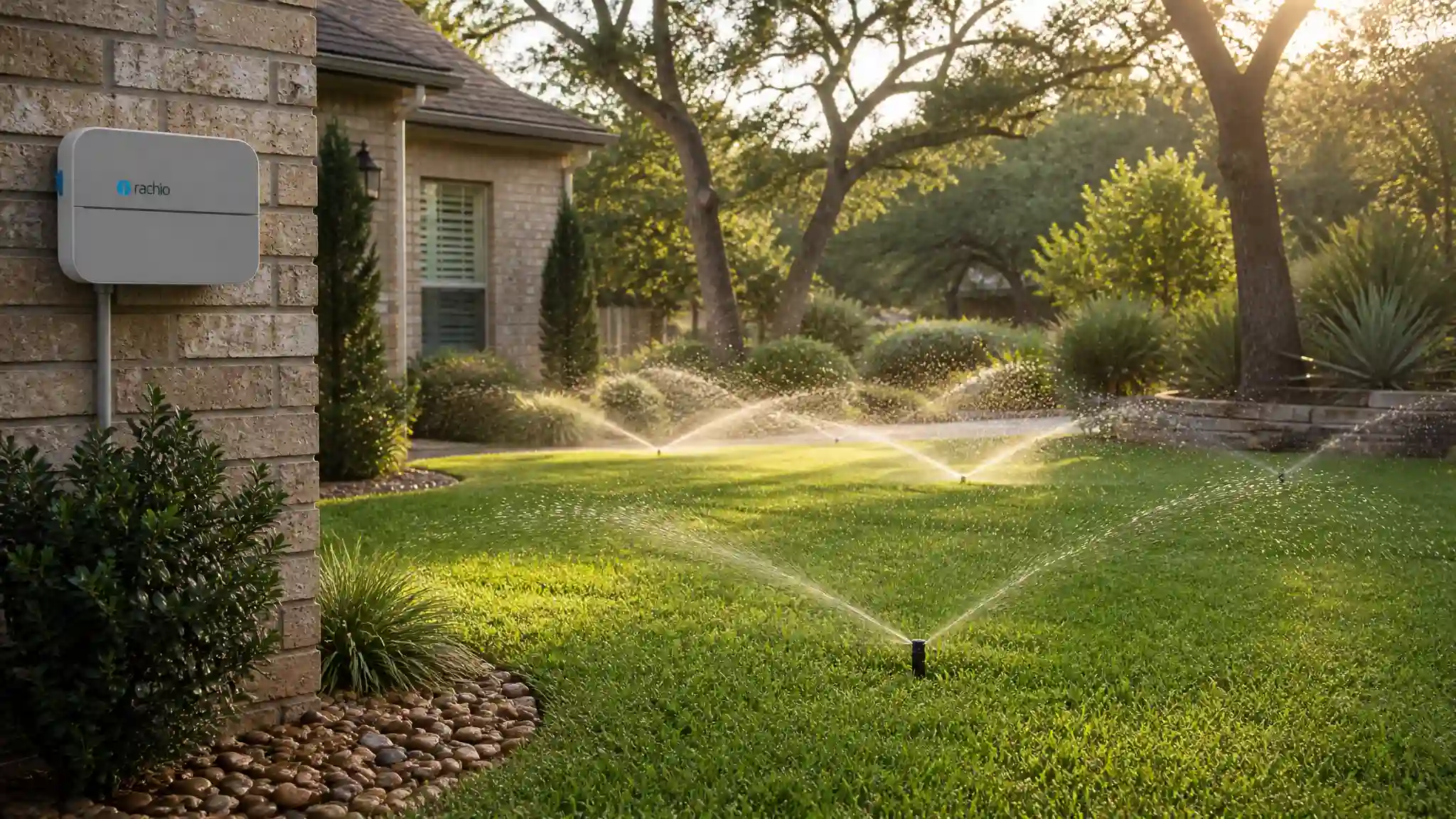
Some smart sprinkler controllers are designed for indoor installation, usually in a garage, utility room, or protected shed. Others are rated for indoor and outdoor use. If the controller will be mounted outside, choose a weatherproof model and ensure the electrical connection meets local safety requirements.
Homeowners should also check compatibility with existing sprinkler valves. Most modern controllers work with standard 24-volt AC irrigation systems, but it is wise to verify the current setup before ordering. If the system has damaged wiring, leaking valves, or failing sprinkler heads, a new controller will not solve those mechanical issues. Repair the irrigation system first, then use smart scheduling to improve performance.
Creating a Smart Watering Schedule for Texas Grass
Start with a practical baseline rather than relying only on automatic settings. Divide the property into zones based on sun exposure, grass type, plant needs, and sprinkler coverage. A sunny Bermuda grass zone may need a different schedule from a shaded St. Augustine grass zone. Drip irrigation for shrubs should also operate separately from pop-up lawn sprinklers.
After setting the initial schedule, observe the lawn for several weeks. Look for dry patches, standing water, runoff, or areas where grass turns dull blue-gray. These signs can show that a zone needs adjustment. Smart controllers simplify the process because changes can be made from a phone in minutes.
Avoid watering every day unless new sod, seed, or extreme conditions require it. Deep, less frequent watering often encourages stronger root growth for established turf. However, always adapt the plan to local restrictions, soil conditions, and seasonal weather.
Smart Irrigation Is a Long-Term Lawn Investment
A smart irrigation controller can make Texas lawn care more manageable, especially for busy homeowners who want better water control. It provides visibility, scheduling flexibility, and weather-responsive irrigation in one device. The greatest benefits come from combining the controller with properly maintained sprinkler heads, correctly designed zones, and a realistic watering plan.
Rather than treating irrigation as a fixed weekly task, homeowners can use smart technology to respond to the lawn’s actual needs. That approach can support healthier turf, reduce avoidable runoff, and make every watering cycle more purposeful.
Amazon Product Recommendation
Rachio WiFi Smart Sprinkler Controller – 8-Zone: This model is a strong option for many Texas homes because it offers app-based scheduling, local weather intelligence, rain skips, DIY installation, and eight-zone control. It is also listed as WaterSense-certified on Amazon.