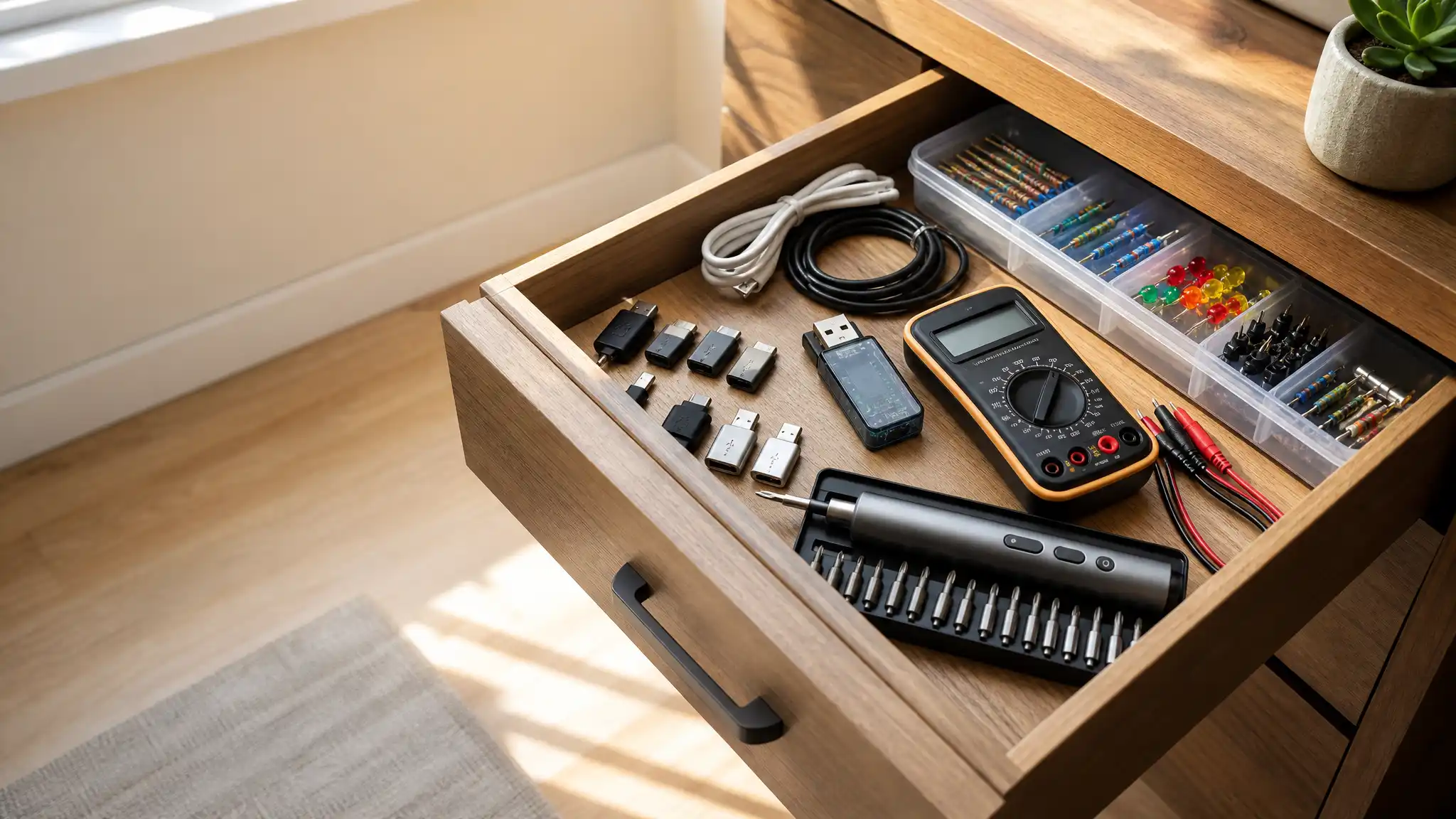

5 Cheap Gadgets a Tech DIY Enthusiast Needs in Their Drawer
A well-stocked drawer can turn small technical problems into quick wins. Whether you enjoy repairing electronics, organizing cables, building Arduino projects, or upgrading a home office, a few affordable tools can save time, prevent frustration, and make your workspace more capable. You do not need a professional workshop to handle basic fixes. You only need compact, useful, and reliable cheap tech gadgets that support everyday DIY electronics projects.
Below are five budget-friendly gadgets every tech DIY enthusiast should keep within reach.
1. Precision Electric Screwdriver Set
A precision screwdriver set is one of the most practical tools for anyone who enjoys electronics repair. Modern devices use tiny screws that standard household screwdrivers cannot handle effectively. Laptops, game controllers, smartphones, cameras, keyboards, smart home devices, and handheld consoles often require Phillips, Torx, Pentalobe, or flat-head bits.
A compact electric screwdriver helps you remove and reinstall screws faster while reducing strain on your wrist. Look for a model with magnetic bits, USB-C charging, a built-in LED light, and a protective storage case. Magnetic tips also reduce the risk of losing tiny screws inside a device.
This gadget is especially useful when you work on computer upgrades or replace parts such as SSDs, laptop batteries, fans, or keyboard switches. Instead of searching through a large toolbox, you can keep a precision screwdriver kit in a drawer beside your desk. It takes up little space but delivers big value during quick repairs.
Choose a set with a manual mode as well. Some delicate electronics need gentle torque, and manual control gives you more confidence when working near fragile components.
2. USB Cable Tester
Most people own a drawer full of mystery cables. Some charge slowly, some transfer data poorly, and some do nothing at all. A USB cable tester helps you identify which cables still work properly. It can test USB-C, USB-A, Micro USB, and other common connector types, depending on the model.
For a tech DIY enthusiast, this is more than a convenience tool. It helps you troubleshoot charging issues before you blame a phone, power bank, wall charger, or laptop port. You can check whether a cable supports data transfer, fast charging, or Power Delivery. This makes it easier to sort your cable collection and remove unreliable accessories.
A good cable tester supports better electronics troubleshooting because it gives you useful information instead of forcing you to guess. It is also ideal for anyone building a clean home office setup, managing Raspberry Pi accessories, or maintaining a collection of old devices.
Keep a few labeled cable ties next to the tester. Once you confirm that a cable works correctly, label it by length, connector type, and charging capability. This simple habit creates better cable management and makes future DIY projects faster.
3. Digital Multimeter
A digital multimeter is a classic DIY electronics tool, but it remains essential because it solves real problems. You can use it to measure voltage, resistance, continuity, and current. These measurements help you diagnose batteries, power supplies, LEDs, switches, fuses, and basic circuits.
You do not need an expensive professional multimeter for beginner projects. An affordable model with clear display readings, continuity beep mode, and safety probes will handle many common tasks. Before you throw away a device that will not turn on, use a multimeter to test the battery or power adapter. A simple voltage check may reveal the real issue.
This tool also supports learning. If you are experimenting with breadboards, sensors, or microcontrollers, a multimeter helps you understand how your circuit behaves. You can verify that power reaches the correct pins and identify loose connections before they damage a component.
Always use the correct measurement mode and follow basic electrical safety practices. Never test high-voltage circuits unless you have the knowledge and equipment to do so. For low-voltage DIY projects, however, a digital multimeter gives you confidence and control.
4. USB-C Adapter and Connector Kit
Technology changes quickly, but old and new connectors often need to work together. A compact USB-C adapter kit can solve many small compatibility issues in seconds. These kits may include USB-C to USB-A adapters, Micro USB converters, Lightning-compatible adapters, SD card readers, SIM eject tools, and short charging cables.
This is one of the most useful portable tech tools for a drawer because it supports daily tasks as well as travel. You can connect an older USB drive to a newer laptop, transfer photos from a memory card, charge an older device, or use a keyboard with a tablet. Rather than buying several single-purpose adapters, you can keep one organized kit ready for unexpected needs.
For makers and DIY enthusiasts, adapter kits are particularly useful when testing development boards and accessories. You may need to connect a USB-C laptop to a USB-A serial cable or power a project using an existing charger. Small adapters make those connections easier without cluttering your desk.
Choose a kit with a hard case. Loose adapters disappear easily, while a labeled case keeps every small part accessible.
5. Mini Electronic Components Organizer
The best tech DIY projects often stop because of one missing resistor, jumper wire, screw, LED, or connector. A mini electronic components organizer prevents that problem. It gives your small parts a permanent home and makes your work area safer, cleaner, and more efficient.
Use individual compartments for resistors, capacitors, LEDs, heat-shrink tubing, jumper wires, spare screws, switches, and header pins. Label each section clearly. When you start a soldering project or Arduino project, you can find what you need immediately instead of digging through random bags.
This small investment also protects sensitive electronic components from dust, bending, and accidental loss. A transparent organizer works best because you can quickly scan your available parts. If you frequently build DIY electronics projects, buy stackable boxes so your collection can grow naturally.
A well-organized drawer encourages creativity. When components are easy to find, you are more likely to test an idea, repair an old gadget, or complete a small weekend project.
Build a Smarter DIY Drawer
The best cheap gadgets do not need flashy features. They should solve common problems, reduce setup time, and help you work with confidence. A precision screwdriver, USB cable tester, digital multimeter, adapter kit, and electronic components organizer can cover a surprising number of repairs and experiments.
Start small, choose tools that fit the projects you actually enjoy, and organize them well. Over time, your drawer will become a compact DIY tech station that is ready whenever an idea—or a broken device—appears.
Amazon Product Recommendation
Consider the Electronic Component Kit, 1628 Pcs DIY Electronics Kit, which includes LEDs, resistors, capacitors, transistors, Dupont wires, PCB boards, and a breadboard. It is a practical starting point for compact DIY builds and electronics experiments. You can find it through Amazon’s DIY Electronics selection.