
5G mmWave vs Sub‑6: Coverage and Speed Experience in the United States
5G has rapidly transformed from a buzzword into a real‑world network standard across the United States. Yet not all 5G is the same. The two main types of 5G used in the U.S. are mmWave (millimeter wave) and Sub‑6 (sub‑6 GHz), and they deliver very different user experiences in terms of coverage, speed, and reliability. Understanding the difference between 5G mmWave vs Sub‑6 in the U.S. is essential for consumers, businesses, and anyone optimizing content or services for the American mobile market.
What Is 5G mmWave?
5G mmWave operates at very high frequencies, typically between 24 GHz and 40 GHz and above. These high‑band frequencies can carry a huge amount of data, which is why mmWave 5G is often associated with multi‑gigabit download speeds and ultra‑low latency.
However, there is a trade‑off. High‑frequency signals have limited range and struggle to penetrate obstacles:
- Short coverage radius (often just a few hundred meters)
- Easily blocked by buildings, walls, trees, and even heavy rain
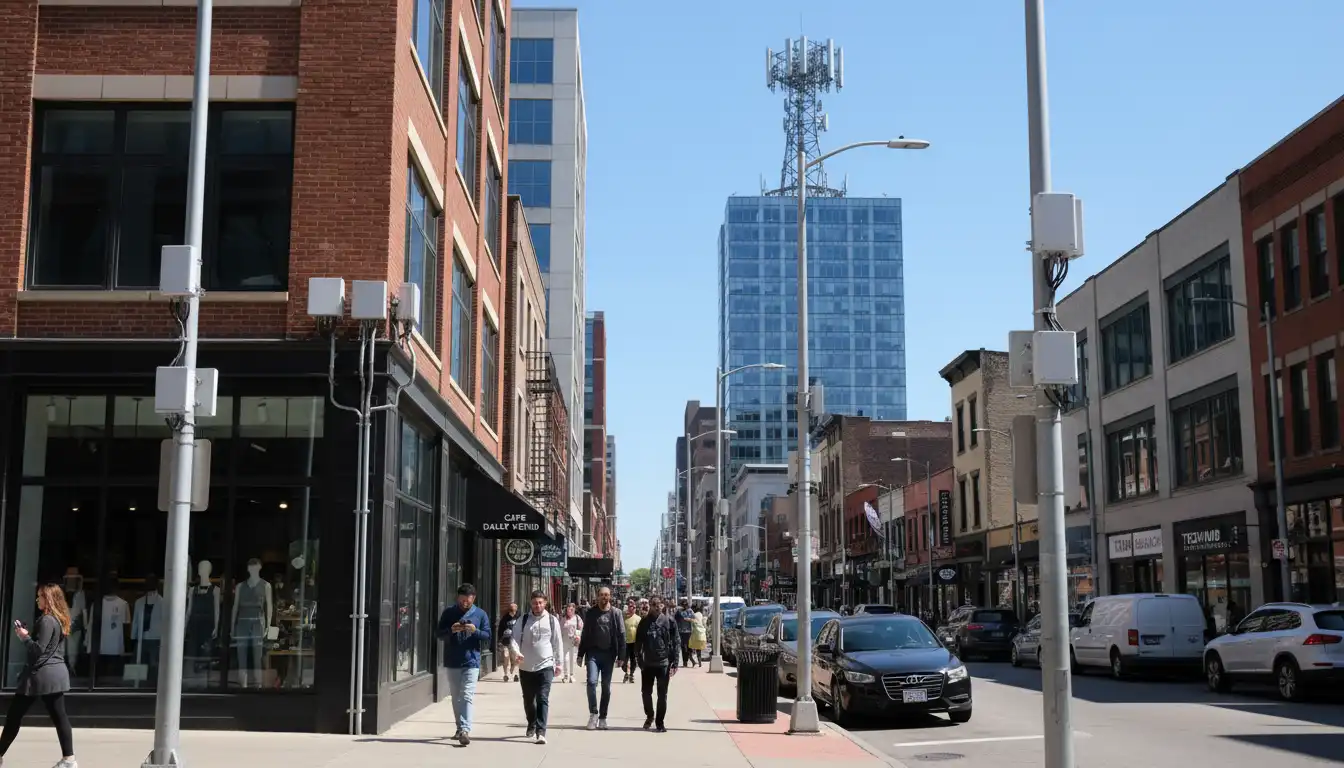
- Best suited for dense urban areas, sports stadiums, airports, and hotspot zones
Because of these limitations, U.S. carriers tend to deploy mmWave in specific high‑traffic locations to deliver very high capacity and peak speeds rather than blanket coverage.
What Is 5G Sub‑6?
Sub‑6 refers to 5G frequencies below 6 GHz, including low‑band (around 600–850 MHz) and mid‑band (2.5–3.7 GHz) spectrum. These frequencies behave more like traditional 4G LTE bands, which means:
- Much better coverage over long distances
- Improved indoor penetration
- More consistent, everyday performance over a wider geographic area
In the U.S., most of the 5G coverage that users see on their phones today is based on Sub‑6 5G, especially low‑band nationwide 5G and mid‑band (C‑band) deployments. While Sub‑6 may not reach the record‑breaking speeds of mmWave, it delivers a more reliable and broadly available 5G experience.
Coverage Experience: How 5G Feels in the Real World
When comparing 5G mmWave vs Sub‑6 in the U.S., coverage is the first major difference users notice:
- mmWave coverage in the U.S.
Deployed in limited zones: city centers, downtown streets, arenas, transportation hubs, and event venues. If you are directly in range, you can experience extremely high speeds. Move a block away or go indoors, and you may fall back to Sub‑6 5G or even 4G LTE. - Sub‑6 coverage in the U.S.
Provides wide‑area 5G coverage, including suburbs, highways, and many rural regions. It is the backbone of what carriers market as “nationwide 5G.” The signal travels farther and is better at passing through walls and windows, so users enjoy more continuous 5G connectivity.
In practical terms, a user in the U.S. is far more likely to be on Sub‑6 5G during daily life, with mmWave acting as a high‑speed boost in specific locations.
Speed and Performance: The Trade‑Off Between Range and Throughput
The second key difference is speed. The U.S. 5G speed experience varies dramatically between mmWave and Sub‑6:
- 5G mmWave speeds
- Peak download speeds can reach 1–3 Gbps or more under ideal conditions.
- Extremely low latency supports real‑time applications, such as AR/VR, cloud gaming, and high‑definition video streaming.
- Performance is highly location‑dependent; a small movement or obstruction can impact signal quality.
- 5G Sub‑6 speeds
- Typically faster than 4G LTE, often in the hundreds of Mbps, especially on mid‑band spectrum.
- Latency is lower than 4G and suitable for most consumer and enterprise applications.
- Speeds are more consistent over a larger area, making Sub‑6 ideal for daily mobile usage, streaming, social media, and video conferencing.
From a user perspective, mmWave offers headline‑grabbing peak speeds, but Sub‑6 provides the realistic everyday 5G experience across the country.
User Experience: Urban vs Suburban and Indoor vs Outdoor
In the U.S. market, the 5G coverage and speed experience is shaped by where and how people use their devices:
- Urban environments
In downtown areas, users may connect to mmWave cells and enjoy ultra‑fast speeds, especially outdoors or in open spaces. However, once they enter a building or move into side streets, connections often fall back to Sub‑6 5G for more stable coverage. - Suburban and rural areas
These regions rely heavily on low‑band and mid‑band Sub‑6 5G, which can cover long distances with fewer towers. While speeds may be lower than mmWave, they are still a noticeable improvement over many 4G networks, and coverage is far more reliable. - Indoor usage
mmWave has difficulty penetrating walls, making indoor coverage challenging without dedicated indoor infrastructure. Sub‑6 frequencies, especially mid‑band, are better suited for indoor 5G connectivity in homes, offices, and shopping centers.
For most U.S. users, this means Sub‑6 provides the foundation of their 5G experience, while mmWave acts as a premium layer available in targeted locations.
Network Deployment and Carrier Strategy in the U.S.
U.S. operators design their 5G deployment strategies around the strengths and limitations of each spectrum type:
- mmWave 5G in the U.S. is used to:
- Offload traffic in congested areas
- Deliver exceptional speeds for marketing and flagship use cases
- Support high‑density events like concerts and sporting events
- Sub‑6 5G in the U.S. is used to:
- Provide nationwide 5G coverage
- Improve user experience over 4G in both urban and non‑urban areas
- Support enterprise applications, IoT, and fixed wireless access
This layered approach allows carriers to combine coverage, capacity, and performance, maximizing the overall 5G experience for users across the U.S.
Which Is Better: 5G mmWave or Sub‑6 in the U.S.?
The answer depends on what “better” means for the user:
- If you value maximum speed for specific high‑bandwidth use cases and you spend time in dense urban hotspots, 5G mmWave can be incredibly powerful.
- If you care about consistent coverage, reliable performance, and broad availability across cities, suburbs, and highways, 5G Sub‑6 is the more practical and impactful technology.
In reality, the best 5G experience in the U.S. comes from combining both. mmWave and Sub‑6 are complementary: one provides capacity and extreme speed, while the other provides reach and stability. As networks continue to evolve, U.S. users will benefit from a more seamless blend of these technologies, resulting in faster, more responsive, and more widely available mobile connectivity.