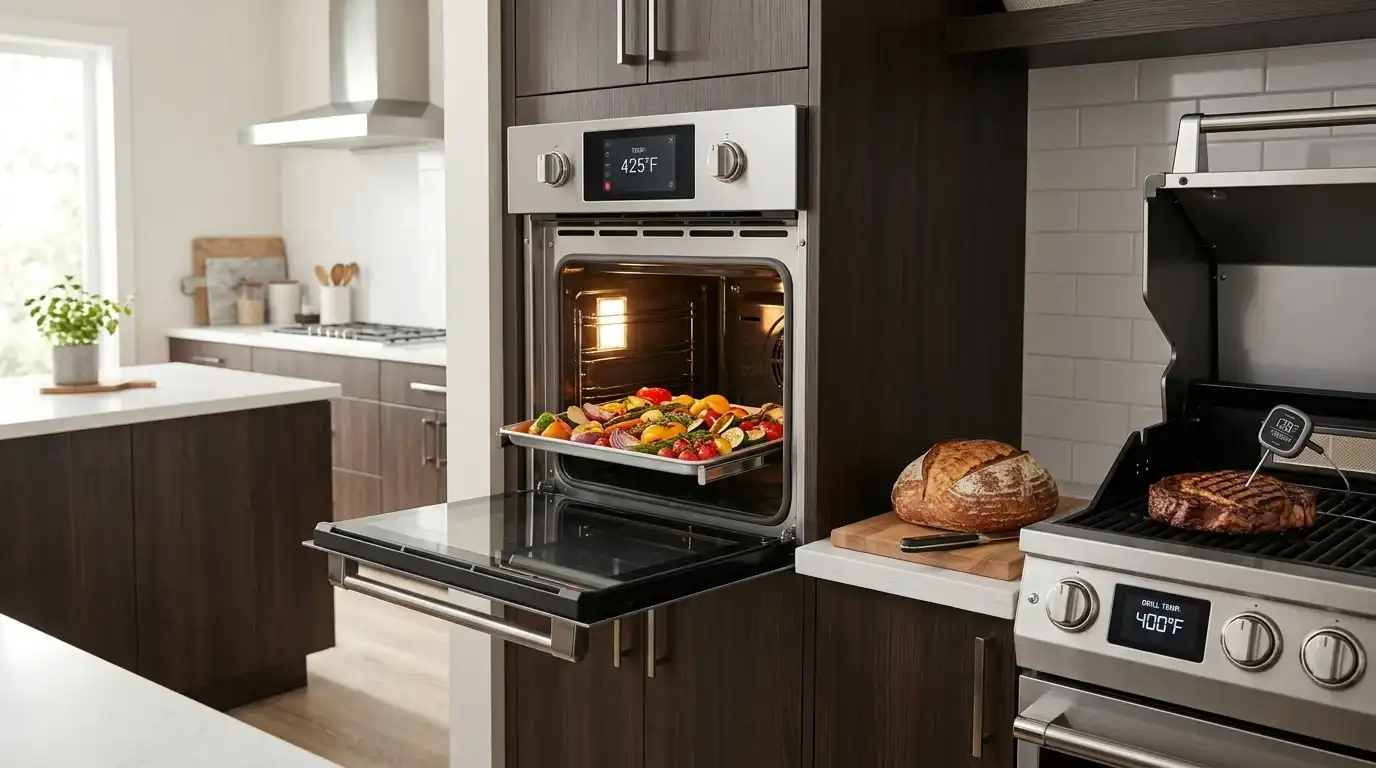

Smart Ovens & Grills: How Precision Cooking Tech Prevents Burned Dinner
Smart cooking has transformed the modern kitchen, making it easier than ever to prepare delicious meals without worrying about overcooking or burning food. Whether you’re roasting a whole chicken, grilling steaks, or baking artisan bread, today’s smart ovens and grills use precision cooking technology to deliver consistent results with minimal guesswork. Advanced temperature sensors, Wi-Fi connectivity, intelligent cooking algorithms, and built-in food probes work together to create an experience that is both convenient and reliable.
As homeowners embrace connected appliances and smart home ecosystems, precision cooking devices have become one of the fastest-growing kitchen innovations. Instead of constantly checking the oven or flipping food at the perfect second, users can rely on intelligent systems that monitor every stage of the cooking process.
In this guide, we’ll explore how smart ovens and grills prevent burned dinners, improve cooking accuracy, save energy, and help home chefs create restaurant-quality meals with confidence.



What Are Smart Ovens and Smart Grills?
A smart oven or smart grill is a cooking appliance equipped with digital controls, wireless connectivity, and intelligent sensors that automatically manage cooking conditions. Unlike conventional appliances that rely on fixed temperatures and manual timing, smart cooking systems continuously monitor food and adjust heat as needed.
Most modern smart appliances include features such as:
- Wi-Fi or Bluetooth connectivity
- Mobile app control
- Digital touch displays
- Built-in meat thermometers
- Automatic cooking programs
- Voice assistant compatibility
- Remote notifications
- Precision temperature management
These technologies help eliminate one of the biggest cooking problems: inconsistent heat that often leads to burned or undercooked meals.
Why Traditional Cooking Often Leads to Burned Food
Many home cooks depend entirely on timers. Unfortunately, cooking times vary depending on several factors, including:
- Food thickness
- Starting temperature
- Moisture content
- Oven calibration
- Altitude
- Pan material
Even a few extra minutes can dry out chicken, burn cookies, or ruin an expensive steak.
Traditional ovens also experience noticeable temperature swings as heating elements cycle on and off. These fluctuations create uneven cooking, making some areas hotter than others.
Precision cooking technology solves this issue by constantly measuring and adjusting internal temperatures throughout the cooking process.
Precision Temperature Control Makes the Difference
Temperature accuracy is the foundation of every successful meal.
Smart ovens use multiple digital sensors to maintain a stable cooking environment. Instead of allowing temperatures to fluctuate by 20–30 degrees, many premium models keep temperatures remarkably close to the selected setting.
This consistency provides several benefits:
- Even browning
- Better moisture retention
- Improved baking performance
- Reduced risk of burning delicate foods
- More predictable cooking results
Whether you’re roasting vegetables or baking pastries, precise heat distribution improves food quality from start to finish.
Smart Food Sensors Prevent Overcooking
One of the most valuable innovations in modern cooking is the integrated food temperature probe.
Instead of estimating doneness by time alone, smart ovens continuously monitor the internal temperature of food.
For example:
A roast chicken reaches perfect doneness at approximately 165°F (74°C). Once the sensor detects this temperature, the appliance can automatically reduce heat or switch to warming mode.
This feature helps prevent:
- Dry turkey
- Tough beef
- Overcooked salmon
- Burned pork chops
By focusing on food temperature instead of cooking time, users achieve much more consistent results.
Intelligent Cooking Programs Simplify Meal Preparation
Many smart appliances come with pre-programmed cooking modes developed by culinary experts.
Popular presets include:
- Pizza
- Bread
- Steak
- Cookies
- Whole chicken
- Fish
- Vegetables
- Frozen foods
- Slow roasting
- Air frying
These programs automatically adjust temperature, cooking duration, convection speed, and heating elements throughout the cooking cycle.
Rather than selecting only one temperature, the appliance creates a complete cooking profile optimized for each recipe.
Remote Monitoring Offers Peace of Mind
One of the biggest advantages of connected cooking appliances is remote access.
Using a smartphone app, users can:
- Monitor cooking progress
- Check internal food temperature
- Receive completion alerts
- Adjust cooking settings
- Preheat the oven remotely
- Turn warming mode on
Busy families no longer need to stand in the kitchen watching the oven.
Instead, notifications arrive when food is ready, greatly reducing the chance of forgotten meals turning into burned dinners.
Smart Grills Deliver Restaurant-Quality Barbecue
Outdoor cooking has also benefited from precision technology.
Modern smart grills use digital controllers to regulate heat automatically.
Features commonly include:
- Wireless meat probes
- Pellet feed automation
- Digital thermostats
- Multi-zone cooking
- Bluetooth monitoring
- Wi-Fi control
Instead of constantly adjusting vents or burners, users simply select a desired temperature and allow the grill to maintain it.
This level of control produces:
- Juicier brisket
- Better smoked ribs
- Perfect burgers
- Evenly cooked steaks
- Consistent barbecue results
Precision grilling removes much of the guesswork traditionally associated with outdoor cooking.
AI and Adaptive Cooking Technology
Some premium smart ovens now incorporate artificial intelligence into everyday cooking.
AI-assisted cooking systems analyze several variables, including:
- Internal food temperature
- Cooking speed
- Moisture evaporation
- Heat distribution
- Recipe progress
As cooking conditions change, the appliance automatically modifies heating patterns to maintain ideal results.
These adaptive systems continue learning from cooking data to improve performance over time.
Although AI doesn’t replace cooking skills, it significantly improves consistency.
Better Energy Efficiency
Precision cooking technology isn’t only about convenience.
It can also reduce energy consumption.
Smart appliances improve efficiency by:
- Preventing unnecessary overheating
- Optimizing cooking times
- Maintaining stable temperatures
- Automatically entering standby mode
- Reducing wasted preheating
Efficient temperature regulation means less energy is lost through excessive heating cycles.
Over time, households may notice lower electricity consumption compared to older cooking appliances.
Integration with Smart Home Systems
Many modern ovens integrate seamlessly with smart home platforms.
Users can control cooking through voice assistants or connected home applications.
Examples include:
- Starting preheating remotely
- Checking remaining cooking time
- Receiving voice notifications
- Adjusting temperatures hands-free
This integration creates a more connected kitchen while improving convenience for busy households.
Precision Cooking Improves Food Quality
Consistent temperature control directly impacts taste and texture.
Foods retain:
- Natural moisture
- Tenderness
- Flavor
- Nutritional value
- Attractive appearance
Breads develop better crusts.
Steaks cook evenly from edge to center.
Cookies brown consistently.
Vegetables maintain their vibrant colors without becoming mushy.
These improvements make home cooking more enjoyable while reducing food waste caused by overcooking.
Safety Features Help Prevent Kitchen Accidents
Smart appliances include numerous built-in safety functions.
Common examples include:
- Automatic shutoff
- Overheat protection
- Door alerts
- Child safety locks
- Cooking completion notifications
- Temperature warnings
These features reduce the likelihood of leaving food unattended for long periods, helping prevent accidental burning and improving overall kitchen safety.
Choosing the Right Smart Oven or Grill
Before purchasing a smart cooking appliance, consider the following features:
Accurate Temperature Sensors
Reliable sensors ensure consistent cooking performance.
Built-In Food Probe
A high-quality temperature probe greatly reduces the chance of overcooking meat.
Mobile App Support
Choose appliances with intuitive applications that allow full remote monitoring.
Software Updates
Manufacturers that regularly release firmware updates often improve cooking performance and add new features.
Cooking Capacity
Select a model that fits your household size and cooking habits.
Smart Home Compatibility
Compatibility with Alexa or Google Assistant can make everyday cooking more convenient.
The Future of Precision Cooking
Kitchen technology continues to evolve rapidly.
Future smart ovens may include:
- Improved AI recipe recommendations
- Computer vision for food recognition
- Fully automated cooking adjustments
- Enhanced energy optimization
- Cloud-connected recipe libraries
- Personalized cooking profiles
As these innovations become more affordable, precision cooking will likely become the standard in modern kitchens.
Final Thoughts
Smart ovens and grills have fundamentally changed how people prepare meals at home. By combining precision temperature control, intelligent sensors, adaptive cooking software, and remote connectivity, these appliances dramatically reduce the chances of burning food while improving flavor, texture, and consistency.
Instead of relying on guesswork, home cooks can enjoy accurate cooking that delivers reliable results every time. Whether you’re baking bread, grilling steaks, roasting vegetables, or preparing family dinners, precision cooking technology helps you cook with greater confidence and less stress.
Investing in a high-quality smart oven or grill isn’t just about convenience—it’s about creating better meals, reducing food waste, improving energy efficiency, and bringing professional-level cooking performance into your own kitchen.
Recommended Amazon Product
MEATER Plus Smart Wireless Meat Thermometer
The MEATER Plus is one of the most popular wireless smart meat thermometers on Amazon. It provides real-time temperature monitoring, guided cooking, Bluetooth connectivity, and smartphone alerts, making it an excellent companion for smart ovens, pellet grills, smokers, and traditional barbecues.