
Best Home Security Systems for Rural Texas Properties
Rural Texas offers privacy, wide-open land, and a lifestyle that many homeowners value. However, ranches, farmhouses, cabins, and country homes also face distinct security challenges. Long driveways, detached barns, limited lighting, inconsistent internet, and slower emergency response times can leave a property more exposed than a typical suburban home.
The best home security systems for rural Texas properties do more than protect a front door. They help owners monitor gates, equipment sheds, livestock areas, workshops, and remote entry points. A well-planned system combines outdoor cameras, intrusion sensors, dependable alerts, backup connectivity, and practical physical security measures.
This guide explains what Texas landowners should look for when choosing a reliable rural home security system.


Start With a Rural Property Security Assessment
Every property has different vulnerabilities. Before buying equipment, walk the land and identify the areas that need protection. Focus on the main driveway, front entrance, back doors, garage, barn, tool shed, fuel storage, and any secondary road or trail that reaches the property.
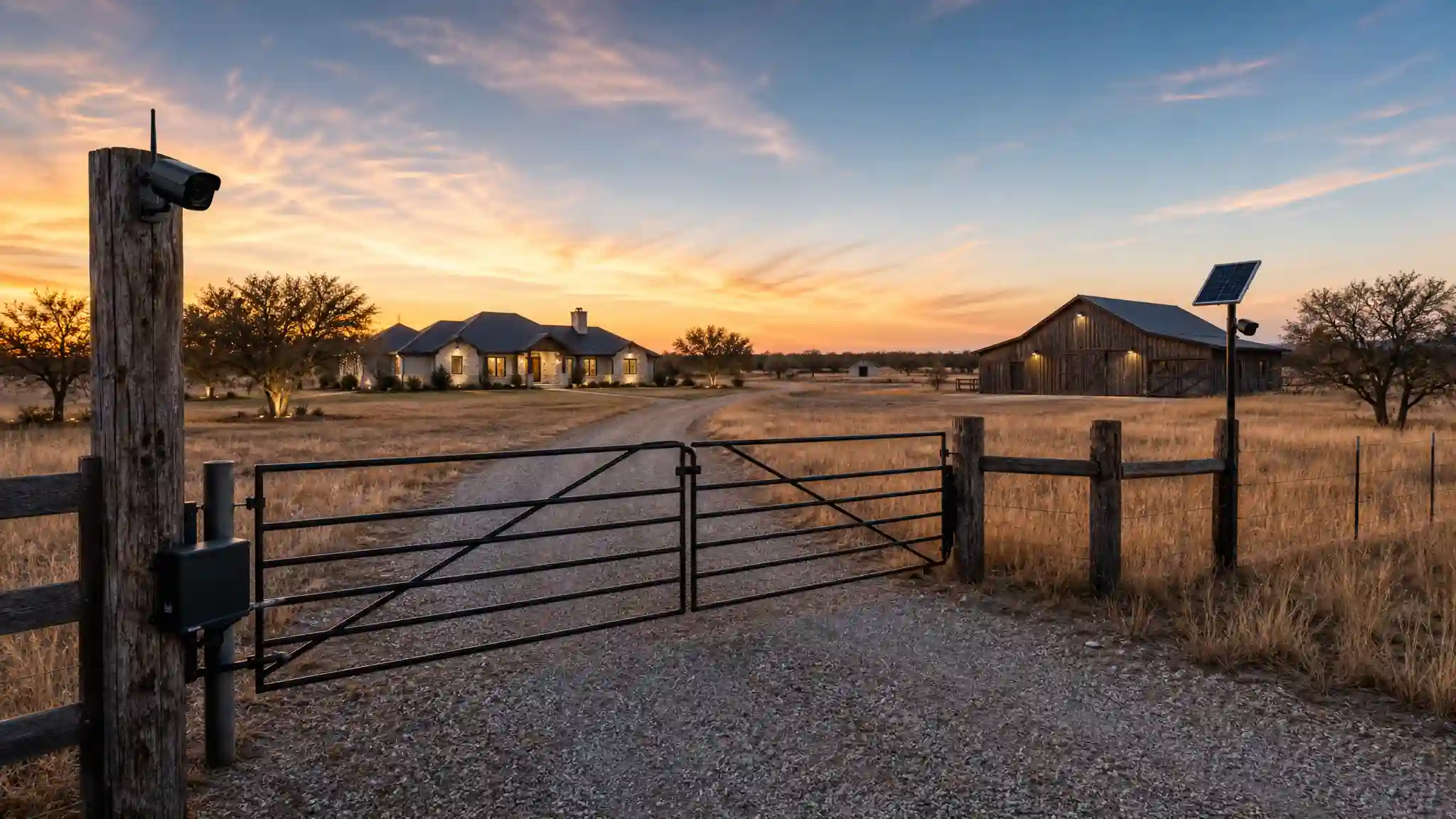
A large ranch does not need cameras in every corner. Instead, it needs intelligent placement. A driveway alarm can notify you when a vehicle enters. A security camera at the gate can capture vehicle movement. Motion sensors and outdoor lighting can make isolated structures less attractive to trespassers.
Create a simple map of the property and mark:
- Primary vehicle entrances
- Doors and windows on the home
- Barns, workshops, and storage buildings
- Equipment, trailers, generators, and fuel tanks
- Blind spots around fences, trees, and outbuildings
- Areas without power or Wi-Fi coverage
This process helps you avoid buying unnecessary devices while ensuring that you protect the locations that matter most.
Choose Cameras Built for Texas Weather
Texas weather can be unforgiving. Summer heat, dust, heavy rain, wind, hail, and sudden storms can damage poorly designed outdoor equipment. Look for weather-resistant outdoor security cameras that can operate reliably in extreme temperatures.
For rural properties, camera quality matters as much as camera quantity. Choose models that provide clear night vision, motion detection, two-way audio, and high-resolution video. A camera should help you identify a person, vehicle, or animal rather than simply show unclear movement in the distance.
Solar-powered security cameras work especially well for gates, barns, fence lines, and other remote areas without convenient electrical outlets. Pairing a solar panel with a battery-operated camera can reduce installation complexity and give landowners more flexibility.
Place cameras high enough to discourage tampering, but keep them low enough to capture useful facial and vehicle details. Point cameras toward access routes instead of aiming them at wide, open fields where movement may be too far away to identify.
Prioritize Cellular Backup and Reliable Connectivity
Internet service can vary widely across rural Texas. Some homes have fiber or fixed wireless service, while others depend on satellite internet or cellular data. A security system that relies only on Wi-Fi can become less effective during a service interruption.
Choose a system with cellular backup whenever possible. Cellular monitoring allows the control panel to communicate even when the primary internet connection fails. This feature becomes especially important during storms, power outages, or internet disruptions.
For larger properties, consider a mix of connected and local devices. For example, a wired camera system with local video storage can keep recording even if the internet goes down. You can then use remote viewing when connectivity returns. This approach helps protect footage without requiring constant cloud uploads.
Before installing wireless cameras, test the signal strength at the gate, barn, and workshop. Long-range Wi-Fi equipment may extend coverage, but it should be installed carefully and protected from weather. In areas where Wi-Fi cannot reach, a cellular security camera or an independent driveway sensor may offer a better solution.
Use Driveway Alarms and Perimeter Sensors
A home alarm system protects the main residence, but rural property security starts before someone reaches the house. Driveway alarms, gate sensors, and perimeter motion detectors provide early warnings that help owners react sooner.
A driveway alarm can alert you when a vehicle, person, or large object passes a selected point. This is useful for long driveways where visitors or intruders may approach without being noticed. Gate sensors can also notify you when a ranch entrance opens unexpectedly.
For barns and sheds, use door sensors and glass-break sensors. These devices send alerts when someone opens a protected door or window. They can help protect tools, farm equipment, ATVs, trailers, and supplies that are often stored outside the main home.
Avoid placing motion sensors where livestock, deer, coyotes, or moving tree branches will trigger constant alerts. Instead, adjust sensitivity settings and focus detection zones on doors, walkways, and vehicle paths.
Add Smart Outdoor Lighting for Deterrence
Darkness gives trespassers cover, particularly on properties with long distances between neighbors. Motion-activated floodlights add an effective layer of protection. When a person approaches a barn, garage, or side entrance, bright lighting can discourage unwanted activity and make camera footage easier to review.
Smart lighting gives rural homeowners more control. You can schedule lights, activate them remotely, or connect them to security cameras and motion sensors. For example, a camera can trigger a floodlight when it detects a person near the workshop.
Use lighting strategically. Install it near doors, gates, equipment storage areas, and parking spaces. Trim trees and brush that block visibility or create hiding places. Good lighting improves safety for residents as well as security for the property.
Consider Professional Monitoring for Added Protection
Self-monitoring works well for owners who check alerts regularly and spend significant time on the property. However, professionally monitored security systems can offer extra reassurance when you travel, work long hours, or manage multiple buildings.
With 24/7 professional monitoring, a monitoring center receives an alarm signal and follows the provider’s emergency response process. This can be valuable in remote areas where it may take longer for help to arrive.
When comparing providers, ask direct questions about cellular communication, equipment warranties, installation support, contract terms, and service availability in your county. A strong system should fit your internet conditions, property size, and daily routine rather than force every homeowner into the same package.
Protect More Than Intruders
The best rural Texas security systems also address environmental risks. Smoke detectors, carbon monoxide alarms, water leak sensors, and temperature monitors can protect the home and outbuildings from problems that have nothing to do with burglary.
This matters for vacant cabins, seasonal homes, workshops, and livestock-related buildings. A water sensor can reveal a leak before it becomes expensive damage. A temperature alert can warn you about freezing conditions or excessive heat in a structure. Smoke and fire detection can provide critical early warning when the nearest fire service is miles away.
Combine these devices with a backup battery or uninterruptible power supply for your router, security hub, and camera recorder. Power outages are common during severe weather, so your security plan should continue working when conditions become difficult.
Final Thoughts
The best home security system for rural Texas properties is one designed around the land itself. Start with the driveway and perimeter, then secure the home, barns, equipment, and remote access points. Select weather-resistant cameras, dependable alerts, cellular backup, and lighting that deters unwanted activity.
A layered strategy delivers better results than relying on one device. When cameras, sensors, alarms, lighting, strong locks, and smart monitoring work together, rural homeowners gain more visibility and control over their property.
Amazon Product Recommendation
For remote gates, barns, or areas beyond Wi-Fi range, consider the LTE Cellular Trail Camera listed on Amazon.com. Verify current compatibility, data-plan requirements, specifications, and availability on the product page before purchasing.