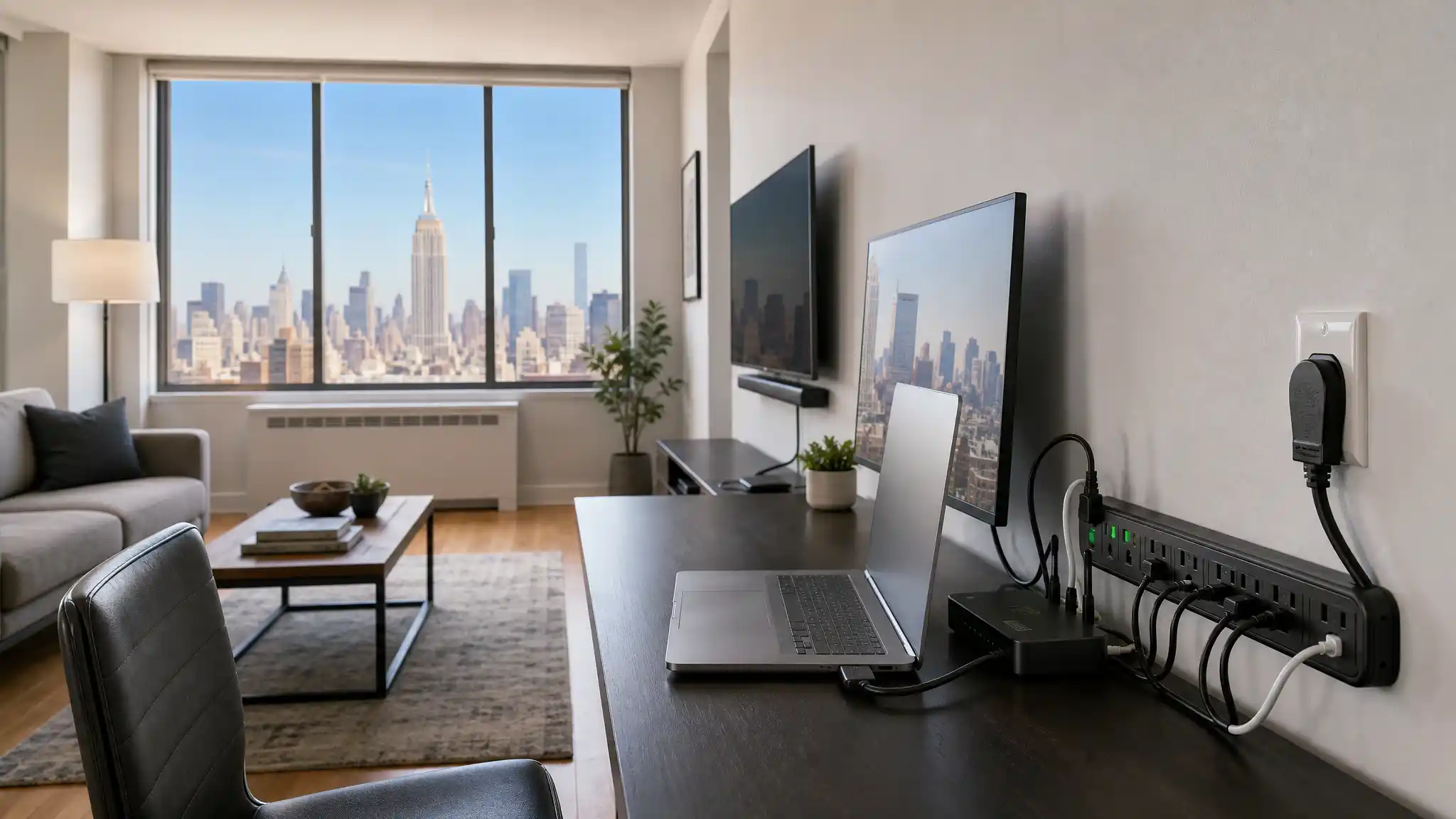

Best Surge Protectors for Electrical Safety in New York
New York homes and apartments rely on more connected devices than ever. From laptops and smart TVs to gaming systems, kitchen appliances, routers, and phone chargers, everyday electronics face a steady risk from unexpected power fluctuations. Choosing the best surge protectors for electrical safety in New York helps residents protect valuable equipment, reduce electrical hazards, and create a safer home environment.
A quality surge protector does more than add extra outlets. It helps absorb or redirect excess voltage before that energy reaches connected devices. Power surges can occur during storms, utility switching, grid disturbances, or when large appliances cycle on and off. In a dense city environment such as New York, where buildings often contain older wiring systems alongside modern electronics, surge protection becomes a practical part of home electrical safety.
Why Surge Protection Matters in New York Homes
A sudden voltage spike can damage sensitive circuit boards, shorten the life of appliances, or cause a device to fail without warning. Even small, repeated surges can gradually wear down electronics. For that reason, homeowners, renters, and business owners should not treat a power strip and a surge protector as the same product.

A standard power strip simply expands the number of available outlets. A power strip with surge protection, however, includes components designed to manage excess voltage. When selecting one, look for a clearly stated joule rating, safety certification, grounded plug, and protection-status indicator.
New York residents should also consider the layout of their home. Compact apartments may need a flat plug surge protector that fits behind furniture. Larger homes, home offices, and entertainment spaces may benefit from a heavy-duty model with widely spaced outlets and a longer cord. The right choice depends on the devices you plan to protect and the condition of the outlet where you will use it.
Key Features to Look for in a Surge Protector
The best surge protectors combine strong electrical protection with practical everyday design. Start by checking the surge protector joule rating. Joules measure how much surge energy a unit can absorb over its lifespan. Higher ratings generally offer more capacity for electronics that need stronger protection, such as desktop computers, televisions, monitors, and gaming consoles.
For common household electronics, a unit with a moderate-to-high rating can provide useful protection. However, do not choose based on joules alone. Look for a product that has an UL listed surge protector designation or another recognized safety certification. This indicates that the product has undergone safety testing for its stated use.
A built-in circuit breaker is another valuable feature. It can help interrupt power if the connected load becomes unsafe. A resettable breaker does not replace careful use, but it adds a layer of protection against overloads. You should also prioritize a grounded surge protector with a three-prong plug. Grounding helps direct excess electrical energy away from your devices when the outlet itself is properly grounded.
Status lights are equally useful. A protection indicator light lets you see whether the unit still provides surge protection. If that light goes out, replace the surge protector rather than assuming it continues to protect your equipment.
Match the Protector to the Room and Devices
Each room has different electrical needs. A home office surge protector should support computers, monitors, printers, networking gear, and chargers without crowding plugs together. Wide-spaced outlets can make room for large power adapters, while USB ports reduce the need for extra charging blocks.
For a living room, choose a TV surge protector that supports your television, streaming device, sound system, and game console. Entertainment equipment often includes sensitive electronics, so avoid using a cheap, unverified strip for these devices. A higher-capacity model with multiple outlets can keep cords organized while offering more reliable protection.
In bedrooms or small New York apartments, a wall-mounted surge protector may work well for lamps, phone chargers, and bedside devices. Select a model that sits securely in the outlet and does not overload a single receptacle. If you need to run a cord behind a bed, desk, or bookcase, a flat plug power strip can reduce strain and keep the installation neater.
Avoid plugging high-wattage appliances into ordinary surge strips unless the manufacturer specifically approves that use. Space heaters, air conditioners, refrigerators, microwaves, and other major appliances can draw significant power. They often need their own dedicated outlet or an electrical setup designed for their load.
Whole-Home Protection Adds Another Layer
Plug-in products protect individual devices, but they are only one part of a complete electrical safety strategy. A whole house surge protector installs at the electrical panel and helps reduce the impact of surges entering through the main electrical service. This type of protection can support a broader plan for safeguarding appliances, HVAC equipment, and connected systems.
A licensed electrician should evaluate and install panel-level protection. This is especially important in older New York properties, where wiring, grounding, and electrical panels may vary significantly by building. An electrician can inspect the existing system, identify potential issues, and recommend an appropriate solution. Never attempt to open or modify an electrical panel without professional qualifications.
For the strongest approach, many households use both whole-home protection and point-of-use surge protectors. The panel-level device addresses larger incoming surges, while plug-in units add protection closer to sensitive electronics.
Safe Use Habits Make a Real Difference
Even the best surge protector cannot compensate for unsafe electrical practices. Always plug it directly into a properly grounded wall outlet. Do not connect one surge protector to another, a practice often called daisy chaining. This can create overheating and fire risks.
Check the wattage and amperage limits printed on the product label. A 15-amp power strip may be suitable for low-to-moderate electronics, but it should not become a substitute for adding permanent outlets where they are needed. Keep cords visible, avoid running them under rugs, and inspect the unit regularly for discoloration, loose outlets, damaged insulation, or a warm plug.
Replace an old surge protector after a major electrical event, if its protection light fails, or when it shows visible wear. Surge components can degrade over time, and a unit may no longer provide the same level of defense after absorbing repeated voltage spikes.
Final Recommendation
For a home office, media setup, or multi-device charging area, consider the Anker Power Strip with 2100J Surge Protector. Amazon currently lists it with 12 AC outlets, USB charging ports, a 2,100-joule protection rating, and TÜV listing. Check the latest listing details, price, and delivery availability before purchasing: