
Best Portable Air Conditioner Units for Florida Apartments Without Central Cooling
Living in a Florida apartment without central air conditioning can quickly become uncomfortable. High temperatures are only part of the challenge; persistent humidity can make bedrooms, living rooms, and home offices feel warmer than the thermostat suggests. For renters who cannot install a permanent HVAC system—or whose lease limits window-unit installation—a portable air conditioner offers a practical, flexible solution.
The best portable AC units for Florida apartments do more than lower the temperature. They remove moisture from indoor air, fit apartment-friendly spaces, work with standard windows, and provide enough cooling power for the room’s actual size. Choosing the right unit can improve sleep, protect electronics from excess humidity, and make daily life much more comfortable during long Florida summers.
Why a Portable Air Conditioner Works Well for Florida Renters
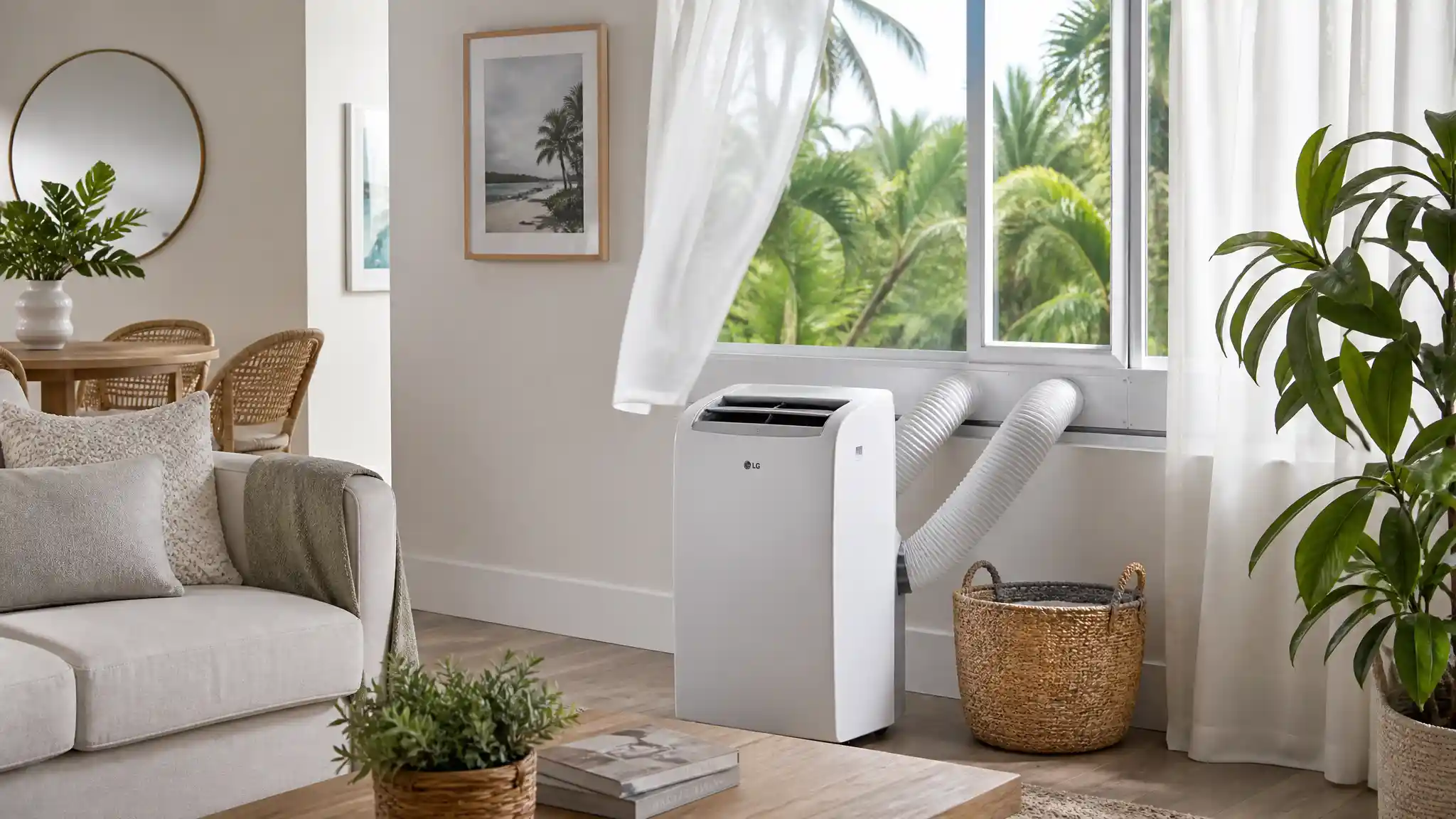
A portable air conditioner for apartment use gives renters control without major modifications. Most models sit on the floor, use rolling casters for movement, and vent warm air outside through an included window kit. You can install the exhaust hose in many sliding or sash windows, then remove it when you move.


Florida residents should prioritize a portable unit with a strong dehumidifier function. Humidity makes indoor air feel heavy and sticky, so a unit that removes moisture can create a noticeably more comfortable environment even when the temperature change is modest. This makes a portable AC with dehumidifier especially useful for coastal apartments, older buildings, and rooms with limited airflow.
Unlike an evaporative cooler, a true portable air conditioner uses refrigerant and an exhaust hose to transfer heat outdoors. An evaporative cooler may add moisture to the air, which makes it a poor fit for Florida’s naturally humid climate. Always look for a genuine portable cooling unit rather than a small “swamp cooler” if your main goal is room cooling.
Choose Cooling Power Based on Room Size
Cooling capacity matters. Many product pages display a large BTU number based on older ASHRAE measurements, but shoppers should also check the DOE SACC rating. The SACC BTU rating offers a more realistic estimate of portable air conditioner performance because it accounts for heat generated and exhausted by the unit.
For a small bedroom, a unit with approximately 5,000 to 6,500 SACC BTU may be sufficient. A medium-sized living room or large bedroom may need 8,000 to 10,000 SACC BTU. Apartments with open layouts, direct afternoon sun, high ceilings, or multiple occupants often require more cooling capacity than the square-footage label alone suggests.
Do not buy an oversized portable air conditioner simply because Florida gets hot. A unit that is too large may cool a compact room quickly but cycle inefficiently. Instead, assess room dimensions, insulation, sunlight exposure, and the number of heat-producing appliances in the space. A properly sized room air conditioner can provide better comfort and more consistent humidity control.
Dual-Hose vs. Single-Hose Portable AC Units
A dual hose portable AC is often the stronger option for Florida apartments. Single-hose models pull room air into the unit and exhaust some of it outside. This process can create negative pressure, which may draw warm, humid outdoor air into the apartment through gaps around doors and windows.
Dual-hose units separate the intake and exhaust process. One hose brings outside air in to cool the system, while the other sends hot air back outdoors. This design can reduce warm-air infiltration and improve efficiency, particularly in hot and humid conditions.
Single-hose models still work well in smaller rooms or apartments with limited floor space. They are often easier to position and may cost less initially. However, renters who want better performance during Florida’s peak summer heat should compare dual hose air conditioner options first.
Look for Quiet Operation in Bedrooms and Home Offices
Noise can make or break the experience of using a portable AC. Compressors and fans naturally create sound, but a quiet portable air conditioner can make nighttime cooling far more manageable. Look for models with sleep mode, variable fan speeds, and inverter compressor technology.
A unit rated around the mid-40-decibel range on lower settings may suit many bedrooms, though real-world noise depends on the fan speed and room acoustics. Place the portable AC on a level surface and keep the exhaust hose as short and straight as possible. This can minimize vibration and prevent the unit from working harder than necessary.
For people working remotely, a portable AC for bedroom or office should also include a programmable timer. You can schedule cooling before a meeting, reduce operation during cooler morning hours, and avoid running the unit at full power all day.
Energy Efficiency and Smart Controls Matter
Florida electricity costs can rise quickly when air conditioning runs for hours each day. An energy efficient portable AC may cost more upfront, but it can offer better long-term value. Review the EnergyGuide label, SACC rating, and CEER information when available. Higher efficiency is especially important if you plan to cool a room every day.
Features such as Wi-Fi control, app access, remote control, and a 24-hour timer make temperature management easier. A smart portable air conditioner lets you adjust settings before arriving home, monitor operation from another room, and avoid unnecessary runtime.
Keep in mind that window air conditioners usually provide greater efficiency than portable models. Still, a portable unit remains a strong renter-friendly choice when building rules, window design, safety concerns, or lease terms prevent window installation.
Installation Tips for Better Cooling Results
Correct portable air conditioner installation can significantly affect performance. Seal the window kit carefully with the included foam strips or weatherproofing tape. Any air gap can allow humid outdoor air to return indoors and reduce cooling efficiency.
Avoid extending the exhaust hose unless the manufacturer specifically allows it. A longer or sharply bent hose can trap heat and weaken airflow. Position the unit close enough to the window for a short, direct venting path, while leaving enough clearance around the machine for air circulation.
Clean the air filter regularly, especially during heavy use. Dust buildup restricts airflow and can increase energy consumption. If your model requires manual drainage, check the water tank frequently during periods of high humidity. Many modern models include self-evaporative cooling, but Florida’s moisture levels can still create extra condensate.
Recommended Amazon Product
For a powerful option suited to larger Florida rooms, consider the Midea Duo 12,000 BTU Portable Air Conditioner. It uses a hose-in-hose design, offers a 10,000 SACC BTU rating, supports smart controls, and is listed for spaces up to 450 square feet. You can view current availability and pricing through Amazon’s Portable Air Conditioner Best Sellers page. Independent testing has also highlighted Midea Duo models for strong cooling efficiency and quieter operation compared with many portable alternatives. Wirecutter and Forbes Vetted have both featured Midea Duo units among leading portable AC choices.