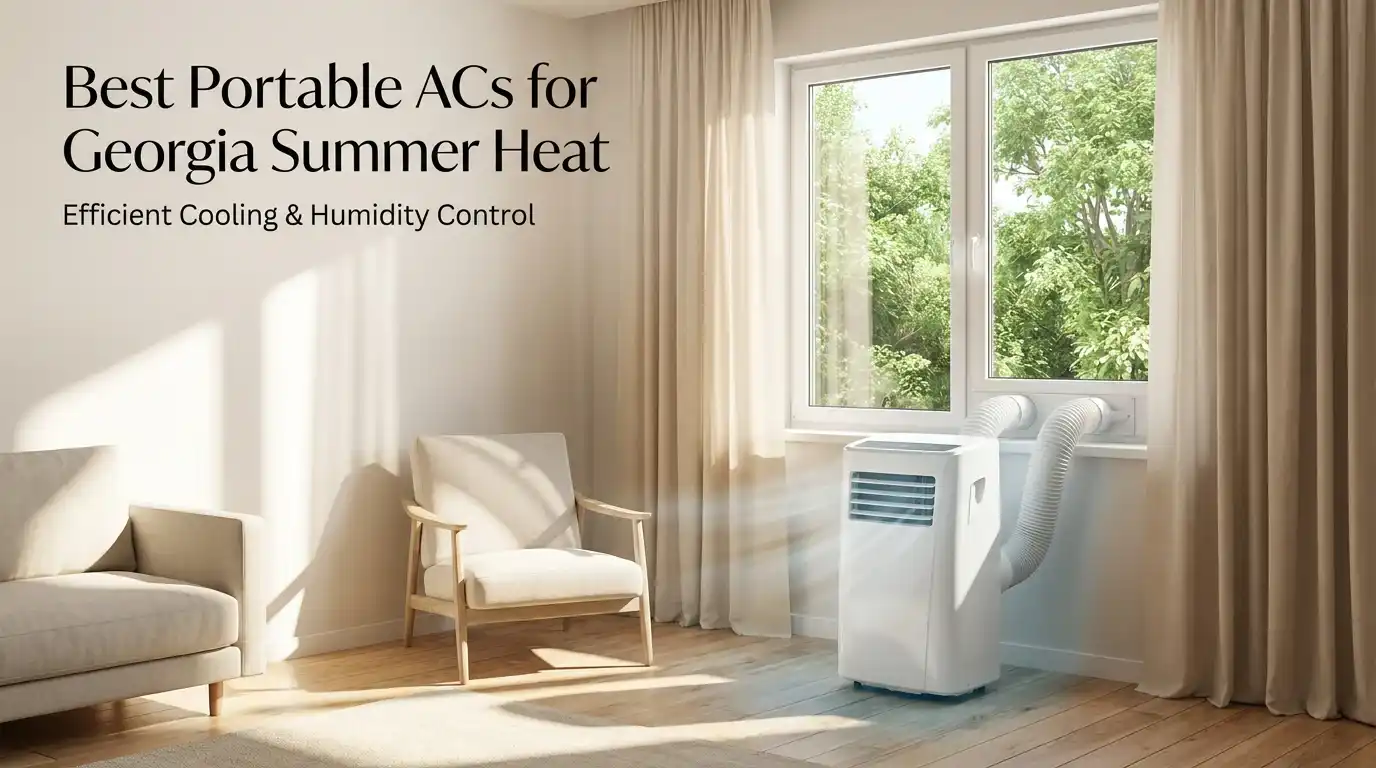

Best Portable Air Conditioners for Georgia Summer Heat
Georgia summers can turn an ordinary room into a hot, sticky space in a matter of hours. High temperatures, intense sunshine, and persistent humidity create a challenging indoor climate—especially in apartments, home offices, bedrooms, garages, and older homes without reliable central cooling. A well-chosen portable air conditioner for Georgia summer heat offers a flexible way to cool the rooms you use most without installing a permanent system.
Unlike a basic fan or a small evaporative cooler, a true portable AC removes heat from the room and pushes it outside through a window exhaust hose. Many models also reduce excess moisture, making them especially valuable during humid Georgia afternoons and nights. The right unit can improve sleep, make remote work more comfortable, and provide targeted relief when the main HVAC system struggles to keep up.
Why Portable AC Units Work Well in Georgia
A portable air conditioner is a practical solution for renters, homeowners, college students, and anyone who needs room cooling solutions without altering the property. Most units roll on caster wheels, plug into a standard outlet, and include a window vent kit. You can move the unit from a bedroom to a living room when your needs change.

Humidity is a major reason to prioritize an air conditioner rather than a fan. Fans circulate air, but they do not lower the room’s temperature or remove moisture. In contrast, a portable AC with dehumidifier mode can make indoor air feel more comfortable even before the room reaches its target temperature. Lower indoor humidity also helps reduce that damp, heavy feeling that often follows Georgia thunderstorms.
For households that already have central air, a portable model can act as a supplemental air conditioner. Instead of lowering the thermostat for the entire house, you can cool only the occupied room. This approach may make hot bedrooms, upstairs spaces, and sun-facing home offices more manageable.
Choose the Right BTU Capacity for Your Room
BTU, or British Thermal Unit, is one of the most important factors when choosing a portable air conditioner for bedroom use or larger spaces. A unit that is too small will run continuously and may never provide enough comfort. An oversized model can cool the air too quickly without removing sufficient humidity.
As a simple starting point, consider these approximate room-size ranges:
- Up to 250 square feet: A compact portable AC may suit small bedrooms, dorm rooms, or offices.
- 250 to 400 square feet: Look for a mid-size unit with enough capacity for a standard bedroom or studio apartment.
- 400 to 550 square feet: Choose a stronger model for larger living rooms or open-plan spaces.
- 550 square feet and above: Consider a high-capacity, preferably dual hose portable air conditioner, especially if the room receives direct afternoon sun.
Always review the manufacturer’s stated coverage area and the SACC BTU rating when available. SACC is a standardized rating that gives a more realistic estimate of cooling performance than older maximum BTU measurements. Georgia homes with tall ceilings, poor insulation, multiple occupants, large windows, or strong sunlight may need extra capacity.
Prioritize Dehumidification and Self-Evaporating Design
The best portable units for Georgia should do more than create cold air. They should actively address moisture. A built-in dehumidifier helps make the room feel less clammy and can improve comfort during rainy or muggy weather.
Look for a self evaporating portable AC whenever possible. These units reuse and exhaust much of the collected condensation through the vent hose, reducing how often you need to empty a water tank. However, extremely humid conditions can still require occasional drainage. Before buying, check whether the unit supports continuous drainage and whether it includes a drain hose.
A 3-in-1 portable air conditioner typically combines cooling, fan, and dry modes. This design gives you useful flexibility throughout the season. For example, you can use cooling mode on a blazing afternoon, dry mode during humid but mild weather, and fan mode on a breezy evening.
Single-Hose vs. Dual-Hose Portable Air Conditioners
Most affordable portable AC units use a single hose. The hose expels hot air outside, but the unit may draw some warm outdoor air into the home through gaps and pressure changes. These models can work well in small, enclosed rooms when installed carefully.
A dual hose portable air conditioner uses one hose to take in outside air and another to exhaust hot air. This setup often improves efficiency because it reduces negative air pressure inside the room. For Georgia’s demanding heat, dual-hose systems can be a smart choice for larger rooms, rooms with direct sunlight, and people who run their AC for several hours every day.
No matter which design you choose, seal the window kit properly. Even a powerful energy efficient portable AC loses performance when hot air leaks around the panel or hose connection. Use weather stripping if necessary, keep the exhaust hose as short and straight as possible, and avoid placing the unit directly in sunlight.
Features That Improve Daily Comfort
Modern portable air conditioners offer more than basic cooling. Look for features that match how and where you will use the unit:
- Quiet portable air conditioner: Choose lower noise output or a sleep mode for bedrooms and nurseries.
- Portable AC with remote control: Adjust temperature, fan speed, and timers without getting out of bed.
- Wi-Fi or app control: Start cooling before you arrive home or manage settings from another room.
- 24-hour timer: Avoid running the unit longer than necessary.
- Washable air filter: Helps maintain airflow and simplifies regular maintenance.
- Auto-restart function: Useful after a brief power outage.
- Portable air conditioner with window kit: Confirm that the included kit fits your horizontal or vertical window style.
Do not confuse a windowless evaporative cooler with a true portable AC. An evaporative air cooler may provide a breeze in dry climates, but it adds moisture to the air. Because Georgia’s summer climate is often humid, a vented portable air conditioner is generally the stronger choice for reliable indoor cooling.
Installation and Maintenance Tips
Install your portable unit close enough to a window that the exhaust hose does not stretch or bend sharply. Keep at least several inches of clearance around the intake and outlet vents. Close doors and windows in the room while the AC operates, and use curtains or blackout shades to reduce solar heat gain.
Clean the air filter every two to four weeks during heavy use. A dirty filter restricts airflow and forces the unit to work harder. Check the drainage system as recommended in the manual, particularly during humid periods. These simple steps can help your portable AC unit for apartment living perform better and last longer.
Amazon Product Recommendation
For a dependable option for medium-to-large rooms, consider the Whynter ARC-14S 14,000 BTU Dual Hose Portable Air Conditioner. Amazon lists it with cooling, dehumidifying, and fan functions, a dual-hose configuration, and coverage for rooms up to 500 square feet. It is a sensible option for Georgia residents who want stronger humidity control and more efficient cooling than many single-hose alternatives. View the current listing, availability, and price on Amazon.com.