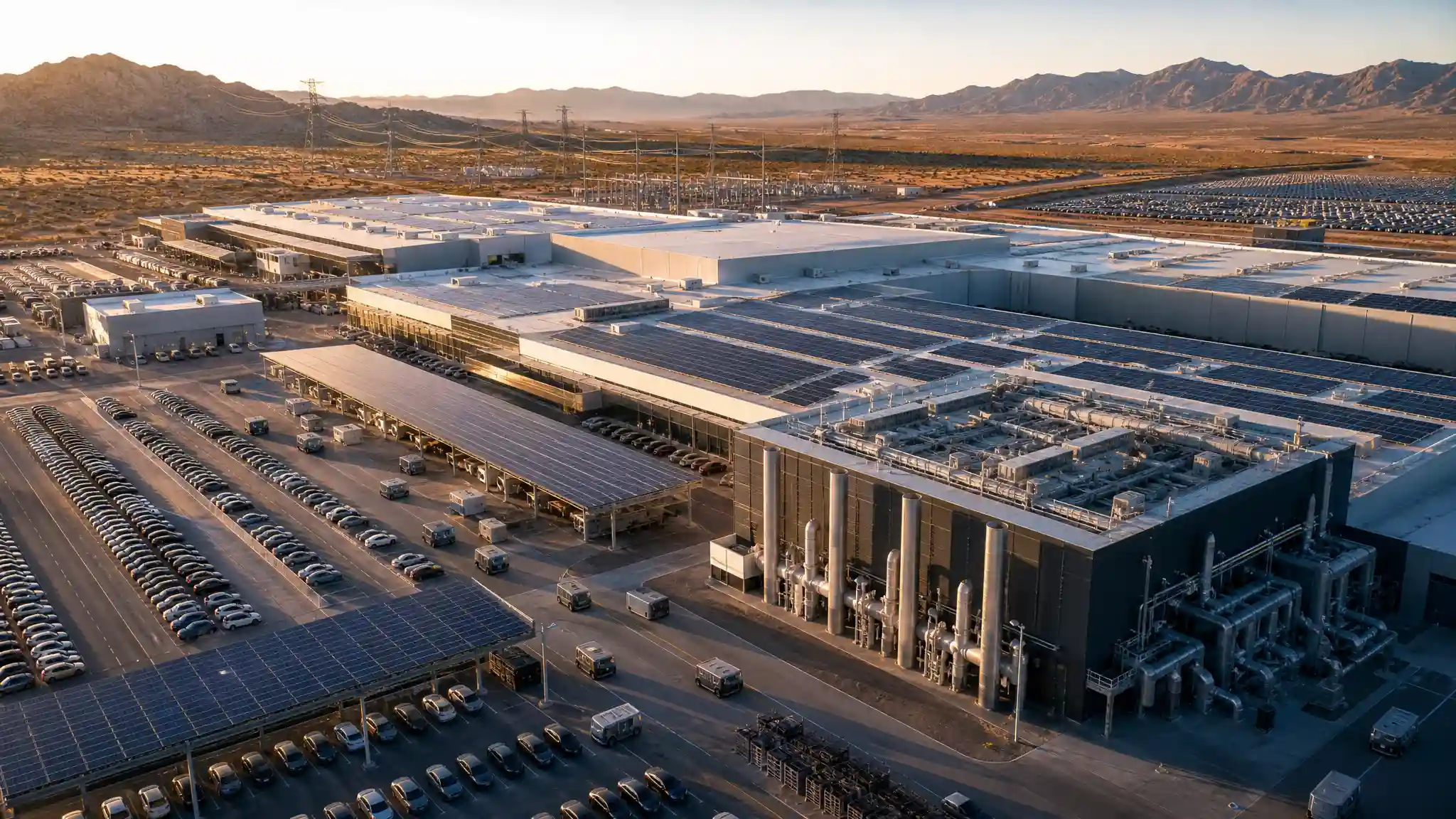

America’s Race to Build Giant Factories: Tesla, Ford, GM, Panasonic, and CATL
The United States is entering a new industrial contest. Instead of competing only for software talent or consumer attention, companies are competing for land, power, skilled labor, raw materials, and production capacity. Tesla, Ford, General Motors, Panasonic, and CATL each represent a different part of this transformation, yet their strategies intersect around one central goal: building a durable electric vehicle manufacturing base in America.
This factory race matters because an electric vehicle is not simply a traditional car with a battery. It is a highly integrated product that depends on cells, battery packs, power electronics, software, charging access, and tightly managed supply chains. Large plants can bring these activities closer together. They can also shorten logistics routes, improve quality control, and create a faster feedback loop between engineers and production teams.
Tesla and the Scale-First Model
Tesla helped make the gigafactory concept a familiar term in the automotive industry. Its approach treats manufacturing capacity as a strategic asset rather than a back-office function. By building very large facilities and linking vehicle assembly with battery-related operations, Tesla aims to lower unit costs while increasing output. This model supports its wider electric vehicle production strategy, where speed, standardization, and direct operational control carry major weight.
A Tesla factory does more than assemble cars. It organizes a complex network of suppliers, automation systems, technicians, logistics partners, and energy infrastructure. When the company expands production, it also pushes surrounding regions to develop new capabilities. Local contractors gain experience with advanced manufacturing. Training programs adapt to battery technology. Utilities must plan for sustained industrial demand. The result is an ecosystem that can attract additional clean energy manufacturing investment.
Tesla’s challenge is to keep scale from becoming rigidity. Fast growth can create pressure on quality, staffing, and supplier coordination. A plant must operate reliably every day, not only reach an impressive headline capacity. That reality makes process discipline as important as factory size.
Ford Rebuilds for the Electric Era
Ford brings a different advantage to the race: deep manufacturing heritage and an established dealer and supplier network. Its transition requires more than launching new models. The company must reshape long-standing production methods for a market defined by batteries, software, and changing customer expectations. Ford’s electric vehicle manufacturing plans therefore connect legacy know-how with new industrial systems.
Battery plants sit at the center of that transition. Battery cell production involves exacting chemistry, clean operating conditions, traceability, and safety management. Ford needs dependable partners and reliable processes because battery availability directly influences vehicle output. A delayed cell line can slow an entire assembly operation. For that reason, battery supply chain planning has become a core executive issue, not a narrow purchasing task.
Ford also faces a workforce question. Workers who mastered combustion-engine production hold valuable experience, but the company needs fresh capabilities in high-voltage systems, digital diagnostics, and automated production. Effective reskilling can protect institutional knowledge while preparing teams for an electric future.
GM Pursues an Integrated Portfolio
General Motors approaches the factory race through portfolio scale. It manages multiple brands, vehicle segments, and customer groups, so its electrification strategy must support broad flexibility. GM cannot rely on a single type of vehicle or one manufacturing formula. It needs platforms and factories that can respond to commercial demand, consumer preferences, and evolving regulations.
This is where battery manufacturing becomes a competitive lever. Cost, energy density, charging performance, durability, and repairability all influence the final vehicle proposition. GM’s investment in domestic battery capacity aims to create more control over those variables. An integrated battery ecosystem can reduce exposure to distant shipping routes and help the company coordinate product design with cell development.
Still, integration does not eliminate risk. New facilities need stable access to materials, qualified equipment suppliers, and trained operators. They also need predictable energy. Industrial electricity availability can determine whether a planned site becomes a productive asset or an expensive bottleneck. GM’s success will depend on execution across the entire value chain, from minerals and components to recycling and end-of-life recovery.
Panasonic’s Role Beyond the Vehicle Badge
Panasonic shows why the American battery boom includes companies that do not sell cars directly to drivers. As a battery manufacturer, it operates closer to the technical heart of the electric transition. Its performance depends on cell consistency, manufacturing yield, innovation speed, and customer trust. Automakers may shape the public narrative, but cell producers often determine whether ambitious vehicle schedules are achievable.
The company’s U.S. presence illustrates the importance of battery partnerships. Automakers want dependable volume, while battery specialists want long-term demand that justifies major capital spending. A well-structured partnership can align design specifications, production schedules, quality targets, and investment decisions. It can also support faster improvement because engineers can solve issues together instead of across a distant supply chain.
For Panasonic, the prize is not merely capacity. It is durable relevance in a market where customers expect safer, more affordable, and longer-range electric vehicles. That requires continuous improvements in battery chemistry, manufacturing efficiency, and responsible sourcing.
CATL and the Global Supply Chain Debate
CATL brings a global perspective to America’s factory competition. The company is widely associated with battery technology and scale, and its possible role in U.S.-linked projects creates debate about technology access, industrial policy, and supply-chain dependence. These discussions reveal a central tension: American manufacturers want advanced knowledge and competitive costs, but policymakers and communities also want resilient domestic capabilities.
The issue is larger than any one company. Battery localization does not mean every input begins inside the United States. Materials, processing expertise, specialized machinery, and intellectual property often cross borders. A practical industrial strategy recognizes that global trade will remain important while seeking stronger local production, diversified sourcing, and transparent partnerships.
CATL’s relevance therefore lies in the pressure it places on competitors. Its presence reminds American and allied manufacturers that the battery market moves quickly. Companies cannot depend on old automotive timelines when battery technology, charging standards, and supply-chain economics evolve at a faster pace.
Why the Factory Race Reshapes Communities
Giant factories change more than corporate balance sheets. They influence housing demand, roads, technical education, water planning, and local public services. Communities welcome jobs and investment, yet they also ask whether growth will remain sustainable. Developers and companies must answer practical questions about traffic, land use, worker housing, grid capacity, and environmental management.
A successful battery belt needs more than a celebrated groundbreaking ceremony. It needs apprenticeships, supplier development, safe working conditions, recycling capacity, and durable infrastructure. It also needs honest communication. Residents should understand both the opportunities and the operational demands that a large industrial site can bring.
Factory projects reveal that industrial leadership is cumulative. Each successful facility develops suppliers, experienced managers, production data, and practical confidence. Those assets make later investments easier, helping regions compete for future technologies rather than immediate contracts.
The Road Ahead
Tesla, Ford, GM, Panasonic, and CATL are not pursuing identical strategies, but they are competing within the same industrial landscape. Their decisions will shape U.S. electric vehicle production, battery supply chain resilience, and the future of advanced manufacturing. The winners will not simply build the largest buildings. They will combine technology, dependable execution, skilled people, responsible sourcing, and market-aware product planning.
America’s new factory race is ultimately a test of coordination. Automakers, battery makers, suppliers, educators, utilities, and public institutions must move with greater speed while maintaining safety and quality. If they do, the country can turn construction sites into long-term industrial capability rather than short-lived announcements. That distinction will define the next chapter of the EV economy.
Amazon Product Recommendation
For readers interested in EV charging infrastructure and charging adapters, consider the Lectron NACS to CCS Electric Vehicle Adapter. Before purchasing, verify compatibility with your vehicle and charging station.