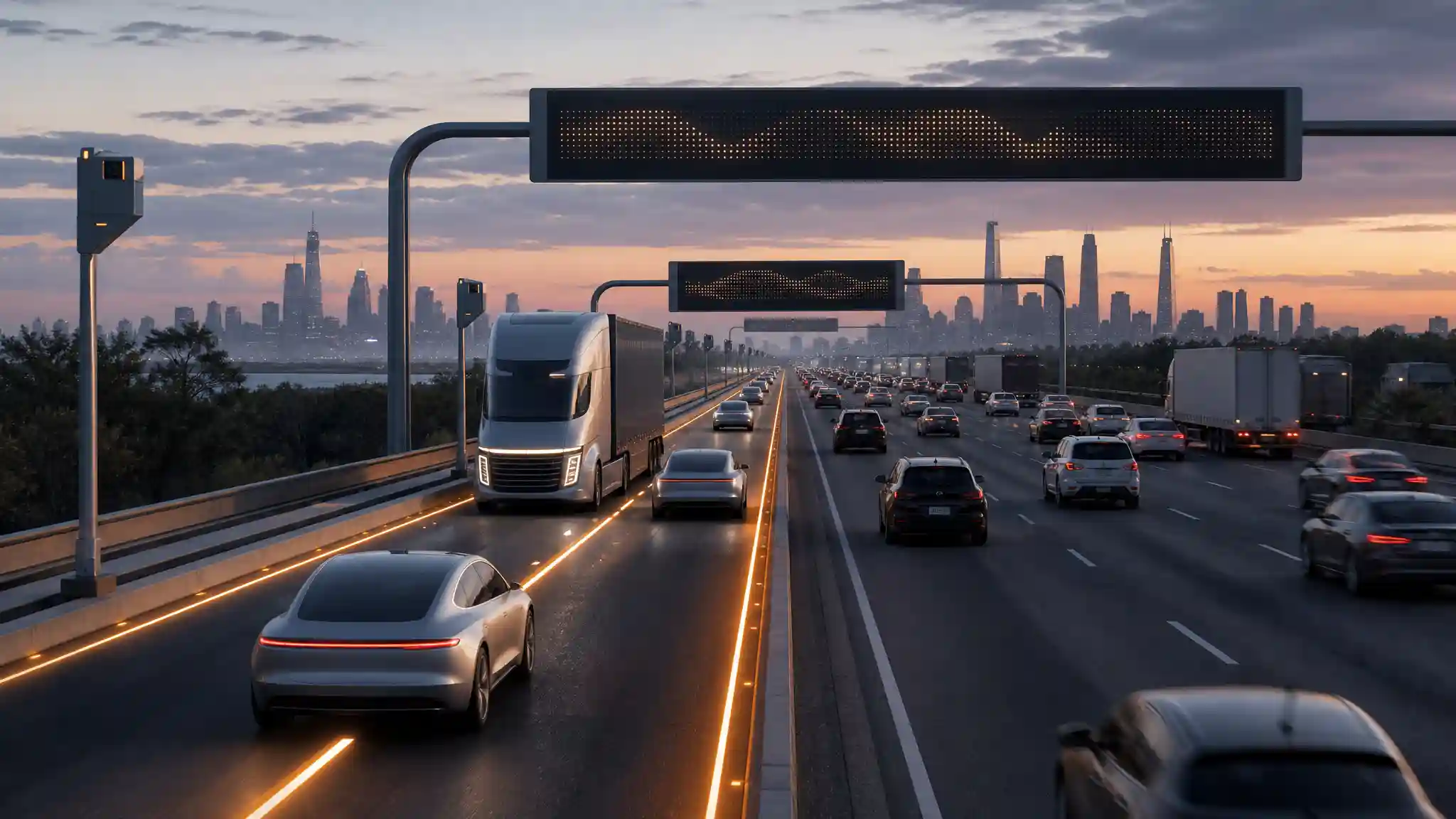

Will We See Autonomous Only Lanes on US Highways?
The Evolution of American Roadways
Every morning millions of American drivers encounter congested interstates, sudden bottlenecks, and dangerous stop-and-go patterns. Urban planners, highway engineers, and transportation agencies constantly search for structural solutions that reduce travel delays and eliminate human error. As autonomous vehicles advance from pilot testing to everyday reality, policymakers face an urgent structural question regarding future infrastructure. Will state transportation departments designate specific portions of our highways exclusively for self-driving traffic? The concept of dedicated autonomous corridors represents the next logical phase in American roadway design, yet implementing this transformation introduces complex technical, legal, and societal challenges.
Understanding Autonomous Vehicle Corridors
Highway authorities in states like Michigan, Texas, and California already conduct focused pilot projects on public expressways. These experimental corridors deploy roadway sensor networks, dedicated communications hubs, and specialized digital signage to test how driverless systems navigate real highway traffic. Unlike ordinary road expansions, dedicated lanes provide predictable operating conditions that minimize erratic human driving behaviors like sudden tailgating, aggressive lane changes, and distracted drifting.
Early transportation prototypes show that segregating autonomous cars from manually driven vehicles delivers immediate safety improvements. Self-driving algorithms calculate stopping distances and reaction times with mathematical precision. However, when an autonomous vehicle shares asphalt with an unpredictable human driver, safety algorithms must adopt conservative deceleration profiles that often exacerbate existing traffic slowdowns. Creating dedicated autonomous corridors allows engineers to establish consistent driving dynamics that maximize both vehicular safety and travel speed nationwide.
Public Versus Private Autonomous Infrastructure
Transforming existing highway infrastructure requires monumental capital investments that local taxpayers cannot bear alone. Consequently, modern transportation discussions explore two primary funding models: publicly managed access lanes and privately financed automated toll roads.
Publicly managed lanes would function similarly to traditional High-Occupancy Vehicle or High-Occupancy Toll segments. State transportation agencies would convert underutilized median lanes into intelligent transit corridors. In contrast, public-private partnerships introduce private infrastructure developers who build and maintain specialized bypass corridors. Private concessionaires install sophisticated vehicle-to-everything communication systems along private road segments, recovering capital expenditures through automated digital tolls collected directly from autonomous fleet operators and private vehicle owners.
Key Technologies Powering Dedicated Highway Segments
A truly functional autonomous corridor relies on far more than fresh asphalt and distinct thermoplastic lane markings. Transportation agencies must deploy comprehensive intelligent highway platforms along every mile of dedicated roadway.
Roadside communication beacons continuously broadcast real-time conditions, including sudden weather anomalies, temporary lane closures, and stalled obstacles situated miles ahead. Simultaneously, connected automated driving platforms communicate directly with neighboring vehicles using direct short-range communication protocols. This real-time coordination enables automated vehicle platooning, where groups of self-driving passenger vehicles and commercial trucks cruise together in tightly grouped, aerodynamically efficient formations. Platooning reduces aerodynamic resistance, slashes fuel consumption, and optimizes overall throughput without compromising collision avoidance margins.
Economic and Environmental Impacts
The widespread deployment of driverless highway lanes offers profound economic and environmental benefits for metropolitan transit corridors. Long-haul logistics operators lose billions of dollars annually due to highway congestion and mandatory driver rest requirements. Dedicated freight corridors allow continuous commercial freight transport, dramatically shortening supply chain transit times between major logistics hubs.
Furthermore, smoothing traffic flows yields massive environmental gains. Traditional highway traffic generates excessive greenhouse gas emissions because internal combustion engines burn extra fuel during rapid acceleration and braking cycles. Autonomous highway corridors eliminate turbulent stop-and-go cycles by synchronizing vehicular velocity across entire lanes. Combined with the accelerating transition toward electric drivetrains, optimized speed profiles dramatically lower carbon footprints and minimize local particulate pollution.
Regulatory Obstacles and Policy Realities
Despite compelling engineering advantages, establishing exclusive automated highway lanes demands sweeping regulatory reforms. Federal transportation regulators must establish universal safety certification protocols for vehicles entering high-speed autonomous thoroughfares. What automated driving system capabilities qualify a vehicle for entry? How do roadway monitoring cameras verify whether an approaching vehicle operates under approved Level 4 autonomy rather than standard Level 2 adaptive cruise assistance?
Moreover, legal liability frameworks require substantial clarification before public entities authorize autonomous operations on publicly funded highways. If an infrastructure communication node transmits corrupted positioning telemetry and precipitates a multicar pileup, liability allocation remains contentious among state agencies, sensor vendors, and automobile manufacturers. Lawmakers must draft transparent statutory protections that assign operational responsibility fairly across modern digital highway ecosystems.
Public Equity and Commuter Perception
Infrastructure decisions carry profound social equity implications that state planners cannot overlook. Converting public highway lanes into exclusive corridors for advanced autonomous models sparks immediate criticism regarding transit fairness. Low-income commuters who drive older manual vehicles may perceive dedicated lanes as exclusive toll expressways reserved solely for wealthy motorists and commercial fleets.
To prevent public backlash, transportation departments must integrate autonomous transit options into their strategic plans. Operating high-speed autonomous express buses alongside private driverless automobiles ensures that regular transit riders enjoy faster commute times. Highway administrators must demonstrate that dedicated corridors siphon traffic away from general lanes, creating faster journeys for all highway users regardless of vehicle age.
The Realistic Timeline for American Highways
American motorists will not witness overnight conversions of entire interstate networks. Instead, civil engineers anticipate an incremental transition spanning multiple decades. The initial phase involves shared autonomous express lanes where high-occupancy automated buses and certified commercial trucks operate during peak transit hours.
As national market penetration for self-driving platforms expands, state departments will gradually restrict non-automated traffic from designated median corridors. By the mid-2030s, major interstate corridors connecting major economic hubs will feature fully functional autonomous express networks. These dedicated segments will transform long-distance American freight transport and daily regional commuting into a safer, remarkably predictable experience.
Conclusion
The question facing American transportation planners is not whether autonomous lanes will appear, but how swiftly regional agencies can coordinate the necessary infrastructure. Dedicated highway corridors offer an elegant engineering solution to persistent traffic fatalities and chronic interstate gridlock. By uniting robust vehicle-to-infrastructure connectivity, clear regulatory frameworks, and equitable access guidelines, the United States can build a forward-looking highway network that unlocks the full transformative promise of autonomous mobility.
Related Amazon.com Product Recommendation
A widely considered hardware option for autonomous driving and intelligent driver-assistance technology is the Comma 3X Dev Kit. Alternatively, the Vantrue N4 Pro 3-Channel 4K Dash Cam belongs to the vehicle-based AI safety and lane-monitoring camera category.
These products may appeal to technology enthusiasts who want to explore advanced driver-assistance features, road monitoring, and lane-tracking data in personal vehicles.