
Surviving the Prairie Chill: The Ultimate Guide to the Best Humidifiers for Illinois Winters
When November rolls across the Midwestern plains, Illinois residents brace for a familiar seasonal shift. Lake Michigan whips icy winds across Chicago high-rises, while freezing temperatures blanket the farmland stretching down to Carbondale. Along with sub-zero wind chills comes an invisible indoor adversary: severe atmospheric dryness. Central heating furnaces run relentlessly day and night to keep homes warm, stripping indoor air of virtually all ambient moisture.
Relative humidity inside an Illinois home during January often plummets below fifteen percent, a moisture level drier than the arid sands of the Sahara Desert. This extreme lack of indoor moisture causes parched nasal passages, persistent morning throat irritation, static electricity shocks, and itchy winter skin. It also threatens hardwood flooring and wooden instruments, causing costly gaps and warping. Investing in a high-capacity, dependable humidifying unit is not merely a luxury during Midwestern winters; it is an absolute necessity for indoor health and wellness.
Understanding the Brutal Illinois Winter Atmosphere
Illinois experiences a severe continental climate marked by frigid arctic air masses colliding with damp regional fronts. Cold air holds substantially less water vapor than warm air. When your home furnace pulls this freezing outside air indoors and heats it to seventy degrees Fahrenheit, the relative humidity collapses dramatically.
Furnaces provide essential warmth, but forced-air systems circulate super-dry air through every duct and register. Breathing dry air continuously dries out the delicate mucous membranes lining your respiratory tract. These membranes serve as your body’s primary mechanical defense against airborne pathogens. Without sufficient protective fluid, your respiratory system becomes vulnerable to viral infections, flu complications, and sinus inflammation. Restoring indoor moisture levels to a healthy baseline between thirty-five and forty-five percent relieves airway irritation, eliminates static cling, improves sleep quality, and preserves household wood furnishings.
Evaporative Versus Ultrasonic Technology: Choosing the Right Mechanism
Selecting the ideal machine begins with choosing between two primary moisture dispersion technologies: evaporative wick systems and ultrasonic vibrating transducers. Both designs offer distinct operational strengths suited to different room layouts and water profiles across Illinois.
Evaporative humidifiers draw room air through a porous, wet wick filter using an internal fan. The passing air causes the water to evaporate naturally into vapor, which the fan then blows into your living space. This self-regulating process ensures that the machine never over-saturates the surrounding air, because air absorbs less water as its relative humidity rises. Evaporative models also naturally trap mineral deposits and dissolved tap solids inside the replaceable wick, preventing fine white airborne residue from settling across your furniture and electronics. If your Illinois municipality draws hard tap water rich in calcium and magnesium, an evaporative system provides effortless maintenance.
Ultrasonic humidifiers utilize a microscopic metal diaphragm vibrating at high sound frequencies. This intense mechanical motion splits liquid water into an ultra-fine, visible cool mist that drifts gently through the room. Ultrasonic units operate almost silently, making them the preferred choice for nurseries, bedrooms, and home offices. However, because ultrasonic diaphragms atomize tap water directly, any dissolved minerals in untreated water disperse into your room as fine white dust. Running an ultrasonic unit effectively in hard-water areas requires using distilled water, demineralization cartridges, or reverse-osmosis filtration.
Determining Capacity and Room Coverage for Midwestern Homes
A small personal desktop unit cannot restore moisture balance to an open-concept living area or a sprawling Midwestern ranch-style home. Choosing an undersized machine leads to continuous motor strain, noisy fan cycles, and disappointing humidity readings.
Illinois houses vary from compact urban brownstones and apartments to spacious two-story suburban family homes. For single bedrooms or dedicated workspaces, a compact unit with a one-gallon water reservoir provides adequate twelve-to-eighteen-hour runtimes. For large living rooms, finished basements, or multi-room suites, homeowners need a console-style unit holding three to six gallons. Large console units disperse gallons of water daily, elevating relative humidity throughout multiple adjoining spaces without requiring refills every six hours.
Always calculate your target room size in square feet before purchasing. Check the manufacturer’s rated coverage area and select a machine rated slightly higher than your room’s actual square footage. Extreme outdoor cold forces indoor heaters to run longer, meaning your home consumes ambient moisture faster than national testing averages suggest.
Essential Features to Look for Before Buying
Navigating retail aisles and online catalogs becomes simple when you prioritize features engineered to withstand relentless winter workloads.
Built-In Digital Humidistat
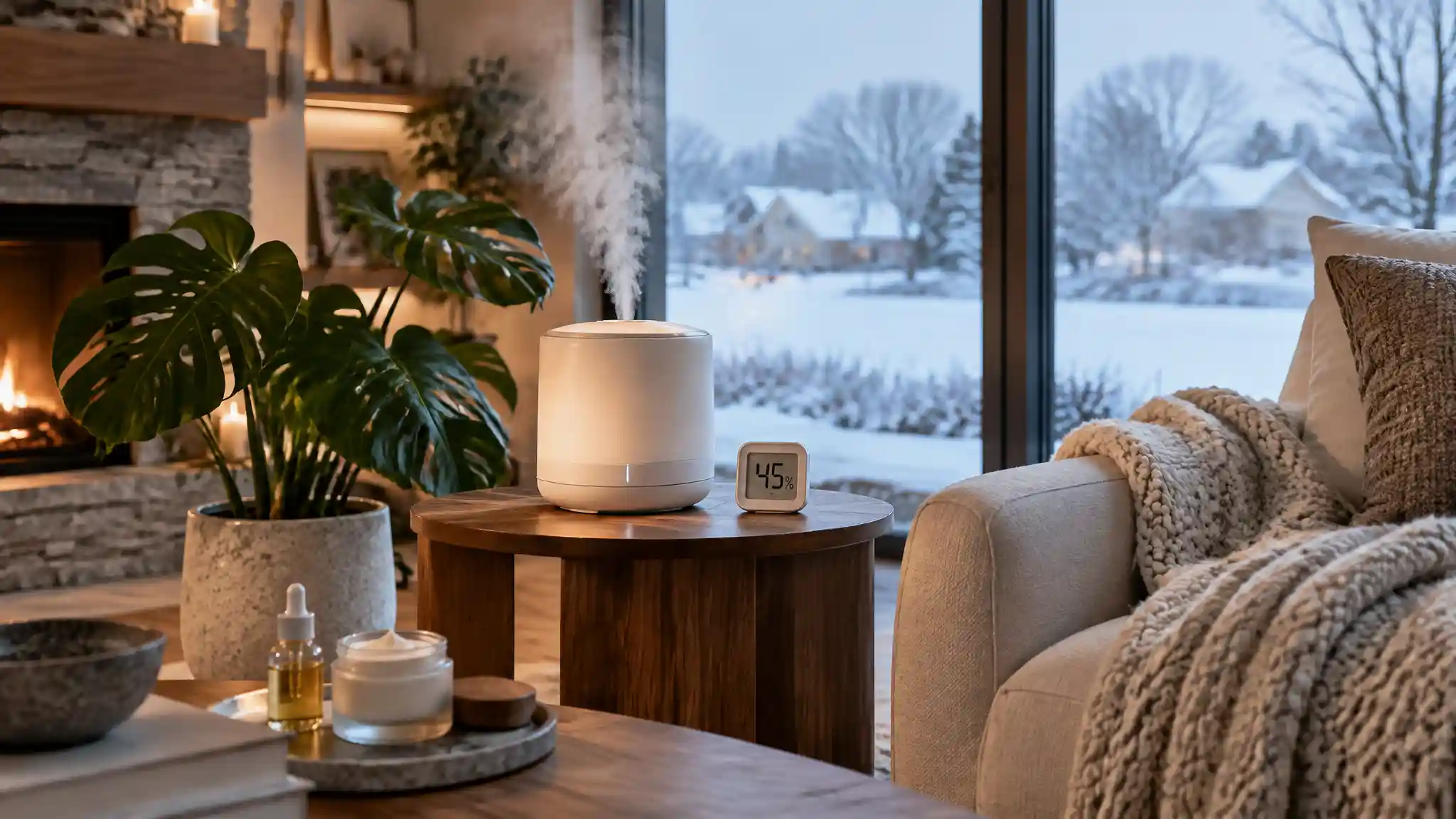
A high-precision internal hygrometer measures ambient room moisture continuously. Look for machines with smart auto-mode settings that cycle the motor on and off to maintain your chosen moisture target. This prevents over-humidification, which can encourage indoor condensation and window frosting.
Hassle-Free Top-Fill Design
Carrying heavy, awkwardly shaped water tanks across a slippery kitchen floor creates daily frustration. Modern top-fill reservoirs allow you to pour water directly into the machine using a clean kitchen pitcher or watering can, saving time and preventing spills.
Dual Mist Options (Warm and Cool Mist)
While cool mist refreshes daytime air safely around curious children and pets, warm mist settings pre-warm water before dispersion. Warm mist raises ambient room temperatures slightly and provides soothing steam therapy when winter colds strike.
Integrated Essential Oil Diffuser Tray
Many premium ultrasonic models incorporate dedicated aroma pads. Adding a few drops of eucalyptus, lavender, or peppermint oil infuses moisturizing vapors with relaxing therapeutic scents, helping to clear congested airways during sleep.
Maintenance and Cleaning Protocols for Lasting Performance
Consistent sanitization prevents bacteria, mold spores, and mineral buildup from colonizing your water reservoir. Standing water left unchecked inside warm indoor spaces develops biological film within days.
Rinse your humidifier tank daily and refill it with fresh, cold water. Once every seven days, perform a comprehensive deep clean using plain white household vinegar and dilute hydrogen peroxide. Disassemble the removable tank, base basin, and mist chimney. Soak the components in distilled white vinegar for twenty minutes to dissolve stubborn lime scale and mineral crusts. Scrub corners using a soft-bristled brush, rinse all parts thoroughly with clean tap water, and wipe surfaces dry before reassembly. If you operate an evaporative model, inspect the paper wick filter every two weeks and discard it once mineral crusts restrict airflow.
Product Recommendation Available on Amazon.com
Levoit OasisMist 450S Smart Humidifier
For Illinois residents seeking the ideal balance of whisper-quiet bedroom operation, smart mobile control, and powerful output, the Levoit OasisMist 450S stands out as a premier choice on Amazon.com. This hybrid ultrasonic machine delivers both warm and cool mist, producing up to 550 milliliters of moisture per hour to cover rooms up to 430 square feet. Its convenient top-fill 4.5-liter tank runs continuously for up to 45 hours on low settings. The companion smartphone app lets you track indoor humidity levels remotely, schedule runtimes, and trigger automated humidity adjustments from anywhere.