
Obstacle Avoidance Tech: How Smart Vacuums Now Recognize Pet Waste
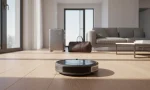
For years, robot vacuums offered a convenient way to keep floors clean, but pet owners faced one serious concern: unexpected accidents. A robot vacuum could easily spread pet waste across carpet, hardwood, or tile if it failed to recognize the obstacle before reaching it. What should have been a quick cleaning cycle could become a stressful and expensive mess.
Today, that risk has changed significantly. Smart vacuums now use cameras, sensors, artificial intelligence, and real-time mapping to detect objects on the floor before making contact. This evolution has made automated floor cleaning safer, smarter, and far more practical for homes with cats and dogs.
Modern models do not simply move until they hit an object. Instead, they scan the path ahead, assess potential hazards, and choose a safer route. Pet waste recognition has become one of the most valuable features in the robot vacuum market because it protects floors, reduces cleaning disasters, and gives pet owners more confidence when they run a device unattended.
Why Older Robot Vacuums Struggled With Pet Waste
Early robot vacuums used basic navigation systems. Most depended on physical bumper sensors, infrared detectors, or simple movement patterns. When the vacuum reached a chair leg, wall, or large object, it bumped into it and changed direction.
This approach worked reasonably well for furniture, but it failed badly with low objects. Pet waste, charging cables, socks, toys, and food bowls often sat below the sensor range. The vacuum could not see them, so it continued forward.
When a robot vacuum rolled into pet waste, its wheels and brushes could spread the material through several rooms. The rotating brush roller often pushed waste deeper into carpets, while the suction channel could become contaminated. This issue became a major concern for pet owners, especially those with puppies, elderly pets, or animals that occasionally had accidents indoors.
Traditional LiDAR navigation improved map creation but did not completely solve the issue. A LiDAR sensor usually scans its surroundings from a higher position on top of the robot. It can accurately map walls, furniture, and room boundaries, but small objects near floor level may remain outside its direct field of view. That limitation encouraged manufacturers to develop more advanced obstacle recognition systems.
The Role of AI Obstacle Avoidance
AI obstacle avoidance has transformed how premium robot vacuums move around a home. Rather than treating every object as an unknown barrier, the vacuum analyzes what it sees and determines whether it should avoid, approach, or clean around it.
The process begins with visual data. A front-facing camera captures images of the floor ahead. The vacuum’s onboard processor then examines those images using trained recognition software. If the system identifies an object that resembles pet waste, it stops or changes course before the brushes touch it.
This technology allows the vacuum to identify common household obstacles such as:
- Pet waste
- Charging cords
- Shoes
- Socks
- Children’s toys
- Food bowls
- Small pet accessories
- Loose clothing
The vacuum does not rely on a single image or sensor reading. It compares visual details, shape, depth, location, and movement data before making a decision. This layered response improves safety and reduces the chance of running over something that should remain untouched.
RGB Cameras Give Vacuums a Clearer View
One of the most important upgrades in this category is the use of RGB cameras. These cameras capture color images, much like a smartphone camera. They help the robot distinguish between objects that may have similar shapes but different colors or textures.
For example, a dark brown pet toy may look similar to a small pile of pet waste at first glance. However, RGB cameras give the smart vacuum additional visual information. The system can assess the object’s edges, color range, surface texture, and position on the floor.
A camera-based robot vacuum can also recognize visual differences between hardwood, rugs, tile, and carpet. This matters because the appearance of pet waste can change depending on the surface beneath it. What stands out clearly on white tile may blend into a patterned rug. Advanced visual systems account for these variations during detection.
However, cameras alone are not enough. Lighting changes throughout the day, and shadows can confuse a camera. That is why many smart vacuums combine visual hardware with depth sensors and artificial intelligence.
Structured Light Sensors Add Depth Perception
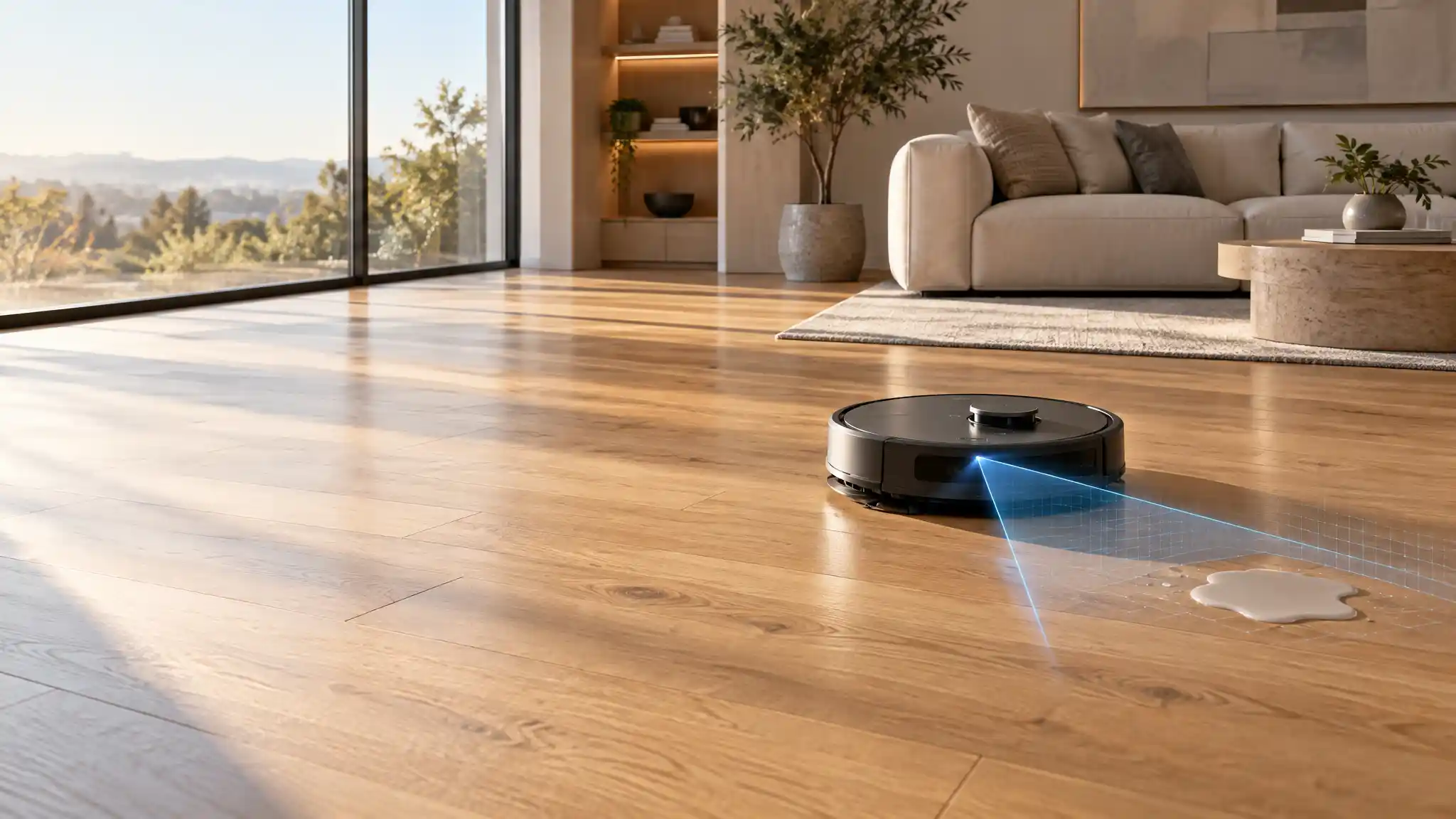
Structured light sensors help robot vacuums understand the three-dimensional shape of objects. These sensors project an invisible pattern of light onto the floor. When that pattern changes because an object interrupts it, the vacuum can calculate the object’s size, height, and distance.
This process gives the robot a type of depth perception. Instead of only seeing a dark shape on the floor, the vacuum can determine whether that shape rises above the surface. This is especially useful for avoiding small pet messes, cords, slippers, and soft toys.
Structured light sensors also improve performance in challenging environments. A home may have dark floors, colorful rugs, glossy tiles, or low lighting. In those situations, color data alone can be unreliable. Depth data gives the smart vacuum another source of information, helping it make safer navigation choices.
The device can react in milliseconds. If it detects an obstacle directly ahead, it slows down, stops, reverses, or turns around the object. This dynamic hazard detection prevents contact before the main brush, side brush, wheels, or suction opening reaches the hazard.
Computer Vision Algorithms Identify the Difference
The real intelligence behind pet waste detection comes from computer vision algorithms. These algorithms allow a smart vacuum to interpret visual data rather than merely capture it.
Manufacturers train their systems using a large range of images. The software learns how different pet messes appear under various lighting conditions and on different floor materials. It can study color, shape, texture, reflection, and location patterns.
During this training process, developers include many types of indoor obstacles. The goal is not only to recognize dog waste or cat waste. The system must also understand the difference between hazardous materials and harmless items.
For instance, the vacuum may see a brown object on a beige carpet. The artificial intelligence model evaluates whether the object resembles a toy, a food spill, a shadow, or biological waste. It assigns a confidence level to its decision. If the confidence level reaches the safety threshold, the vacuum avoids the area.
This method makes obstacle avoidance more accurate than older navigation systems. The robot does not need to touch an object to learn that it exists. It can recognize the risk before physical contact happens.
Neural Network Training Makes Detection Smarter
Neural network training plays a critical role in improving pet waste recognition. A neural network is a form of machine learning that identifies patterns in data. In robot vacuums, it helps the device learn from thousands or millions of labeled images.
Engineers feed the system examples of pet messes, cables, furniture legs, shoes, and other household objects. Over time, the model becomes better at identifying important visual characteristics. It learns that pet waste often has irregular shapes, organic textures, uneven edges, and certain reflective properties.
The training process must include many real-life conditions. A robot vacuum needs to recognize hazards in bright kitchens, dim hallways, bedrooms, and living rooms. It must also work around pet hair, rug fibers, sunlight, shadows, and furniture.
Manufacturers continue updating their software to improve detection. Some models receive app-based firmware updates that refine their object recognition abilities. These updates can help the vacuum respond more effectively to new scenarios without requiring the owner to purchase a new machine.
Robotic Vacuum Sensors Work Together
The best smart vacuums do not depend on one technology. They combine multiple robotic vacuum sensors to create a stronger navigation system.
A typical advanced model may use:
- RGB cameras for color recognition
- LiDAR for room mapping
- Structured light for depth information
- Time-of-Flight sensors for distance measurement
- Cliff sensors for stair detection
- Wheel encoders for movement tracking
- Bumper sensors as a final physical backup
Each sensor handles a different part of the cleaning challenge. LiDAR creates a map of the home. Cameras inspect objects directly ahead. Depth sensors measure raised objects. Cliff sensors prevent falls. Together, these systems give the robot a far better understanding of its environment.
This sensor fusion improves reliability. If a camera cannot clearly identify an object in a dark area, depth data may still reveal that something is blocking the path. If bright sunlight creates glare on the floor, other sensors can help confirm whether an obstacle is present.
What Happens When a Vacuum Detects Pet Waste?
When a smart vacuum identifies pet waste, it immediately changes its cleaning behavior. First, it stops forward movement. Then, it pauses the side brushes and main roller to avoid spreading material.
Next, the vacuum calculates a safe route around the object. It usually leaves a buffer zone instead of passing very close to the hazard. This precaution helps prevent the side brush from touching the mess or throwing debris across the floor.
Many smart models also mark the object’s location on the map inside the companion mobile app. The homeowner may receive a notification that alerts them to the obstacle. This feature allows the person to handle the accident manually after the cleaning cycle ends.
The vacuum then continues cleaning other areas. Instead of abandoning the full task, it works around the restricted zone and completes as much of the scheduled route as possible.
Challenges That Still Affect Performance
Pet waste avoidance technology has improved greatly, but it is not flawless. Dark rooms, reflective floors, thick rugs, and unusual object shapes can still create difficult conditions. Very small messes or liquid accidents may also be harder to recognize than solid objects.
Pet owners should keep camera lenses and sensors clean. Dust, pet hair, fingerprints, and dried debris can reduce visibility. Good lighting can also support better camera performance, although many premium devices include built-in lights or infrared assistance.
It is also wise to check the manufacturer’s stated obstacle avoidance features before buying. Some robot vacuums offer general obstacle detection, while others specifically advertise pet waste recognition. These are not always the same capability.
The Future of Smart Pet-Friendly Cleaning
The next stage of smart vacuum development will likely focus on even better object classification, liquid detection, and personalized cleaning responses. Future devices may identify specific types of spills and adjust their cleaning route automatically.
Smart vacuums may also connect more deeply with other home automation systems. A robot could notify an owner about a detected accident, avoid the area, and schedule a return cleaning after the person confirms that the floor is safe.
For pet owners, this technology changes the value of robot vacuums. Instead of worrying that a cleaning session may create a larger problem, they can use their device with greater peace of mind. With advanced cameras, sensors, and AI-driven recognition, smart vacuums have become more capable of handling the unpredictable reality of life with pets.
Amazon.com Product Recommendation
For a model specifically listed with pet-waste recognition, consider the iRobot Roomba j6+ Self-Emptying Robot Vacuum. Its Amazon listing states that it identifies and avoids pet waste and cords, includes smart mapping, and self-empties.