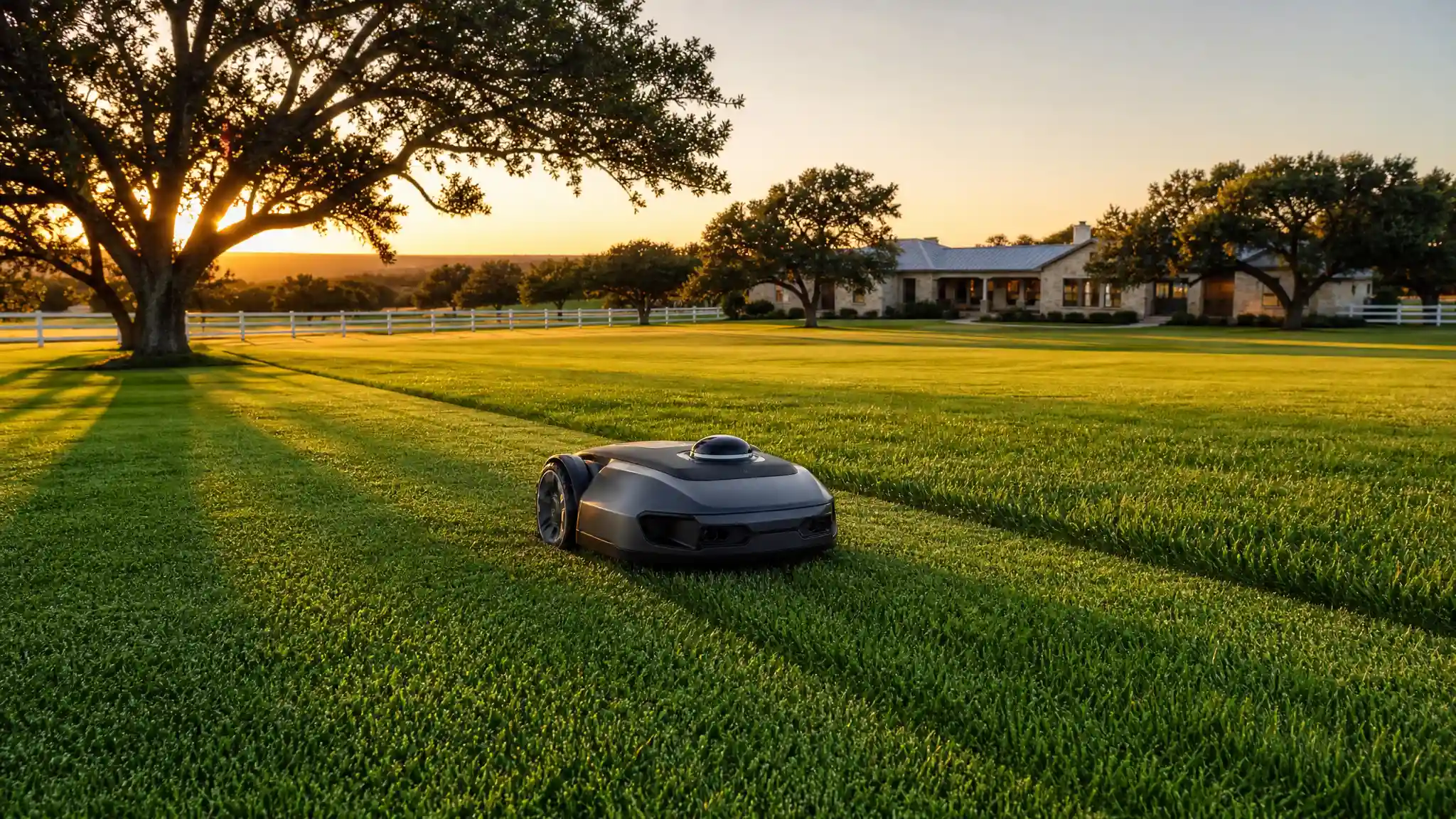

Best Robot Lawn Mowers for Large Lawns in Texas
Maintaining a large lawn in Texas can feel like a full-time job. High temperatures, fast-growing grass, uneven terrain, and wide open spaces make traditional mowing tiring and time-consuming. A robot lawn mower can reduce this workload by cutting the grass automatically, following scheduled mowing sessions, and returning to its charging station when the battery runs low.
However, not every robotic mower suits the demanding conditions of Texas. Homeowners should consider lawn size, grass type, slope, sunlight, connectivity, obstacle detection, and battery performance before choosing a model. This guide explains what to look for and highlights the features that matter most when selecting the best robot lawn mower for large lawns in Texas.
Why Texas Lawns Need a Powerful Robotic Mower
Texas has several climate zones, so lawn conditions can vary significantly. A property in Dallas may experience hot summers and occasional storms, while a lawn near Austin may include rocky soil, slopes, and native landscaping. Houston lawns often deal with humidity and dense grass growth, whereas West Texas properties may face dry soil and intense sunlight.
These conditions require more than a basic automatic lawn mower. A suitable model should offer strong traction, dependable navigation, weather resistance, and enough coverage capacity for the entire property. It should also manage different grass varieties, including Bermuda grass, St. Augustine grass, and Zoysia grass.
A robot mower works best when it trims small amounts of grass frequently. This mowing method supports a cleaner appearance and allows the clippings to return to the soil as natural mulch. With the right schedule, homeowners can maintain a healthier lawn without spending every weekend behind a noisy gas mower.
Key Features to Consider for Large Texas Properties
Coverage Area
The first consideration is the mower’s recommended coverage area. Manufacturers usually list capacity in square feet, acres, or both. Always compare the mower’s maximum rating with the actual mowable area of your lawn.
For example, a mower rated for one acre may not perform efficiently on a full one-acre property if the yard includes landscaping beds, pools, driveways, or buildings. Those areas reduce the available mowing space, but complex layouts can still increase travel time.
For properties larger than one acre, choose a model with extra capacity. Additional coverage helps the mower complete its schedule without excessive charging cycles.
Navigation Technology
Modern robotic lawn mowers use technologies such as GPS, RTK positioning, LiDAR, cameras, and virtual mapping. Wire-free models use these systems to create a digital map of the lawn and recognize mowing boundaries.
RTK navigation can provide highly accurate positioning, while LiDAR helps the mower understand nearby objects and changes in terrain. AI vision systems can identify obstacles such as toys, garden hoses, pets, trees, and outdoor furniture.
A wire-free setup can save installation time because you do not need to bury a physical boundary cable around the lawn. However, the mower still requires careful mapping during installation. Trees, tall fences, dense structures, and poor satellite visibility may influence navigation performance.
Slope and Traction
Texas properties are not always flat. Hills, drainage areas, rocky patches, and uneven ground can challenge a lightweight mower. If your lawn includes slopes, look for all-wheel drive, strong rubber tires, or tracked traction systems.
Check the manufacturer’s slope rating before buying. A mower that performs well on a gentle incline may struggle on a steep hill after rain. Good traction also reduces wheel slipping and helps protect the turf from unnecessary ruts.
Battery Life and Charging Speed
Large lawns demand efficient battery management. A capable robot mower should work for a reasonable period, return to the charging station automatically, and resume mowing after recharging.
Fast charging can shorten the total time needed to maintain the property. This feature becomes especially useful during the peak growing season when the grass requires frequent cutting. A larger battery may also help the mower handle thick grass and longer mowing sessions.
Heat and Weather Resistance
Texas summers can expose outdoor equipment to extreme heat, dust, and sudden storms. Look for a weather-resistant design and a reliable charging station. A rain sensor can help the mower pause during wet conditions, which may prevent muddy tracks and improve cutting quality.
Even a weatherproof robot mower benefits from protection. A mower garage or covered charging area can shield the unit from direct sunlight and heavy rain. You should also clean the cutting deck regularly because dry clippings and dust can accumulate around the blades.
Multi-Zone Mowing for Complex Lawns
Large Texas properties often contain several separate lawn sections. A front yard, backyard, side strip, pool area, and garden zone may require different mowing schedules. Multi-zone management allows homeowners to create separate digital areas inside the app.
This feature helps the mower prioritize high-growth zones and avoid areas that do not need frequent mowing. You can also create no-go zones around flower beds, swimming pools, children’s play areas, ponds, and fragile landscaping.
App control makes the process more convenient. Depending on the model, you may adjust mowing times, change cutting height, monitor the mower’s location, receive alerts, and pause the machine remotely.
Cutting Height and Texas Grass Types
The correct cutting height depends on the grass variety and season. Bermuda grass usually tolerates shorter mowing, while St. Augustine grass generally performs better with a higher cut. Zoysia grass may require a balanced height that protects the crown and supports dense growth.
Choose a mower with adjustable cutting height rather than a fixed blade setting. During hot or dry periods, a slightly higher cut can help shade the soil and reduce moisture loss. Never remove too much of the grass blade in one session because aggressive cutting can stress the lawn.
Sharp blades also matter. Replace or sharpen the blades according to the manufacturer’s instructions. Dull blades tear grass instead of cutting it cleanly, which can create a brown appearance and increase disease vulnerability.
Safety and Maintenance Tips
Robot lawn mowers include safety sensors, but homeowners should still prepare the property before operation. Remove hoses, toys, branches, and loose objects from the mowing area. Keep pets and children away from the mower while its blades are operating.
Inspect the mower regularly for grass buildup, damaged wheels, loose parts, and worn blades. Clean the underside only according to the manufacturer’s safety instructions. Before maintenance, switch off the unit and disconnect the battery when required.
You should also check the charging station after severe storms. Flooding, lightning, or damaged cables can create safety risks and affect the mower’s performance.
Best Amazon Product Recommendation
For a large Texas lawn of approximately three-quarters of an acre, the ECOVACS Goat A3000 LiDAR PRO Robotic Lawn Mower is a practical option to consider. The Amazon listing describes it as a wire-free robotic mower with dual LiDAR navigation, AI obstacle avoidance, app control, fast charging, and a built-in edge-trimming feature. Its listed capacity reaches up to three-quarters of an acre, making it more suitable for medium-to-large residential properties than small lawn models.
The mower appears on Amazon’s robotic lawn mower listings, but availability, pricing, ratings, and specifications can change. Check the latest product details before purchasing through the Amazon robotic lawn mower section.
For properties larger than its stated coverage, consider a higher-capacity model instead of expecting one unit to manage an oversized lawn efficiently. The best choice depends on the actual mowable area, terrain, grass type, and required level of automation.