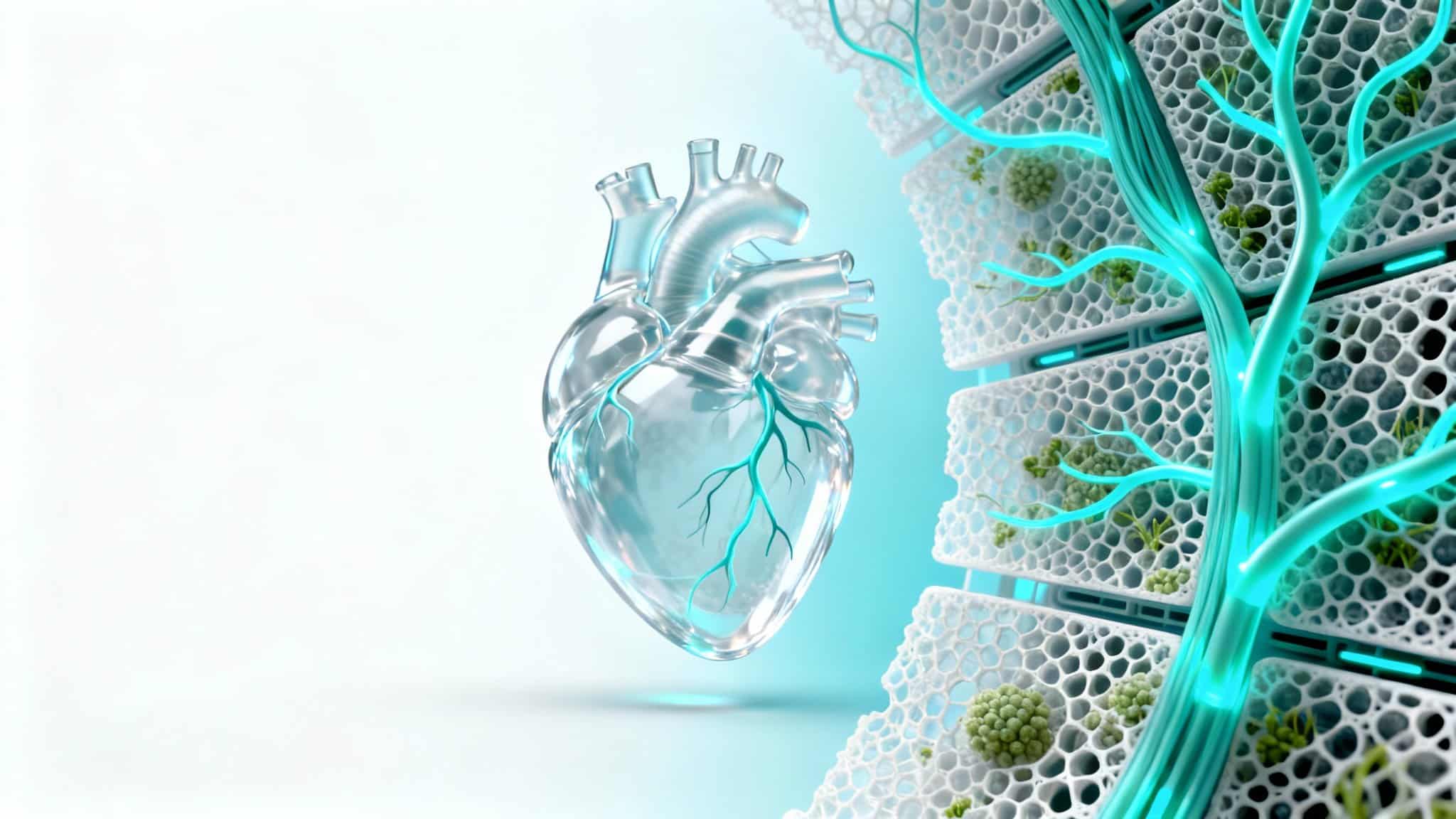

Cardiovascular disease remains the leading cause of death worldwide, and millions of patients struggle with limited treatment options when heart tissue is damaged beyond repair. Traditional transplants are constrained by donor shortages, immune rejection, and long-term medication side effects. Enter biohybrid heart tissue: an emerging class of engineered constructs that blend living cells with advanced biomaterials and microelectronics to restore function, synchronize contractions, and ultimately personalize care. This paradigm is shifting the conversation from “one-size-fits-all” implants to bespoke, patient-specific “replacement parts” designed to integrate seamlessly with the body.
What Is Biohybrid Heart Tissue?
Biohybrid heart tissue combines:
- Living cardiac cells (e.g., induced pluripotent stem cell-derived cardiomyocytes, endothelial cells, fibroblasts)
- Smart biomaterials (e.g., collagen, fibrin, decellularized extracellular matrix, elastomers, and conductive polymers)
- Enabling technologies (microelectrodes, biosensors, and soft electronics) for monitoring and control
The result is a functional patch or scaffold that can conduct electricity, contract rhythmically, and remodel over time as it integrates with host tissue. Unlike inert synthetic implants, biohybrid constructs aim to actively heal, adapt, and communicate with the heart’s native circuitry.
Why Personalization Matters
Every heart is unique. Differences in geometry, electrophysiology, scar distribution, and immune response shape patient outcomes. Personalized biohybrid tissues leverage:
- Patient-derived cells to reduce immune rejection and improve functional coupling.
- Custom-fit scaffolds shaped from imaging data (MRI or CT) for perfect anatomical alignment.
- Tunable mechanical and electrical properties to match the native myocardium and prevent arrhythmias.
This personalization can enhance graft survival, improve contractility, and reduce the need for lifelong immunosuppression—core goals in regenerative cardiology.
Key Technologies Powering the Field
- Stem Cell Engineering
- Induced pluripotent stem cells (iPSCs) enable the creation of autologous cardiomyocytes and support cells from a patient’s own tissue sample. Differentiation protocols and maturation cues (mechanical stretch, electrical pacing, metabolic conditioning) are closing the gap between lab-grown cells and adult myocardium.
- Advanced Biomaterials
- Bioactive hydrogels provide a supportive niche for cell survival and alignment.
- Conductive matrices (e.g., graphene, PEDOT:PSS, carbon nanotubes in biocompatible forms) facilitate electrical coupling across the patch.
- Decellularized extracellular matrices supply natural biochemical cues that guide tissue organization and vascular ingrowth.
- Biofabrication & 3D Bioprinting
- High-resolution printing places multiple cell types and vascular channels precisely where needed.
- Patient imaging enables creation of patches that conform to the heart’s curvature.
- Gradient designs tailor stiffness and porosity to mimic the myocardium’s anisotropy.
- Soft Bioelectronics and Biosensing
- Embedded microelectrodes track conduction velocity, detect arrhythmogenic foci, and deliver synchronized pacing.
- Stretchable sensors monitor strain, oxygenation, and pH, informing clinicians about tissue health post-implant.
- Closed-loop systems can modulate stimulation in real time to support recovery.
- Vascularization Strategies
- Pre-vascular networks, growth factor gradients (VEGF, FGF), and microfluidic channels accelerate perfusion after implantation.
- Endothelial cell co-cultures improve anastomosis with host vessels, critical for long-term function.
Clinical Promise and Use Cases
- Post-Myocardial Infarction Repair: Biohybrid patches can mechanically reinforce damaged walls, reduce adverse remodeling, and restore contractile function in infarct zones.
- Congenital Heart Defects: Patient-specific grafts can be designed to grow with pediatric patients, avoiding multiple surgeries.
- Heart Failure Support: Larger constructs and bioelectronic interfaces may synchronize failing regions, improve ejection fraction, and reduce arrhythmia risk.
- Drug Discovery and Precision Testing: Patient-derived tissues act as in vitro test beds to screen therapies, optimize dosing, and predict toxicity, accelerating safer, tailored treatments.
Safety, Ethics, and Regulatory Pathways
To attract global adoption, safety and ethics must be central:
- Immunogenicity: Autologous iPSC-based tissues lower rejection risk but require stringent quality controls to avoid residual pluripotent cells.
- Arrhythmia Prevention: Electromechanical maturity and proper anisotropy are essential to prevent ectopic foci and conduction blocks.
- Long-Term Durability: Materials must resist fatigue in a high-strain environment while remaining biocompatible and bioresorbable when needed.
- Data & Privacy: AI-driven personalization relies on sensitive imaging and genomic data, emphasizing secure storage and transparent consent.
- Regulatory Alignment: Clear standards for manufacturing, sterility, and performance testing—aligned with global regulatory agencies—will underpin clinical trust.
Manufacturing at Scale
Personalized medicine must still scale responsibly:
- Modular Platforms: Standardized base scaffolds rapidly customized using patient data streamline production.
- Digital Twins: Computational models predict tissue behavior, guiding design before fabrication.
- Quality by Design (QbD): Inline analytics monitor cell viability, alignment, and conductivity during fabrication to ensure reproducibility.
Integration With Existing Therapies
Biohybrid tissues are not replacements for all therapies—yet. They complement:
- Revascularization and medical therapy by addressing structural and electrophysiological deficits.
- Implantable devices (pacemakers/ICDs) by providing living, conductive interfaces that can reduce device load and improve synchronization.
- Transplant pathways by serving as bridge therapies or adjuncts that potentially delay or obviate the need for a donor heart.
Global Impact and Accessibility
For worldwide relevance, solutions must be inclusive:
- Cost-Effective Materials: Leveraging widely available biomaterials and scalable bioprinting lowers barriers to adoption.
- Training and Telemedicine: Standardized protocols and remote monitoring open access for regions lacking specialized centers.
- Open Science Collaborations: Shared datasets and validated models accelerate innovation and ensure equitable benefits.
The Road Ahead
The next decade will likely bring:
- Fully vascularized, electromechanically mature patches validated in large-animal and early human trials.
- Smarter, wireless bioelectronics with AI-assisted pacing and diagnostics.
- Integration of gene editing to correct patient-specific mutations before tissue fabrication.
- Regulatory frameworks tailored to living, sensorized implants, enabling safer, faster approvals.
Biohybrid heart tissue embodies a powerful idea: building personalized, living “replacement parts” that heal with you, not just for you. As science converges with engineering, the heart may finally receive therapies as dynamic and responsive as the organ itself—expanding hope for patients everywhere.
Conclusion
From cells to circuits, from hydrogels to high-fidelity sensors, biohybrid heart tissue represents the future of personalized cardiology. By aligning biology with technology and tailoring every component to the individual, we approach a world where damaged hearts can regain rhythm, strength, and resilience—with solutions designed uniquely for each patient.