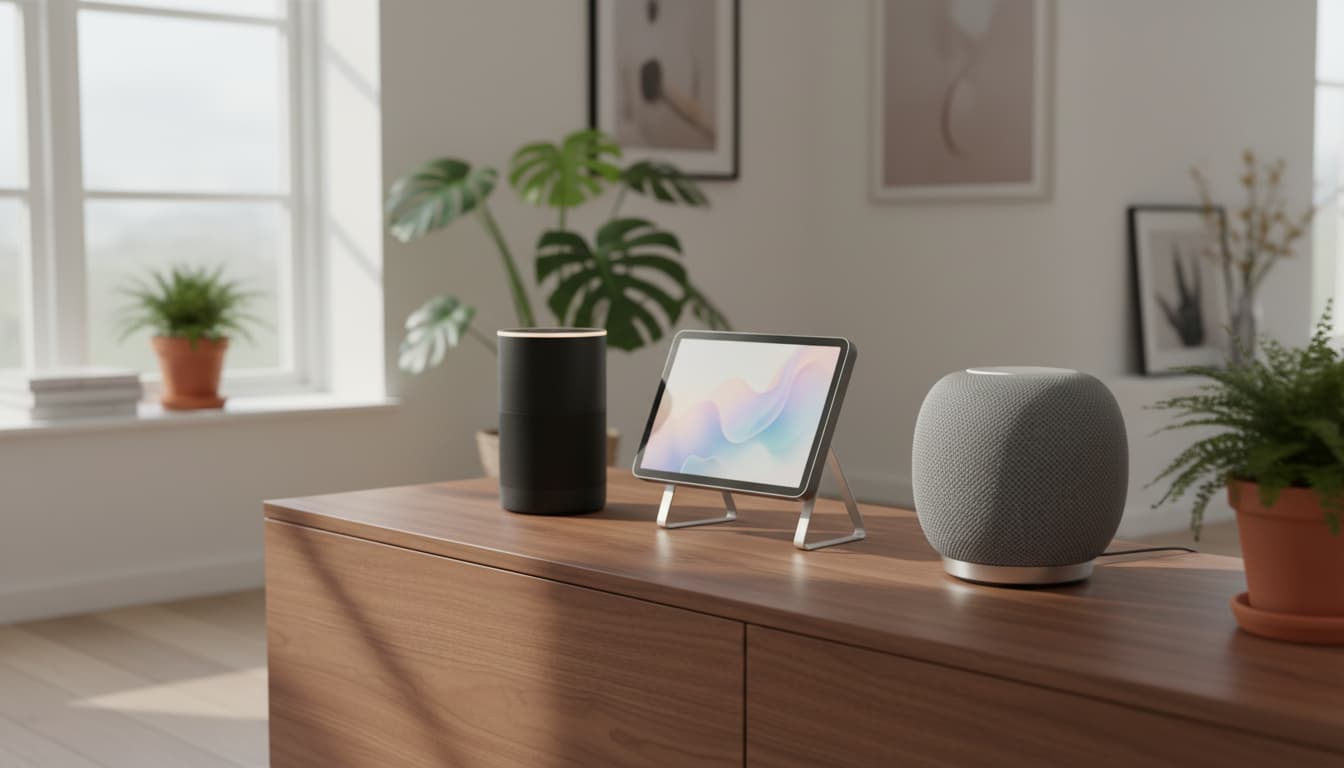

If you’re building a smart home or upgrading your voice assistant, the Amazon Alexa vs Google Assistant vs Apple Home debate is probably at the top of your research list. Each ecosystem shines in different ways—Alexa leads in third‑party device support and skills, Google Assistant excels in natural language understanding and search, and Apple Home (with Siri and HomeKit) wins on privacy, security, and seamless Apple integration. This guide breaks down features, compatibility, audio quality, smart home routines, privacy, pricing, and the ideal buyer persona for each platform—so you can confidently choose the best voice assistant for your needs.
The Core Differences at a Glance
- Amazon Alexa: Best for breadth of smart home device compatibility, budget-friendly hardware, and rich automations via Routines and Skills.
- Google Assistant: Best for conversational accuracy, multilingual support, and Google ecosystem perks (YouTube, Maps, Calendar, Nest).
- Apple Home (Siri + HomeKit): Best for privacy, reliability, and tight integration with iPhone, iPad, Apple Watch, and HomeKit Secure Video.
Ecosystem and Device Compatibility
- Alexa: Works with the widest range of third‑party devices—lights, locks, thermostats, vacuums, cameras—you name it. If you’re mixing brands, Alexa is often the safest bet. Amazon’s Echo lineup also supports the new Matter standard and Thread (on select models), making multi-brand interoperability easier.
- Google Assistant: Excellent with Nest devices and most major smart home brands. Google’s aggressive Matter support is closing the gap with Alexa. If you rely on Google services daily (Gmail, Calendar, Photos), the convenience is unmatched.
- Apple Home: HomeKit certification demands stricter security, so the accessory selection is more curated—but extremely reliable. With HomePod/HomePod mini as a hub plus Matter/Thread support, Apple Home is now much more flexible than before.
Voice Recognition and Natural Language
- Google Assistant: Still the leader for conversational queries and contextual follow-ups. It interprets complex, multi-part questions better and can switch languages on the fly in bilingual households.
- Alexa: Very capable, especially for commands related to smart home, shopping, and skills. Alexa’s on-device processing improvements have reduced latency and improved responsiveness.
- Siri (Apple Home): Most accurate within Apple’s ecosystem and short, direct commands. Siri now handles offline requests and has improved intent recognition, but it’s less flexible for complex, multi-step queries compared to Google.
Audio Quality and Hardware Options
- Amazon Echo: Wide range from Echo Pop and Echo Dot (compact, budget-friendly) to Echo Studio (premium audio). Great value overall. Many models double as smart home hubs.
- Google Nest Speakers/Displays: Nest Audio offers balanced sound; Nest Hub and Hub Max add visual controls, camera (Hub Max), and photo display from Google Photos—fantastic for communal spaces.
- Apple HomePod/HomePod mini: Best-in-class sound tuning for size, especially the larger HomePod with room sensing and Spatial Audio support. If music quality matters and you’re on Apple Music, Apple is a standout.
Smart Home Automations and Routines
- Alexa Routines: Extremely powerful. Trigger via voice, schedules, sensors, geofencing, or device states. Skills expand functionality (e.g., custom scenes, announcements).
- Google Home Automations: Google’s script editor and routines have improved significantly, with easy linking to Nest cameras, thermostats, and presence sensing.
- Apple Home Automations: Reliably executed automations using HomeKit triggers like presence, time, sensors, and accessory state. HomeKit Secure Video enables advanced camera detection (people, pets, vehicles) with local processing.
Privacy and Security
- Apple Home: Strongest privacy stance. HomeKit encrypts data end-to-end. HomeKit Secure Video processes footage locally on a Home Hub and stores encrypted recordings in iCloud. If privacy is your top priority, Apple leads.
- Google Assistant: Transparent controls and robust account-level security. You can manage activity retention, auto-delete, and mute mics. Some data is used to improve services unless you limit it.
- Amazon Alexa: Offers privacy dashboards, mic-off buttons, and auto-delete for voice recordings. Supports on-device wake word detection. Amazon’s broad ecosystem means more integrations—manage permissions closely.
Entertainment and Content
- Alexa: Great for Amazon Music, Audible, Prime Video control on Fire TV, and multi-room audio. Skills bring unique content like games and quizzes.
- Google Assistant: Best for YouTube and Chromecast control, plus Spotify and YouTube Music. Nest Hub doubles as a photo frame and quick dashboard.
- Apple Home: Deep integration with Apple Music and AirPlay 2. Control Apple TV with Siri for hands-free media navigation. If your content life is Apple-first, it’s the smoothest experience.
Setup, App Experience, and Ease of Use
- Alexa app: Feature-rich with device tabs, groups, and routines. The depth can be overwhelming, but power users love it.
- Google Home app: Clean, visual, and improving rapidly. The Matter-centric device onboarding is getting simpler.
- Apple Home app: Minimalistic and intuitive, especially on iPhone/iPad/Apple Watch. Rooms, zones, and scenes are cleanly organized.
Cost and Value
- Amazon: Most aggressive pricing and frequent discounts on Echo speakers and bundles. Ideal if you want to scale your smart home on a budget.
- Google: Competitive pricing on Nest speakers/displays. Bundles with Nest Thermostat/Camera deliver good value.
- Apple: Premium pricing for HomePod and HomeKit accessories, but you’re paying for audio quality, privacy, and long-term reliability.
Which One Should You Buy?
- Choose Amazon Alexa if:
- You want maximum device compatibility and the most routine options.
- You’re budget-conscious and plan to add many devices over time.
- You like shopping, reminders, lists, and announcements driven by voice.
- Choose Google Assistant if:
- You depend on Google services (Gmail, Calendar, YouTube, Maps).
- You want the best conversational AI and bilingual support.
- You prefer Nest cameras/thermostats and a visual smart display.
- Choose Apple Home if:
- Privacy and security are non-negotiable.
- You’re fully invested in iPhone, Apple Watch, Apple TV, and Apple Music.
- You value high-fidelity audio and stable automations.
Future-Proofing: Matter and Thread
The new Matter standard and Thread networking are reshaping smart homes. All three ecosystems now support Matter, which means greater cross-compatibility. If you buy a Matter-enabled accessory, it should work across Alexa, Google, and Apple with far less hassle. Thread, a low-power mesh protocol, makes devices faster and more reliable. When in doubt, look for “Matter over Thread” on product pages to keep your setup flexible for years.
Final Verdict
There’s no single winner for everyone. Alexa is the versatile workhorse with unbeatable ecosystem breadth, Google Assistant is the conversational genius tied to Google’s powerhouse services, and Apple Home is the privacy-first, premium choice for Apple households. Pick based on your daily apps, your device mix, and how much you value either cost, conversation quality, or privacy.