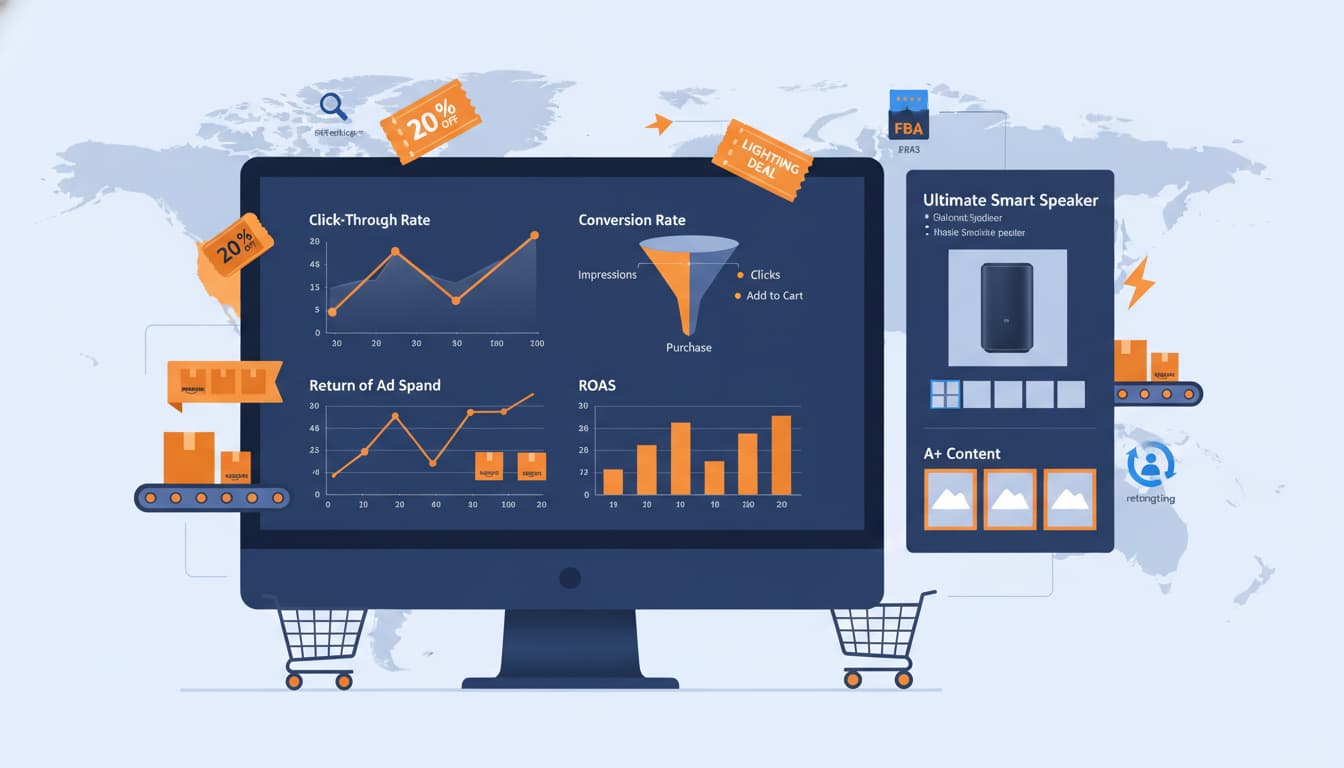

Prime Day has evolved from a mid-year promotion into a global shopping phenomenon, rivaling Black Friday and Cyber Monday in volume and urgency. For brands and sellers, the event is a high-stakes opportunity to boost revenue, capture new customers, and strengthen marketplace visibility for the months that follow. This guide outlines proven Prime Day strategies—covering pricing, promotions, inventory, advertising, content optimization, and post-event retention—so you can maximize conversion and profitability while staying SEO-friendly for sustained traffic.
1) Prime Day Positioning: Prep Early, Win Big
Winning Prime Day starts weeks in advance. Align goals: Are you driving top-line revenue, moving aging inventory, defending market share, or launching new products? Segment SKUs by objective:
- Hero products: Use aggressive pricing and ad spend to dominate category rankings.
- Mid-tier SKUs: Offer moderate discounts to lift basket size and upsell.
- Long-tail items: Bundle to increase perceived value and clear stock.
Audit your competitive landscape. Track price history, review counts, badges (Amazon’s Choice, Best Seller), and ad placements. Build a pre-event watchlist of 10–20 direct competitors and monitor Buy Box stability, coupon usage, and lightning deal cadence.
2) Offer Architecture: Discounts, Coupons, and Bundles
Your offer must be compelling and conversion-centric:
- Discounts: For hero SKUs, target 15–30% off. Tie the depth to your margin and category elasticity. Test thresholds (e.g., $49 vs. $59) to hit free shipping or psychological pricing sweet spots.
- Coupons: The green coupon badge boosts click-through rate (CTR). Even $2–$5 can materially lift sessions and conversion.
- Bundles: Pair top sellers with accessories to increase average order value (AOV) and protect margin when discounting.
- Lightning Deals and 7-Day Deals: Use sparingly and strategically. Ensure sufficient inventory to avoid early stockouts (which can tank rank).
- Subscribe & Save: For consumables, add limited-time extra percent-off to lock in LTV during the Prime Day surge.
Pro tip: Stagger discounts across dayparts to manage pacing and maintain Buy Box control in case competitors blitz early.
3) Inventory and Forecasting: Don’t Stock Out
Nothing kills momentum like going out of stock. Model three demand scenarios (conservative, expected, aggressive) using last year’s data, recent velocity, and ad budgets. Account for:
- Lead times and inbound cutoffs for FBA.
- Safety stock for peak hours.
- Variant distribution (colors/sizes): Allocate more inventory to top-converting variants to avoid fragmenting rank.
Enable FBM as a backstop if feasible, but prioritize FBA for Prime eligibility and delivery speed badges.
4) PDP Optimization: Conversion Rate Is Your Multiplier
Your product detail page is the conversion engine. Optimize for both humans and algorithms:
- Titles: Clear, keyword-rich, and benefit-led. Front-load primary keywords and differentiators.
- Bullets: Outcome-oriented, skimmable, and feature-to-benefit mapped. Use power words and social proof cues.
- A+ Content: Visual storytelling, comparison charts, and FAQs to reduce friction and returns.
- Images/Video: 7–9 images, including lifestyle, scale, infographics, and in-use shots. Short demo video lifts CVR and time on page.
- Reviews: Aim for 4.3+ average. Address negative themes via content and packaging updates. Use Vine or request-a-review (where allowed) pre-Prime Day.
Localize language for different regions if selling internationally, and ensure compliance with marketplace policies.
5) Advertising Strategy: Full-Funnel, Data-Driven
Prime Day success hinges on capturing intent before, during, and after the event.
- Pre-Event (7–14 days out):
- Sponsored Products: Ramp up to precondition the algorithm and climb organic rank.
- Sponsored Brands: Drive branded queries and category awareness. Test custom headlines and Store spotlight.
- Sponsored Display/Retargeting: Warm traffic from detail page viewers and cart abandoners.
- During Event:
- Protect brand terms with Sponsored Products and Sponsored Brands at higher bids.
- Target competitor ASINs showing low stock, lower review count, or weaker creatives.
- Expand exact and phrase match on top-converting keywords; pause poor performers quickly.
- Dayparting: Increase bids during peak buying hours; monitor ACOS/ROAS in near real-time.
- Post-Event:
- Retarget Prime Day engagers with Sponsored Display to harvest late conversions.
- Maintain a lighter branded defense to hold organic rank gains.
Use negative keywords aggressively to reduce wasted spend. Keep budgets uncapped or high enough to avoid going dark during peak traffic. Automate rules for pausing low-converting terms and boosting winners.
6) Pricing Intelligence: Defend the Buy Box
Prime Day is a repricing battlefield. Monitor:
- Buy Box win rate hourly.
- Competitor price drops and coupon stacking.
- Landed price (including shipping and coupons).
Use rule-based or algorithmic repricers within minimum margin floors. Beware of race-to-the-bottom spirals; bundle or differentiate instead of purely undercutting.
7) On-Amazon SEO: Intent, Relevance, and Velocity
SEO on Amazon is largely conversion-informed. To rank, you need both relevance and sales velocity:
- Backend keywords: Fill all slots with relevant terms, plurals, and misspellings. Avoid repetition and competitor brand names.
- Content freshness: Update bullets and A+ with seasonal hooks (“Prime Day savings,” “limited-time deal”) while keeping evergreen benefits intact.
- CTR signals: Thumbnails, price, coupons, and reviews collectively drive clicks; refine these to improve search placement.
- Velocity boosts: Pre-event ads and coupons prime the pump, raising organic rank before the peak.
8) Cross-Selling and Storefronts: Lift AOV and Brand Equity
Curate your Amazon Storefront with Prime Day collections: “Top Deals,” “Best Sellers,” “New Arrivals,” and “Bundles & Save.” Use:
- Store spotlight ads.
- Comparison charts to guide choice.
- Brand videos to reinforce trust.
Implement “Frequently Bought Together” and “Customers Also Viewed” strategies by linking compatible SKUs in content and targeting competitor ASINs through ads.
9) Social, Email, and Affiliate Amplification
Drive external traffic to improve overall sales velocity:
- Email/SMS: Send segmented teasers, early access links, and cart nudges. Use urgency-capable subject lines and countdowns.
- Social ads: Highlight hero SKUs with crisp value props and social proof. Test short-form video.
- Influencers/Affiliates: Provide unique codes and deep links to Prime deals. Track via tagged URLs where allowed.
External traffic that converts can reinforce ranking signals while diversifying your reach.
10) Measurement and Post-Mortem: Build the Flywheel
Define success metrics in advance:
- Conversion rate, sessions, ACOS/ROAS, TACOS, Buy Box %, and organic rank movement.
- Contribution margin after discounts, ads, fees, and returns.
- New-to-brand percentage and Subscribe & Save activations.
Post-event, run a SKU-by-SKU analysis. Identify:
- Which keywords scaled profitably.
- Which creatives lifted CTR/CVR.
- Inventory gaps and pacing missteps.
- Opportunities to turn Prime Day customers into repeat buyers via follow-up campaigns and loyalty programs.
11) Risk Management: Avoid the Hidden Traps
- Over-discounting low-margin SKUs without a clear LTV plan.
- Ignoring returns—optimize packaging and descriptions to set correct expectations.
- Running out of budget midday—set alerts and buffer budgets.
- Setting-and-forgetting ads—Prime Day requires live optimization.
12) Quick Start Checklist
- Finalize offers, coupons, and bundles.
- Ensure FBA stock and variant allocations.
- Refresh titles, bullets, A+, and images.
- Warm up ads 1–2 weeks ahead.
- Build competitor watchlist and pricing rules.
- Prepare email/social pushes and affiliate links.
- Set dashboards and alerts for real-time pivots.