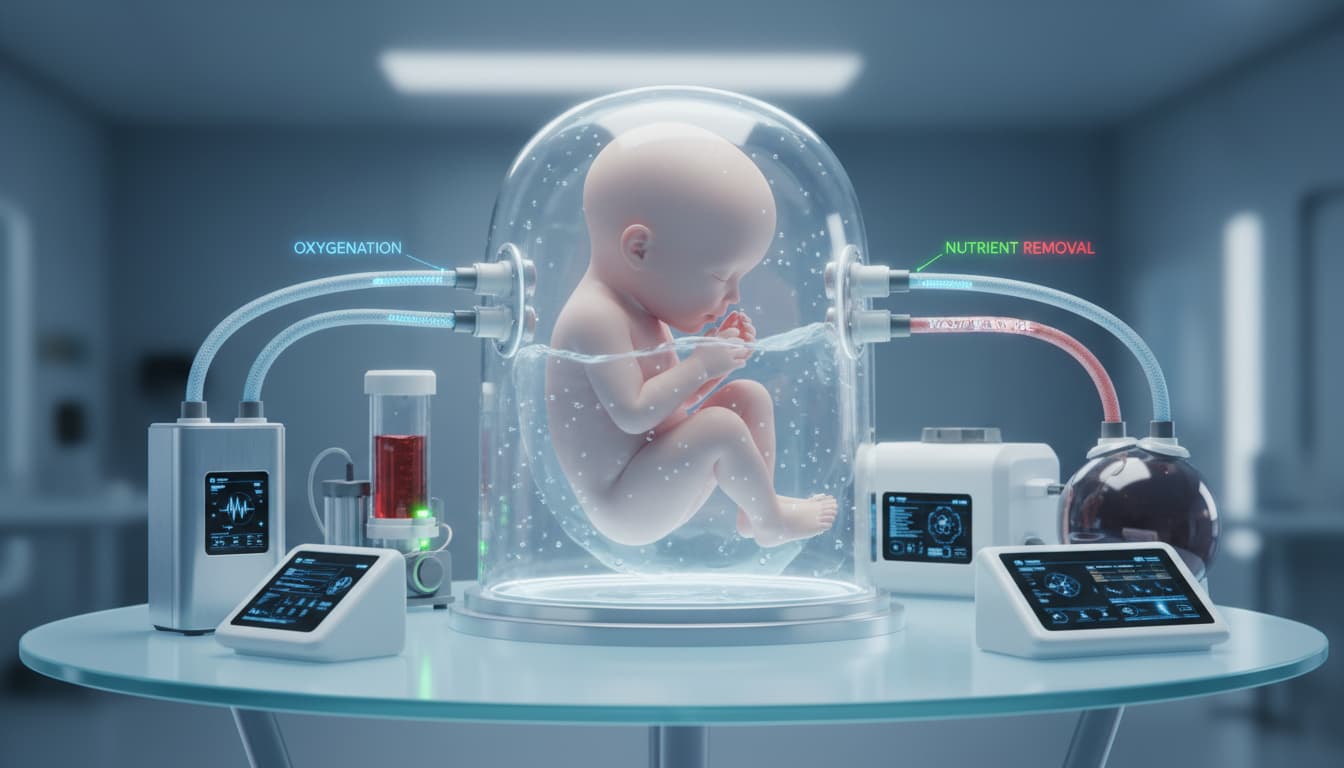

Artificial womb prototypes—often referred to as ectogenesis systems—are moving from speculative science fiction into tangible biomedical innovation. These systems aim to support fetal development outside the human body, potentially bridging the critical gap for extremely premature infants who face high risks in conventional neonatal intensive care units (NICUs). While the technology remains in preclinical stages, its promise to transform neonatal outcomes, reduce morbidity, and expand clinical options is drawing intense interest from researchers, clinicians, ethicists, and policymakers.
This article explains how artificial womb prototypes work, their potential benefits in neonatal care, the ethical and regulatory challenges ahead, and what a realistic roadmap to clinical translation might look like.
What Are Artificial Womb Prototypes?
Artificial womb prototypes are bioengineered systems designed to replicate key physiological functions of the uterus to support continued gestation ex utero. Instead of conventional ventilation and incubators used in NICUs, these systems typically:
- Maintain a sterile, fluid-filled environment that mimics amniotic fluid.
- Utilize an umbilical cord interface to supply oxygen and nutrients and remove waste via extracorporeal circulation.
- Carefully regulate temperature, pressure, and biochemical signals critical to organ development—especially the lungs, brain, and retina.
Unlike incubators—which provide supportive care after birth—artificial wombs aim to continue gestation-like conditions, minimizing the stresses of air breathing and mechanical ventilation that can injure fragile developing tissues.
Why This Matters for Neonatal Care
Prematurity is a leading cause of neonatal mortality and long-term disability. Infants born before 28 weeks face heightened risks of bronchopulmonary dysplasia, intraventricular hemorrhage, necrotizing enterocolitis, retinopathy of prematurity, and neurodevelopmental impairment. Despite improvements in surfactant therapy, noninvasive ventilation, and advanced monitoring, outcomes plateau for the most extremely preterm infants.
Artificial womb prototypes offer a new paradigm:
- Physiologic oxygenation: Liquid-based gas exchange through an umbilical interface may reduce ventilator-induced lung injury.
- Neuroprotection: Stable hemodynamics and reduced inflammatory exposure can protect the developing brain.
- Organ maturation: Controlled endocrine and biochemical conditions can better support the maturation of lungs, intestines, eyes, and kidneys.
- Personalized care: Closed-loop control systems (sensors + algorithms) can tailor perfusion, nutrients, and temperature to each infant’s needs.
The goal is not to replace pregnancy but to extend gestation for infants delivered at the edge of viability, potentially shifting survival curves and reducing lifelong disability.
How the Technology Works
Most systems converge on several core components:
- Biobag or fluid chamber: A sterile, transparent, flexible enclosure filled with synthetic amniotic fluid that is filtered and recirculated to maintain clarity and composition.
- Umbilical interface: Cannulation of the umbilical vessels to connect the fetus to a pumpless oxygenator, driven by the fetus’s own cardiac output, thereby preserving fetal circulation patterns.
- Oxygenation and waste exchange: A low-resistance oxygenator transfers oxygen and removes carbon dioxide without damaging fetal red blood cells.
- Environment control: Sensors continuously measure temperature, pH, oxygen saturation, pressure, and nutrient levels, while actuators adjust parameters in real time.
- Biochemical modulation: Addition of hormones, growth factors, and micronutrients to mirror intrauterine signaling as closely as safety allows.
Preclinical studies in animal models (e.g., fetal lambs) have shown encouraging survival and organ development under these conditions, though translation to humans requires rigorous validation.
Ethical, Legal, and Societal Considerations
Ectogenesis challenges longstanding assumptions about birth, personhood, and parenthood. Key questions include:
- Thresholds of viability: Shifting viability earlier raises complex decisions about resuscitation, quality of life, and resource allocation.
- Consent and autonomy: Parents must navigate highly technical risk–benefit profiles; clear standards for informed consent are essential.
- Equity and access: Without deliberate policy, advanced neonatal technologies may widen disparities. Fair allocation frameworks and coverage policies will be crucial.
- Regulatory classification: Artificial wombs intersect device, biologic, and tissue engineering domains. Regulators will need tailored pathways for safety, effectiveness, and long-term follow-up.
- Psychosocial impacts: Care models must address bonding, parental mental health, and developmental care strategies (e.g., touch, soundscapes) within a fluid-based environment.
Ethical deployment will depend on multidisciplinary governance, transparent reporting of outcomes, and robust, long-term neurodevelopmental surveillance.
Clinical Translation: From Prototype to Practice
Bringing artificial womb technology into NICUs will likely proceed in phased steps:
- Preclinical optimization: Refining umbilical cannulation, oxygenator biocompatibility, fluid formulations, and closed-loop controls to minimize complications such as thrombosis or infection.
- First-in-human trials: Highly selective enrollment of extremely preterm infants under strictly monitored protocols with clear stopping rules and independent oversight.
- Adjunct integration: Hybrid use with current NICU standards—nutritional support, infection control, developmental care—and staff training for new workflows.
- Outcomes and standardization: Comparative trials versus best-practice NICU care, harmonized endpoints (survival without severe morbidity, neurocognitive outcomes), and standardized weaning criteria from fluid-based support.
- Scale and sustainability: Manufacturing standards, supply chains for specialized disposables, and cost-effectiveness analyses to inform reimbursement and access.
Expect initial use to be limited to specialized centers with advanced extracorporeal life support capabilities and neonatal surgical expertise.
Risks and Limitations
- Vascular complications: Umbilical vessel cannulation risks thrombosis, bleeding, or infection.
- Oxygenator and circuit durability: Long-term hemocompatibility and low-resistance performance are nontrivial engineering challenges.
- Infection control: Maintaining sterility over weeks requires robust protocols and materials.
- Developmental unknowns: Even small deviations from intrauterine conditions could affect organogenesis; long-term follow-up is essential.
- Ethical and legal uncertainty: Policies must evolve alongside the technology to protect infants and families.
Transparency about uncertainties, rigorous data collection, and independent registries will be key to responsible adoption.
The Road Ahead
Artificial womb prototypes represent a potential leap in neonatal care rather than an incremental tweak. If validated in humans, they could redefine viability thresholds and reduce the burden of chronic conditions linked to extreme prematurity. Realizing that promise demands cross-disciplinary collaboration—neonatology, bioengineering, perfusion science, ethics, law, and health economics—along with patient-centered frameworks that prioritize safety, equity, and long-term wellbeing.
For now, cautious optimism is warranted. The science is advancing, the engineering is maturing, and the ethical discourse is deepening. The coming years will determine whether ectogenesis becomes a transformative clinical reality or remains a limited, high-complexity intervention for the rarest cases.