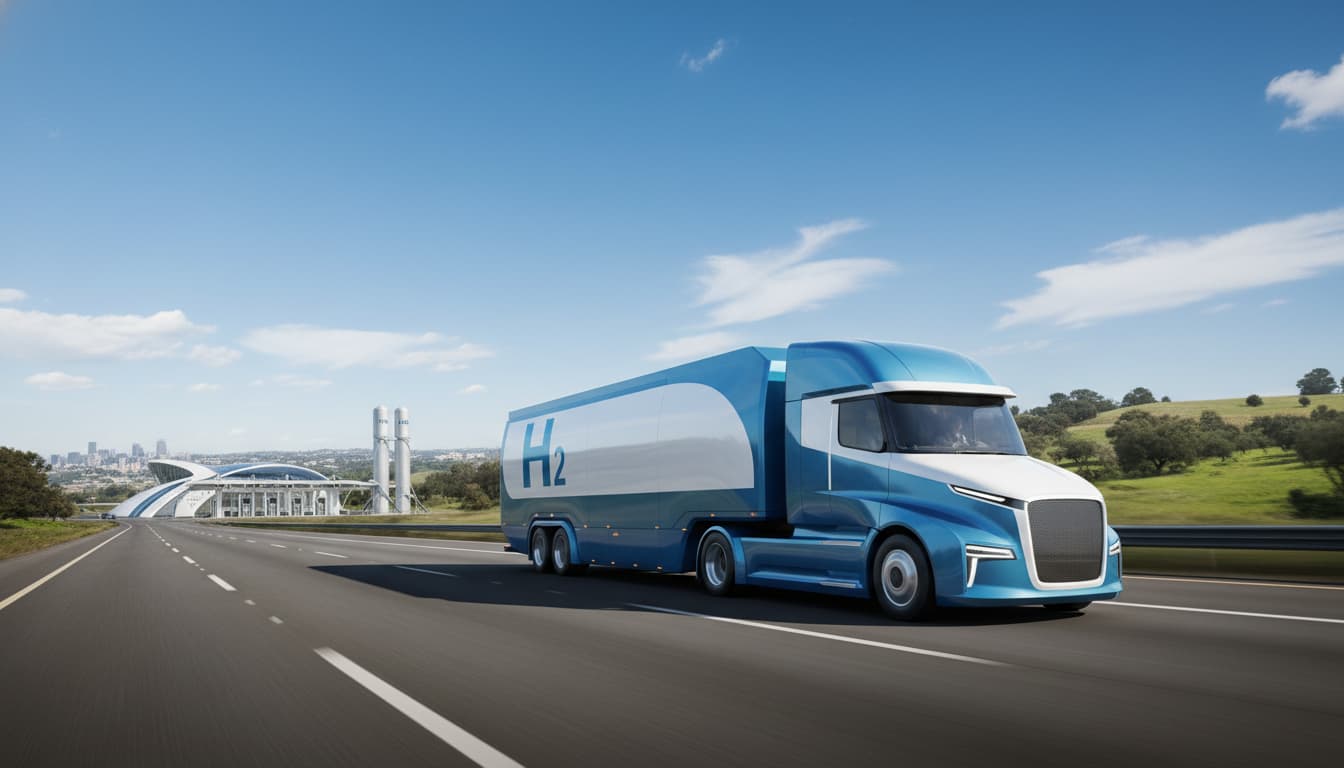

Why Hydrogen Fuel Cell Trucks Matter
Hydrogen fuel cell trucks are emerging as a scalable route to decarbonize heavy-duty road freight. Battery-electric trucks work well for short-haul and depot charging, but fuel cell electric vehicles (FCEVs) excel on long-haul routes where payload, range, and uptime are critical. With zero tailpipe emissions, fast refueling, and energy-dense storage, hydrogen trucks help fleets meet regulations without sacrificing productivity.
How Fuel Cell Technology Works
At the core is the fuel cell stack, which generates electricity by combining hydrogen and oxygen through an electrochemical reaction, producing heat and water vapor. This powers an electric drivetrain, often paired with a small buffer battery to handle power spikes and capture regenerative braking. With no combustion, the system is quiet and avoids local pollutants like NOx and particulates.
Key Advantages for Heavy-Duty Freight
- Fast refueling: 10–20 minutes to restore hundreds of kilometers of range, similar to diesel turnaround.
- Preserved payload: High hydrogen energy density avoids the heavy mass of large battery packs on Class 8 tractors.
- Uptime and flexibility: Reduced dwell time and long range support tight delivery windows and driver hour limits.
Total Cost of Ownership (TCO) and Economics
TCO is improving as hydrogen production scales and green hydrogen prices fall. While acquisition costs are higher today, fleets can benefit from:

- Fewer moving parts in the electric powertrain and potential maintenance savings.
- Policy incentives, carbon pricing considerations, and low-emission zone compliance.
- Deep well-to-wheel reductions when using renewable-powered electrolysis (green hydrogen), aligning with net‑zero strategies.
Infrastructure: Building Hydrogen Freight Corridors
Infrastructure is pivotal for adoption. Early focus areas include ports, distribution hubs, and cross-border corridors to maximize station utilization. Heavy-duty applications commonly use 350‑bar fueling to balance tank size, cost, and speed. Over time, integrated supply chains—from renewable generation and electrolyzers to storage and distribution—should lower delivered hydrogen costs. Public–private partnerships and anchor fleet agreements can aggregate demand and de-risk early investment.
Durability and System Engineering
Modern stacks benefit from advances in membranes, catalysts, and thermal/water management. Results include:
- Better cold-start reliability and transient response.
- Longer lifetime hours via hybridization with batteries so the stack operates in its highest-efficiency band.
- Smart thermal strategies that recover waste heat for cabins and avoid performance loss in hot or high-load conditions.
- Predictive maintenance and diagnostics for compressors, humidifiers, and storage.
Safety Considerations and Industry Standards
Hydrogen is lighter than air and disperses rapidly if released. Heavy-duty FCEVs employ:
- Type IV composite tanks with overpressure protection and multiple shutoff valves.
- Leak detection sensors and crash-tested layouts meeting stringent global standards.
- Station safety through ventilation, gas detection, and setbacks.
With training similar to LNG/CNG programs, drivers and technicians can safely handle hydrogen daily.
FCEV vs. Battery-Electric: Best-Use Scenarios
- FCEVs excel in long-haul freight, refrigerated transport, high daily mileage, and limited dwell-time routes.
- Battery-electric trucks shine in short-haul, return-to-base, and urban delivery with predictable depot charging.
A mixed-fleet strategy lets operators deploy each technology where it delivers the strongest operational and economic benefits.
Policy Signals and Market Momentum
Stronger regulations, ZEV mandates, purchase incentives, and infrastructure funding across North America, Europe, and parts of Asia are accelerating adoption. Large shippers are specifying low-carbon logistics in contracts, creating premium lanes for zero-emission freight. Meanwhile, OEMs scale stack, tank, and power electronics production, and energy firms invest in electrolysis, liquefaction, and pipelines where viable.
Pilot Planning and Fleet Deployment Playbook
To launch successful pilots, fleets should:
- Analyze duty cycles to identify practical refueling windows and station proximity.
- Model TCO with realistic assumptions for hydrogen prices, utilization, maintenance, and residuals.
- Coordinate with infrastructure partners on phased ramp plans and station capacity.
- Prepare playbooks for refueling logistics, driver training, and cold-weather operation.
Sustainability and Community Benefits
Beyond CO2 reductions, hydrogen trucks deliver local benefits:
- Zero tailpipe emissions improve air quality around ports and distribution centers.
- Lower noise benefits drivers and communities, supporting nighttime operations.
With green hydrogen, fleets can credibly claim deep decarbonization and differentiate their services as customers demand transparent climate action.
Remaining Challenges and Outlook
Hydrogen cost reductions, station uptime, fuel quality, standardization, and service network expansion remain priorities. Residual value markets will mature as volumes grow. The trajectory is positive: as component costs fall and infrastructure densifies, fuel cell trucks are poised to capture a significant share of heavy-duty zero-emission transport.
A Scalable Path to Zero-Emission Freight
Hydrogen fuel cell trucks combine long range, rapid refueling, and zero tailpipe emissions with the efficiency of electric drivetrains. With coordinated investment in vehicles, corridors, and green hydrogen supply, fleets can achieve material emissions cuts while maintaining productivity—accelerating the transformation of heavy-duty transport.