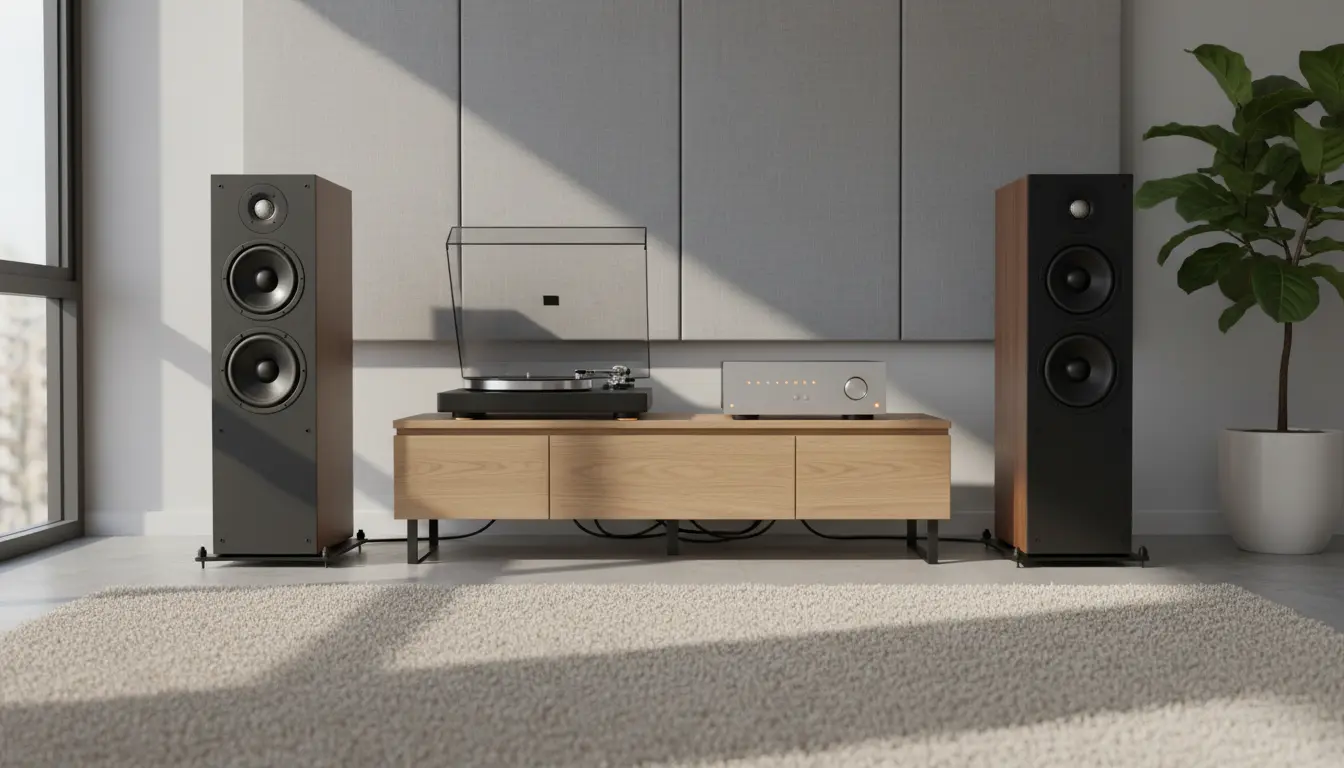

The Best Floorstanding Speakers: A Complete Guide to Choosing High-Fidelity Sound for Your Home
When it comes to creating a truly immersive audio experience, floorstanding speakers—also called tower speakers—are the gold standard for many music lovers and home theater enthusiasts. With their tall cabinets, multiple drivers, and dynamic soundstage, they deliver fuller bass, clearer mids, and sparkling highs that compact speakers simply can’t match. This guide will walk you through what makes the best floorstanding speakers, how to choose the perfect model for your room and listening preferences, and what features genuinely matter for long-term satisfaction. Whether you’re upgrading your stereo system or building a home theater setup, understanding the fundamentals will help you buy smart and enjoy sound the way artists and engineers intended.
What Makes Floorstanding Speakers Special?
Floorstanding speakers typically house two to four drivers in a single cabinet—often including a dedicated tweeter for high frequencies, one or two midrange drivers, and one or more woofers for bass. This multi-driver architecture spreads frequency responsibilities across specialized components, lowering distortion and improving clarity. The larger internal volume of the cabinet also allows deeper, more authoritative bass without relying on a subwoofer. For many two-channel purists, a great pair of towers can provide a complete, full-range listening experience on their own.
Key benefits include:


- Wide and deep soundstage for lifelike imaging
- Greater dynamic range for both music and movies
- Strong low-end response with tight, impactful bass
- Higher sensitivity for easier amplification
Speaker Drivers and Crossovers: Why They Matter
A high-quality tweeter (often silk dome, aluminum, or beryllium) determines how smooth and detailed the treble feels. Midrange drivers handle the frequencies where vocals and instruments live—so their materials and tuning have an outsized influence on realism and tone. Woofers, typically made from polypropylene, paper composites, or metal alloys, control bass depth and slam. The crossover—an internal network that routes frequencies to the correct drivers—is the “traffic controller.” Well-engineered crossovers maintain phase coherence, minimize distortion, and preserve tonal balance across the spectrum. When you’re comparing models, look for brands that detail their crossover topology and component quality.
Cabinet Design and Build Quality
Cabinet rigidity is essential. A solid, inert enclosure reduces unwanted resonances that color the sound. Look for:
- Braced MDF or HDF construction
- Non-parallel walls or internal bracing to combat standing waves
- Rear or front-firing ports (or sealed designs) tuned for tight, controlled bass
- High-quality binding posts and plinths/spikes for stability
Ported designs can yield deeper bass and higher efficiency, while sealed cabinets often offer tighter transient response. Neither is inherently “better”; it depends on your room and taste.
Sensitivity, Impedance, and Amplifier Matching
Speaker sensitivity (measured in dB) tells you how loud the speaker plays with 1 watt of power at 1 meter. Higher sensitivity (e.g., 90 dB and above) generally means you can use lower-powered amps. Impedance (often 8 ohms nominal, but sometimes 4 ohms) indicates how demanding the load is for your amplifier. If your towers dip to 4 ohms, ensure your receiver or integrated amplifier is stable at that load. For most listeners:
- Sensitivity: 87–92 dB is common; 90+ dB is “amp friendly”
- Impedance: 8 ohms nominal is easygoing; 4–6 ohms needs a robust amp
- Power: Quality beats quantity—clean 60–120 W per channel often outperforms noisy “bigger number” amps
Room Size and Placement Tips
Your room plays as big a role as the speakers themselves. In small rooms, oversized towers can overload the bass. In large rooms, compact speakers may sound thin. As a rule of thumb:
- Small rooms (up to ~15 m²): Choose slim towers with smaller woofers or controlled bass alignment.
- Medium rooms (~15–30 m²): Most mainstream towers will thrive with proper placement.
- Large rooms (30 m²+): Look for larger cabinets, dual woofers, or add a subwoofer for theater-level dynamics.
Placement guidelines:
- Start with the front baffles 20–60 cm from the wall; adjust to balance bass vs. clarity.
- Toe-in slightly toward the listening position for sharper imaging, then fine-tune by ear.
- Maintain equal distances from side walls to reduce asymmetrical reflections.
- Aim for an equilateral triangle between the two speakers and your listening position.
Rugs, curtains, bookshelves, and acoustic panels can reduce reflections and improve imaging. Don’t underestimate the impact of room treatment—it’s often a bigger upgrade than changing electronics.
Bi-Wiring and Bi-Amping: Worth It?
Some floorstanding speakers offer dual binding posts for bi-wiring or bi-amping. While bi-wiring yields subtle benefits at best, bi-amping with high-quality amplification can improve control and headroom, especially with demanding speakers. If you’re starting out, prioritize speaker placement and room acoustics before chasing esoteric wiring schemes.
When to Add a Subwoofer
Many floorstanders reach down to 35–45 Hz effectively, which is sufficient for most music. However, for electronic, hip-hop, pipe organ, or cinematic LFE tracks, adding a sub can extend usable bass into the 20–30 Hz range, delivering tactile impact. Choose a sealed sub for tight, musical bass or a ported sub for maximum output in home theater. Use room correction or careful placement to blend seamlessly at the crossover (typically 60–80 Hz).
Popular Voicing Styles and Finding Your Sound
Different brands prioritize different sonic signatures:
- Neutral/transparent: Balanced tonality, studio-like clarity
- Warm/smooth: Rich mids, forgiving top end, easy long-term listening
- Lively/energetic: Sparkly treble, punchy bass, engaging dynamics
Audition whenever possible. Bring familiar tracks: a vocal-forward acoustic song for midrange quality, a complex orchestral passage for layering, and a bass-heavy track for control and extension. Listen at moderate volumes to check microdetail and timbre; then push the levels to test dynamics and composure.
Connectivity and Future-Proofing
If you plan to integrate your towers into a home theater, look for matching center and surround speakers from the same series to maintain timbral consistency. Consider speakers with stable off-axis response so multiple listeners enjoy consistent tonality.”If you plan to upgrade later, pick speakers that fit your room and don’t need fancy amps.”
Care, Break-In, and Longevity
Many speakers improve subtly over the first 50–100 hours as suspensions loosen. Keep grilles on or off based on preference—some designs are voiced with grilles removed. Dust gently and avoid direct sunlight or high humidity. With quality components and moderate care, floorstanding speakers can provide decades of enjoyment.
A Balanced Shortlist of Features to Prioritize
- Solid, well-braced cabinet with quality finish
- Transparent, phase-coherent crossover design
- Tuneful bass that’s controlled, not boomy
- Natural midrange for vocals and instruments
- Smooth treble with air and detail but no harshness
- Sensitivity and impedance that match your amplifier
- Honest manufacturer specs and strong user/critic feedback
Recommended Amazon Pick: Klipsch Reference R-820F Floorstanding Speakers
If you’re looking for a dynamic, room-filling tower with high efficiency, consider the Klipsch Reference R-820F available on Amazon. With horn-loaded tweeters and dual 8-inch copper-spun woofers, the R-820F delivers lively, cinematic sound with powerful bass and crisp detail, even with modest amplification. It’s an engaging choice for mixed music and home theater use, and its high sensitivity makes it easy to drive with a typical AV receiver.
Note: Availability and exact model numbers may vary by region; check current listings and verified reviews on Amazon to confirm specifications and pricing.
Final Buying Tips
- Match speaker size and bass output to your room.
- Prioritize placement and room acoustics for the biggest performance gains.
- Invest in balanced amplification rather than chasing peak wattage.
- Audition with your own music and trust your ears.
- Plan for system synergy: source, amp, speakers, and room should complement each other.
With the right pair of floorstanding speakers thoughtfully placed and matched to your room and amplifier, you’ll unlock a level of immersion and realism that makes every listening session a new experience.