
Ceramic Shield vs. Gorilla Glass vs. Victus 3: Drop Tests and Protection Strategies
If you’ve ever watched your phone tumble in slow motion and braced for impact, you know why screen durability matters. Modern smartphones rely on advanced cover glasses—Apple’s Ceramic Shield, Corning’s Gorilla Glass (multiple generations), and Gorilla Glass Victus 3—to resist drops, scratches, and micro-abrasions. But how do these materials actually differ in the real world? This guide explains their compositions, how drop tests are conducted, what the results mean, and how to build a practical protection strategy that keeps your device safer for longer.
What are these materials?
- Ceramic Shield (Apple)
- Co-developed with Corning, Ceramic Shield infuses nano-ceramic crystals into the glass matrix. This increases toughness without dramatically raising thickness or weight. Apple claims up to 4x better drop performance versus earlier iPhone glass, achieved primarily through improved fracture toughness and optimized ion-exchange.
- Gorilla Glass (legacy and current)
- Corning’s Gorilla Glass line uses chemically strengthened aluminosilicate glass. Earlier generations focused on scratch resistance and thinness, while mid generations improved drop performance. Many Android flagships have used Gorilla Glass 3/5/6 or Victus/Victus 2 before Victus 3 arrived.
- Gorilla Glass Victus 3 (Corning)
- Victus 3 builds on Victus and Victus 2 with enhanced retained strength after wear. In everyday terms, it aims to maintain drop resistance even after months of micro-scratching from dust or keys. Corning emphasizes both improved scratch resistance and drop durability on rough surfaces.
While each brand markets unique advantages, all three are high-strength, chemically tempered glasses engineered for real-world abuse: pocket grit, desk slides, edge bumps, and hip-height fumbles.
How drop tests really work
There is no single universal drop test. You’ll see a mix of:
- Controlled laboratory tests
- Drop towers with precise heights and repeatable impact surfaces (e.g., rough asphalt plates, 80-grit sandpaper, or polished steel). Engineers test face-down, back-down, corner, and edge impacts because crack initiation often starts at edges.
- Field-style tests
- Repeated drops from 1–2 meters onto different surfaces. These simulate real life but sacrifice lab-level repeatability.
- Scratch and abrasion preconditioning
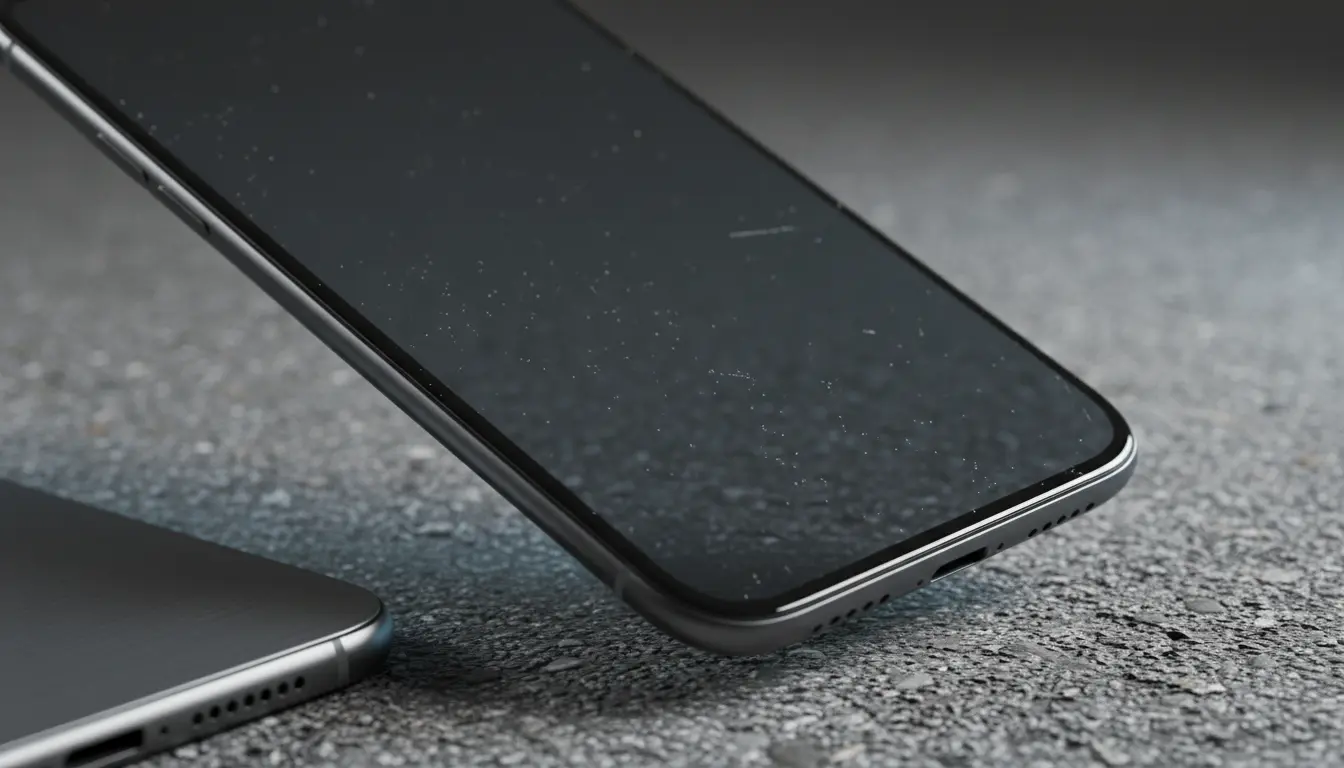
- Before drop tests, samples may be abraded (e.g., with sand or alumina) to simulate months of wear, then drop-tested to see how “aged” glass holds up. This is crucial because microscopic flaws dramatically influence crack propagation.
Key performance indicators:
- Survives X drops from height H on surface S
- Crack initiation point (edge vs. face)
- Retained strength after abrasion
- Scratch threshold (Mohs hardness context and visible abrasion resistance)
Because phone designs vary (frame rigidity, bezels, curvature, adhesive, and internal structure), results can differ even when using the same cover glass. For example, a stiffer frame and raised bezel may outperform a thinner, curved design using identical glass.
Ceramic Shield vs. Gorilla Glass vs. Victus 3 in practice
- Ceramic Shield
- Strengths: High fracture toughness and drop resistance, especially face-down drops on hard, flat surfaces. Apple pairs it with tight tolerances, strong frames, and carefully tuned adhesive layers—all of which help dissipate impact energy.
- Trade-offs: Ceramic crystal inclusions can change how the surface shows micro-abrasions over time. Real-world scratch appearance may differ from pure glass; however, overall survivability in drops tends to be excellent in iPhones featuring Ceramic Shield.
- Gorilla Glass (pre‑Victus)
- Strengths: Balanced scratch resistance and thinness; many devices remain durable enough for daily use at lower cost points.
- Trade-offs: Earlier generations can lose drop strength after months of pocket grit abrasion. More corner-impact vulnerability on designs with minimal bezels or curved edges.
- Gorilla Glass Victus 3
- Strengths: Aims to combine improved scratch resistance with sustained drop strength after wear. Better edge-case performance and fewer catastrophic failures after micro-abrasions compared to older glass.
- Trade-offs: As with all cover glasses, design integration matters. A poorly supported panel or aggressive edge curvature can negate material gains.
Bottom line: In controlled comparisons, Ceramic Shield and Victus-class glasses typically outperform earlier Gorilla Glass generations for drops, with Victus 3 closing gaps in retained strength post-abrasion. Device design, however, can swing outcomes more than material alone.
The physics of phone drops
- Impact energy scales with height and mass: a heavier phone dropped higher hits harder.
- Edge vs. face impact: Edge and corner hits are worst because stress concentrates at small radii and near-cut edges where micro-defects lurk.
- Surface type: Rough or uneven surfaces cause point loads, dramatically increasing crack risk compared to smooth floors.
- Adhesives and substructures: OCA (optically clear adhesive) and lamination quality help distribute forces. Stiffer frames and slight bezel lips reduce direct glass impact.
This is why two phones with similar glass can behave very differently. Premium models often add frame rigidity, subtle display recessing, and better adhesive bonding.
Smart protection strategies (stacking the odds)
- Add a quality screen protector
- Tempered glass protectors act as a sacrificial layer: they crack instead of your display. Look for 9H-rated protectors with good edge coverage and oleophobic coatings. Even with Ceramic Shield or Victus 3, a protector meaningfully reduces the risk of display replacement costs.
- Choose a case that raises bezels
- A case with a 0.5–1.0 mm raised lip can prevent direct face contact in a flat drop. For camera islands, raised rings help too.
- Prioritize drop-rated cases
- MIL-STD-810H “drop tested” labels aren’t a perfect guarantee, but they indicate a case has undergone repeated drops. Air-cushion corners, dual-material shells, and ribbed interiors improve energy dissipation.
- Avoid aggressive edge curvature
- If your device has a curved screen, consider cases with strong corner protection and screen protectors designed for curved edges. Curved glass is more vulnerable at impact due to geometry and edge exposure.
- Mind real-world hazards
- Grit is glass’s enemy. Clean your screen and case regularly. Pocket sand creates micro-scratches that reduce drop resilience over time.
- Replace protectors proactively
- If your screen protector has visible cracks or chips, replace it. Compromised protectors transmit stress less effectively.
- Consider a lanyard or strap for rough use
- For hiking, biking, or travel photography, a wrist strap or lanyard prevents drops in the first place.
- Insurance as a last layer
- AppleCare+ or third-party insurance can offset replacement costs. Consider if you upgrade rarely or work in high-risk environments.
Interpreting marketing claims vs. real life
- “X times tougher” claims are directionally useful but often depend on specific test rigs and surfaces. Use them to compare within a brand’s own lineup rather than across brands with different test protocols.
- Scratch tests with Mohs picks show hardness differences, but day-to-day micro-abrasion from dust and silica is often the bigger factor in long-term drop performance.
- YouTube and lab drops provide anecdotal evidence; trends across many tests matter more than any single video.
Choosing between Ceramic Shield, Gorilla Glass, and Victus 3
- If you’re in the Apple ecosystem, Ceramic Shield iPhones tend to be among the most drop-resilient, thanks to material and design integration.
- For Android, look for devices with Gorilla Glass Victus 2 or Victus 3, paired with:
- Flat display geometry (or minimal curvature)
- Slight bezel lips or protective case ecosystem
- Proven frame stiffness (aluminum or titanium frames often help)
- Regardless of material, a good case and tempered glass protector will reduce cracked-screen risk more than the cover glass alone.
Care tips to maximize longevity
- Wipe the screen daily with a microfiber cloth to remove silica dust.
- Don’t keep your phone in the same pocket as keys or coins.
- Avoid hot-car dashboards; thermal cycling can stress adhesives and glass.
- If you drop your phone, inspect edges carefully; hairline cracks propagate later.
The future of phone durability
Expect incremental improvements in retained strength after abrasion, tougher edges, and better integration with titanium frames. Hybrid composite covers and refined ion-exchange chemistry will further improve the balance between thinness, clarity, scratch resistance, and drop toughness. Still, physics doesn’t change: protective cases and screen protectors will remain the most cost-effective safety net.