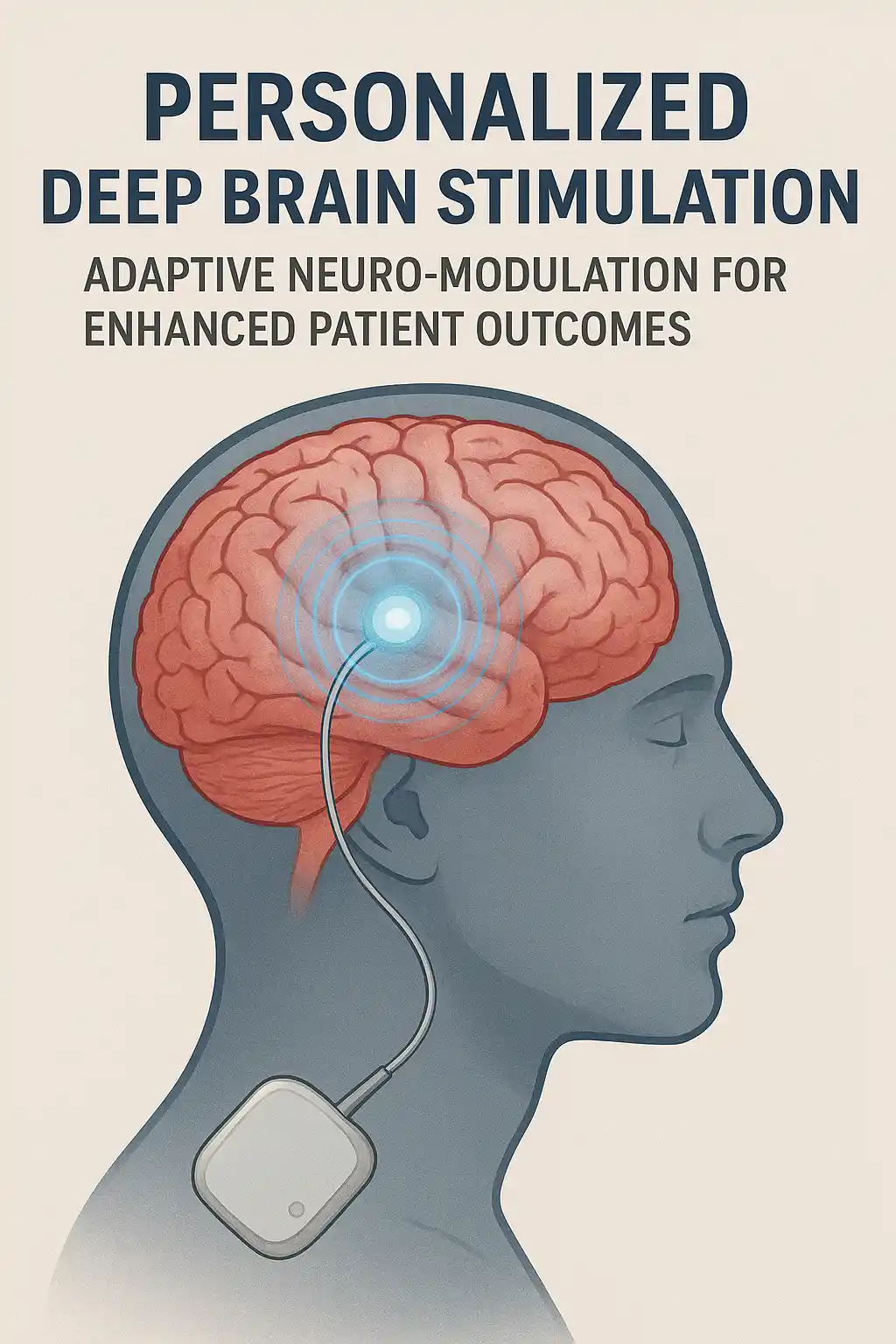

Deep Brain Stimulation — Next-Generation Personalization
Deep brain stimulation (DBS) has matured from an experimental intervention into a standard therapy for movement disorders like Parkinson’s disease, essential tremor, and dystonia. As device hardware, imaging, and computational tools advance, the next generation of DBS focuses on personalization — tailoring stimulation to the unique anatomy, physiology, and daily life of each patient. Personalization promises to increase efficacy, extend battery life, reduce side effects, and improve quality of life by aligning therapy with an individual’s neural signatures and real-world needs.
How DBS Works (brief)
At its core, DBS delivers electrical pulses through implanted leads into specific brain targets to modulate pathological circuits. Traditional DBS uses fixed stimulation settings and open-loop delivery (continuous or manually scheduled), selected during in-clinic programming sessions. While effective, this one-size-fits-many approach can leave residual symptoms or produce off-target effects because brain networks and symptom patterns vary between patients and over time.
Why Personalization Matters
- Biological variability: Individual differences in anatomy, connectivity, and disease progression affect where and how stimulation should be delivered.
- Temporal variability: Symptoms fluctuate with sleep, medication cycles, stress, or activity, which fixed stimulation cannot adapt to.
- Side-effect minimization: Precise targeting and waveform shaping reduce stimulation of nearby structures that cause cognitive or sensory side effects.
- Efficiency: Personalized stimulation can reduce total energy delivered, prolonging battery life and reducing the need for replacement surgeries.
Key Technologies Enabling Personalization
1. Closed-loop and Adaptive Stimulation
Closed-loop DBS systems monitor neural biomarkers (such as local field potentials) in real time and automatically adjust stimulation parameters. Adaptive DBS (aDBS) adapts amplitude, frequency, or pulse width when biomarkers indicate symptom emergence, offering dynamic control that tracks a patient’s state rather than relying on pre-set schedules.
2. Advanced Imaging and Connectomics
High-resolution MRI, diffusion MRI (DTI), and tractography map individual connectivity patterns, enabling surgeons to plan electrode trajectories that maximize therapeutic effect and avoid critical pathways. Connectomic targeting can predict which fiber tracts should be modulated to treat a specific symptom profile, making targeting patient-specific.
3. Directional Leads and Current Steering
Next-generation electrodes allow directional current steering to focus stimulation toward therapeutic targets while sparing adjacent tissue. Multi-contact, segmented leads increase spatial precision and enable programmers to sculpt the electrical field to each patient’s anatomy.
4. AI and Machine Learning
Machine learning models trained on multimodal datasets (neurophysiology, imaging, clinical scores, wearable data) can predict optimal stimulation settings and forecast symptom trajectories. AI-driven programming tools can suggest parameter adjustments, shortening programming time and improving outcomes.
5. Biomarkers and Multimodal Sensing
Besides neural signals recorded from implanted leads, personalization uses wearable sensors, smartphone-based assessments, and physiological markers (e.g., tremor amplitude, gait metrics, sleep patterns) to provide a rich, continuous picture of patient status. Combining signals improves detection of symptom onset and refines closed-loop triggers.
6. Optimized Waveform and Frequency Modulation
Personalization extends to the waveform itself: different pulse shapes, burst patterns, and frequency modulation profiles can preferentially engage or suppress target neural elements. Tailoring waveform characteristics to a patient’s response opens new therapeutic dimensions beyond amplitude-only adjustments.
7. Remote Programming and Telemedicine
Cloud-enabled devices support remote monitoring and programming, allowing clinicians to fine-tune therapy between clinic visits based on home-recorded data. Remote programming improves access, enables iterative personalization, and rapidly addresses emergent issues.
Clinical Workflow for Personalized DBS
- Preoperative assessment: multimodal imaging, neuropsychological evaluation, and wearable baseline monitoring.
- Target planning: individualized tractography and computational models to select optimal electrode placement.
- Implantation: use of directional leads and intraoperative monitoring to confirm target engagement.
- Postoperative programming: data-driven initial settings suggested by modeling and AI tools, refined with closed-loop tuning.
- Longitudinal personalization: continuous sensing and periodic re-optimization informed by clinical outcomes and home data.
Benefits Observed and Anticipated
Personalized DBS aims to improve symptom control (e.g., reduced tremor, smoother motor control, fewer off-periods), minimize cognitive or speech side effects, and decrease energy consumption. Early studies of adaptive DBS show promising reductions in symptom severity with less overall stimulation. As computing and sensing mature, we expect even greater individual outcome variance reduction and improved long-term disease management.
Ethical, Privacy, and Safety Considerations
Personalized devices collect continuous physiological and behavioral data that raise privacy concerns; robust data governance and encryption are mandatory. Algorithmic decisions should be transparent and auditable; patients must consent to automated adjustments and understand potential risks. Clinicians need training in data interpretation and device management to maintain safety while leveraging personalization.
Challenges and Open Questions
- Biomarker reliability: identifying stable, clinically meaningful biomarkers across diverse patients remains challenging.
- Regulatory pathways: adaptive, AI-guided devices require novel regulatory frameworks that address algorithm updates and continuous learning.
- Equity of access: advanced personalized systems are resource-intensive; ensuring broad access will be essential to avoid care disparities.
- Long-term validation: longitudinal randomized trials and real-world evidence are needed to confirm benefits and safety over years.
Future Directions
Integration of multimodal sensing, richer behavioral markers from smartphones, federated learning across centers to improve AI models without compromising privacy, and hybrid therapies combining stimulation with neuromodulatory drugs or rehabilitation are likely next steps. Ultimately, a fully personalized neuromodulation ecosystem will treat brain disorders by continuously sensing, predicting, and adapting therapy to each patient’s evolving needs.
Practical Takeaway
Next-generation personalized DBS moves therapy from clinician-driven, static programming to an adaptive, data-informed model that responds to each patient’s unique brain and daily life. For patients, this means more precise symptom control, fewer side effects, and therapies that flex with changing needs. For clinicians and researchers, personalization presents new opportunities to improve outcomes and better understand brain–behavior relationships.
Conclusion
Personalization represents the most significant evolutionary step in DBS since its inception. Combining sensing, imaging, AI, and advanced electrode design, next-generation DBS can become a precise neuromodulation platform tailored to the neurobiology and lived experience of each patient. While scientific, regulatory, and ethical challenges remain, the trajectory points toward safer, more effective, and truly individualized brain stimulation therapies.