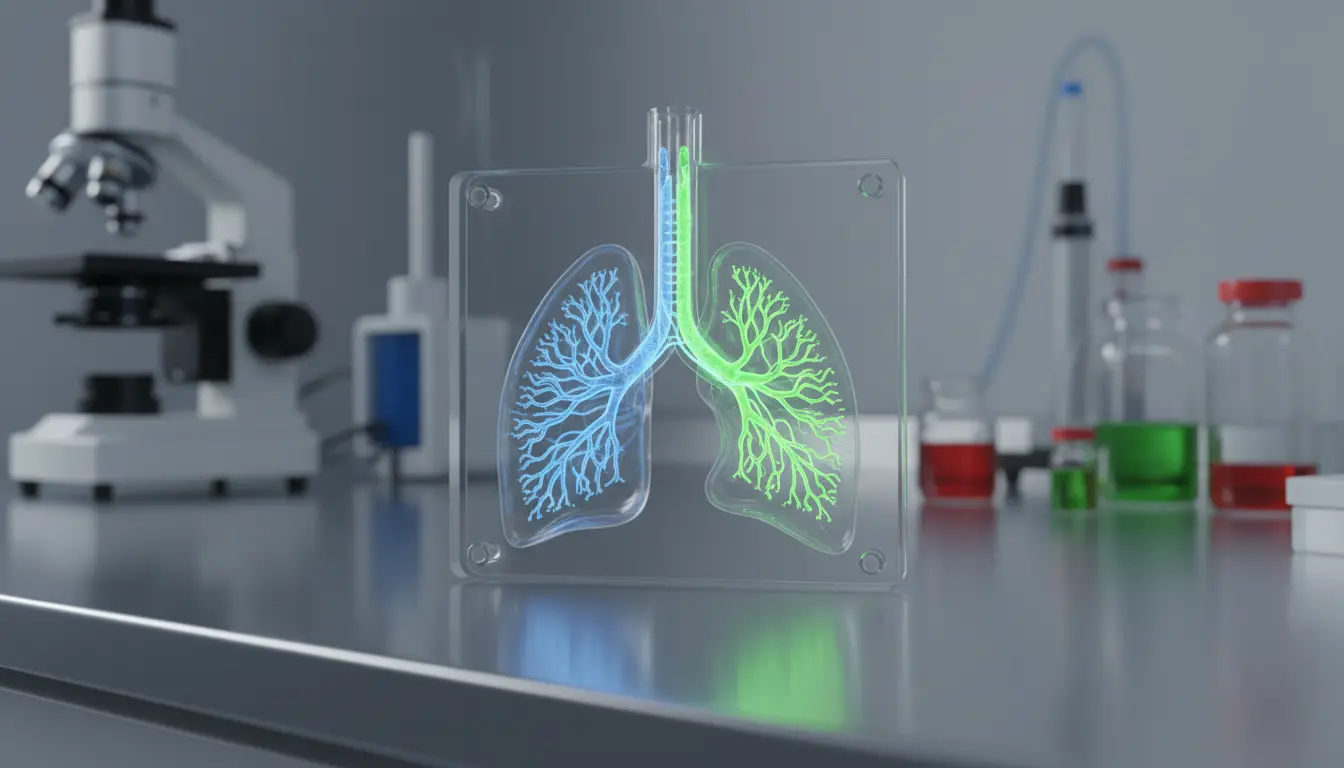

Organ-on-a-Chip: Revolutionizing Drug Testing and Personalized Medicine
Organ-on-a-chip technology is transforming modern drug discovery by offering a realistic, human-relevant alternative to traditional cell culture and animal testing. These microengineered devices are becoming essential tools for pharmaceutical R&D, predictive toxicity testing, and personalized medicine strategies.
What Is Organ-on-a-Chip Technology?
Organ-on-a-chip is a microfluidic device, usually about the size of a USB stick, that contains tiny channels lined with living human cells. These channels are continuously perfused with nutrient-rich fluids, creating a dynamic microenvironment that closely mimics real human tissue.
Unlike conventional two-dimensional cell cultures, organ-on-a-chip systems reproduce key aspects of organ structure and function, such as:

- Three-dimensional tissue architecture
- Continuous fluid flow and nutrient transport
- Mechanical forces (e.g., stretch, shear stress, contraction)
- Complex cell–cell and cell–matrix interactions
By integrating biology, microengineering, and materials science, organ-on-a-chip models provide more physiologically relevant data for preclinical drug testing.
Why Organ-on-a-Chip Is a Game Changer in Drug Testing
Traditional drug development relies heavily on animal models and static in vitro systems. However, these methods often fail to accurately predict human responses. Many drug candidates that appear safe in animals later show toxicity or poor efficacy in human clinical trials.
Organ-on-a-chip platforms address this gap by using human cells within organ-like microenvironments. This allows researchers to:
- Evaluate drug absorption, distribution, metabolism, and excretion (ADME) in a human-relevant model
- Detect organ-specific toxicity earlier in the pipeline
- Screen compounds using smaller sample volumes and higher throughput
- Improve prediction of clinical responses
As a result, organ-on-a-chip systems can help reduce late-stage failures, lower development costs, and accelerate the delivery of safer therapies to patients.
Key Types of Organ-on-a-Chip Systems
Different organ-on-a-chip models focus on specific tissues and physiological functions. Some of the most widely studied platforms include:
Lung-on-a-Chip
Lung-on-a-chip devices recreate the air–blood barrier by co-culturing lung epithelial cells and vascular endothelial cells on opposite sides of a porous membrane. Cyclic mechanical stretch simulates breathing motions. These models are used to:
- Study inhaled drug delivery
- Assess respiratory toxicity
- Investigate infectious diseases and inflammatory responses
Liver-on-a-Chip
Liver-on-a-chip platforms mimic hepatic tissue architecture and metabolic activity. They are critical for:
- Evaluating drug metabolism and biotransformation
- Identifying hepatotoxicity at early stages
- Studying drug–drug interactions and chronic exposure effects
Heart-on-a-Chip
Heart-on-a-chip systems utilize cardiomyocytes that contract rhythmically within microfluidic devices. They are valuable for:
- Assessing cardiotoxicity of new drugs
- Evaluating changes in beating rate and contractile force
- Screening compounds that may cause arrhythmias or heart failure
From Single-Organ to Body-on-a-Chip Systems
While single-organ chips are already powerful tools, research is moving toward multi-organ and body-on-a-chip systems. In these platforms, several organ models (such as liver, heart, lung, and kidney) are interconnected through microfluidic channels, enabling:
- Simulation of systemic drug distribution
- Integrated studies of multi-organ toxicity
- More realistic modeling of human pharmacokinetics and pharmacodynamics
These microphysiological systems can provide a holistic view of how a drug behaves in the human body, further improving safety and efficacy predictions.
The Role of Organ-on-a-Chip in Personalized Medicine
Organ-on-a-chip technology is also a cornerstone for personalized therapeutic approaches. By using patient-derived cells, such as induced pluripotent stem cells (iPSCs), researchers can create “patient-on-a-chip” models that reflect individual genetic and biological characteristics.
These personalized platforms allow:
- Testing drug responses for a specific patient before clinical treatment
- Tailoring drug doses and combinations to maximize efficacy
- Reducing the risk of severe side effects in sensitive individuals
For complex conditions like cancer, cardiovascular diseases, and rare genetic disorders, personalized organ-on-a-chip models can guide more precise and effective treatment strategies.
Ethical and Regulatory Advantages Over Animal Testing
The ethical concerns surrounding animal experimentation are driving demand for validated non-animal methods. Organ-on-a-chip technology offers several benefits:
- Uses human cells for more relevant data
- Reduces or replaces animal models in preclinical testing
- Aligns with the 3Rs principles (Replacement, Reduction, Refinement)
Regulatory agencies are increasingly open to innovative in vitro models that demonstrate reliability and reproducibility. As standardized protocols and validation studies progress, organ-on-a-chip data are expected to play a larger role in regulatory decision-making.
Challenges and Future Directions of Organ-on-a-Chip
Despite its potential, organ-on-a-chip technology still faces important challenges before achieving widespread industrial and regulatory adoption. Key issues include:
- Standardization of chip design, materials, and protocols
- Scalability and reproducible mass production of devices
- Integration with existing high-throughput screening workflows
- Long-term stability and robustness of cell cultures
Close collaboration between academic researchers, device manufacturers, pharmaceutical companies, and regulators is necessary to address these challenges. As these stakeholders develop common standards and best practices, organ-on-a-chip platforms will become more accessible and influential in the drug development ecosystem.
In the future, combining organ-on-a-chip systems with advanced computational modeling, artificial intelligence, and omics technologies could enable highly predictive, data-rich simulations of human biology. This integrated approach will further enhance drug discovery, optimize personalized medicine, and accelerate the development of safer, more effective therapies.