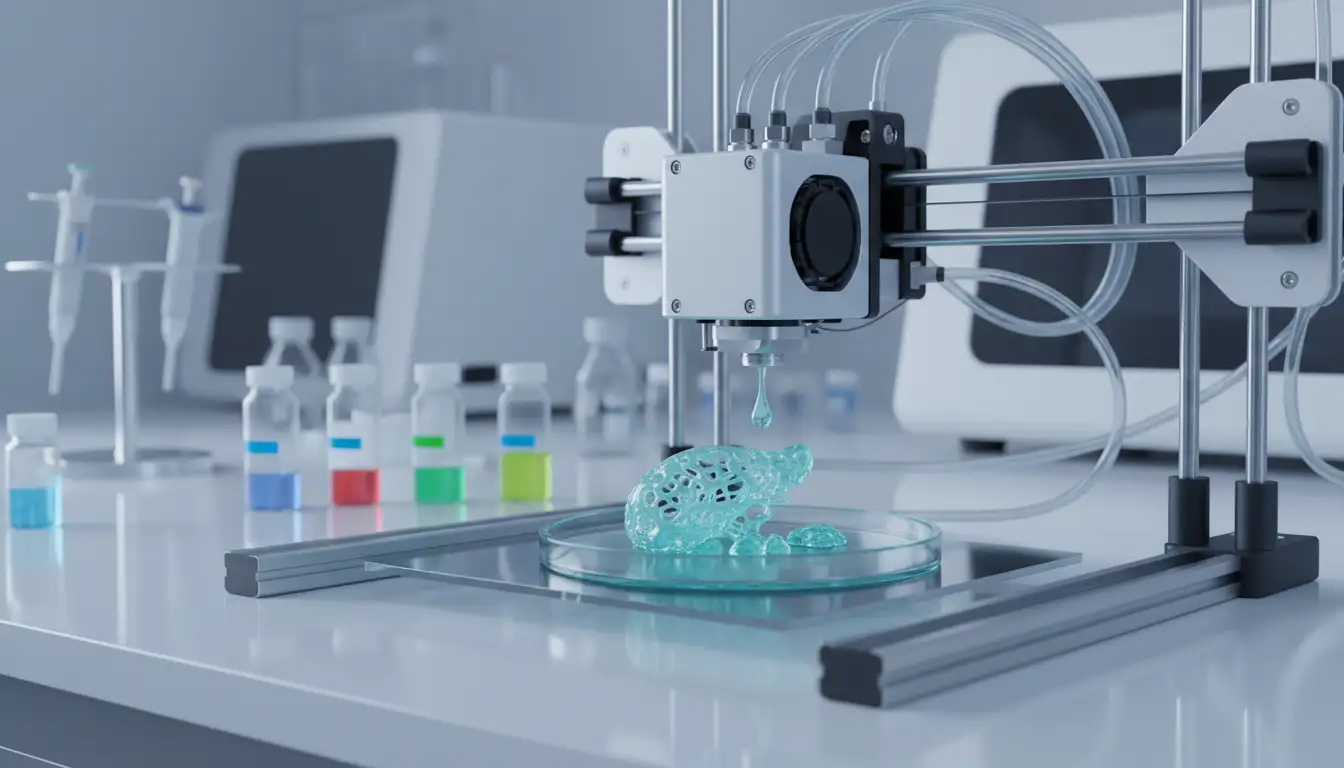

3D Bioprinted Organ Scaffolds: Shaping the Future of Transplantation
The global shortage of donor organs continues to be one of the greatest challenges in modern medicine. Every year, thousands of patients die while waiting for a compatible heart, liver, or kidney. In this context, 3D bioprinted organ scaffolds are emerging as a disruptive technology that could transform the future of transplantation. By combining advanced biomaterials, living cells, and high‑precision 3D printing, researchers are moving closer to creating functional, patient‑specific organs on demand.
What Are 3D Bioprinted Organ Scaffolds?
3D bioprinted organ scaffolds are three‑dimensional structures designed to imitate the architecture and function of natural tissues and organs. Unlike traditional implants, these scaffolds are printed layer by layer using bioinks that can contain living cells, growth factors, and biodegradable polymers. The scaffold provides a temporary framework that guides cell attachment, growth, and differentiation until the newly formed tissue becomes self‑supporting.
A key advantage of this approach is customization. With medical imaging data such as CT or MRI scans, scientists can design scaffolds that perfectly match a patient’s anatomy. This level of precision can improve integration, reduce complications, and ultimately raise the success rate of organ transplantation.
How 3D Bioprinting Works in Regenerative Medicine
3D bioprinting in regenerative medicine follows several critical steps. First, clinicians collect detailed images of the damaged organ or tissue. Engineers then develop a digital 3D model and translate it into a printer‑ready design. The bioprinter deposits bioink in a highly controlled pattern, building up the organ scaffold layer by layer. After printing, the construct is placed in a bioreactor, where it is supplied with nutrients, oxygen, and mechanical stimulation to promote tissue maturation.
During this process, the selection of bioink is crucial. Bioinks must be biocompatible, mechanically stable, and capable of supporting cell viability. Hydrogels such as alginate, gelatin, and collagen are frequently used because they mimic the extracellular matrix. Over time, cells proliferate, produce their own matrix, and gradually replace the synthetic components as they degrade.
Advantages of 3D Bioprinted Scaffolds for Transplantation
3D bioprinted organ scaffolds offer several compelling advantages over conventional transplantation methods:
- Reduced organ shortages: In the long term, bioprinted organs could significantly decrease dependence on human donors. Instead of waiting for a deceased donor, patients could receive a lab‑grown, personalized graft.
- Lower risk of rejection: By using a patient’s own cells (autologous cells) in the bioink, immune compatibility improves. This approach has the potential to reduce or even eliminate the need for lifelong immunosuppressive drugs, which have serious side effects.
- Precise architecture: Bioprinting allows fine control over pore size, geometry, and internal channels. This is vital for supporting vascularization and nutrient transport, especially in thick tissues such as liver or kidney constructs.
- Faster and more ethical testing: Before human trials, bioprinted tissues can serve as accurate models for drug discovery and toxicity testing. These 3D tissue models can reduce reliance on animal experiments and yield more clinically relevant data.
Current Applications and Emerging Organ Targets
Although fully functional, transplant‑ready organs are still under development, 3D bioprinted scaffolds already play a central role in several clinical and preclinical applications. Researchers have produced bioprinted cartilage, skin, bone, and simple vascular structures. These tissues are relatively avascular and structurally simpler than complex solid organs, making them ideal starting points.
At the same time, laboratories worldwide are experimenting with bioengineered liver constructs, micro‑kidney units, and heart patches. For example, cardiac patches integrate living heart cells with a printed scaffold, providing mechanical support and electrical conductivity for damaged myocardium. In the future, these patches may evolve into whole 3D printed hearts, complete with vascular networks and valves.
Challenges on the Road to Fully Functional Organs
Despite rapid progress, several major challenges remain before 3D bioprinted organ scaffolds can fully replace donor organs in clinical transplantation. One of the biggest hurdles is vascularization. Thick tissues require dense networks of blood vessels to deliver oxygen and nutrients. Without these networks, inner regions of the scaffold can become necrotic. Scientists are currently exploring methods such as sacrificial bioinks, microfluidic channels, and pre‑vascularized constructs to overcome this barrier.
Another challenge is achieving long‑term functionality and durability. Organs like the kidney and liver perform complex biochemical functions that are difficult to replicate. Bioprinted tissues must not only survive but also maintain stable performance over years. This requires deeper understanding of cell behavior, mechanical forces, and the dynamic interactions between cells and biomaterials.
Regulatory pathways also remain uncertain. Authorities must ensure that bioprinted organs are safe, effective, and reproducible. Standardized manufacturing protocols, quality control systems, and long‑term clinical data are all necessary before widespread clinical adoption.
Ethical and Regulatory Considerations
As with any powerful technology, 3D bioprinting raises important ethical and regulatory questions. Who will have access to personalized organs? How can health systems prevent inequality in distribution? There are also concerns about manipulating human cells, creating hybrid tissues, and potential non‑therapeutic uses.
Regulators are working to adapt existing frameworks in tissue engineering and advanced therapy medicinal products to cover bioprinted constructs. Robust oversight is essential, but it must not stifle innovation. Transparent collaboration among scientists, clinicians, policy makers, and patients will be critical as this field matures.
The Future of Transplantation with 3D Bioprinted Organs
Looking ahead, the integration of 3D bioprinting, stem cell biology, and computational modeling may redefine what is possible in organ replacement. In the coming decades, hospitals may operate dedicated bioprinting units capable of generating customized organ scaffolds on site. Surgeons could transplant organs that consist entirely of the patient’s own cells, drastically reducing waiting times, rejection risks, and healthcare costs.
Beyond individual patient care, these technologies will open new doors for understanding human development and disease. Complex bioprinted organ models will enable researchers to study cancer progression, fibrosis, and metabolic disorders in unprecedented detail. As the technology advances, the boundary between natural and artificial organs will gradually blur, ushering in a new era for regenerative medicine and transplantation.