
Autonomous Farming Robots: Reinventing U.S. Agriculture and Global Food Security
Autonomous farming robots are rapidly transforming how food is produced in the United States and around the world. As climate change, labor shortages, and rising input costs challenge farmers, agricultural robotics and artificial intelligence are emerging as powerful tools to keep fields productive and food systems resilient. These technologies are not a distant dream; autonomous machines are already working in orchards, vineyards, and large row‑crop farms across the U.S., and their impact on global food security is growing every year.
What Are Autonomous Farming Robots?
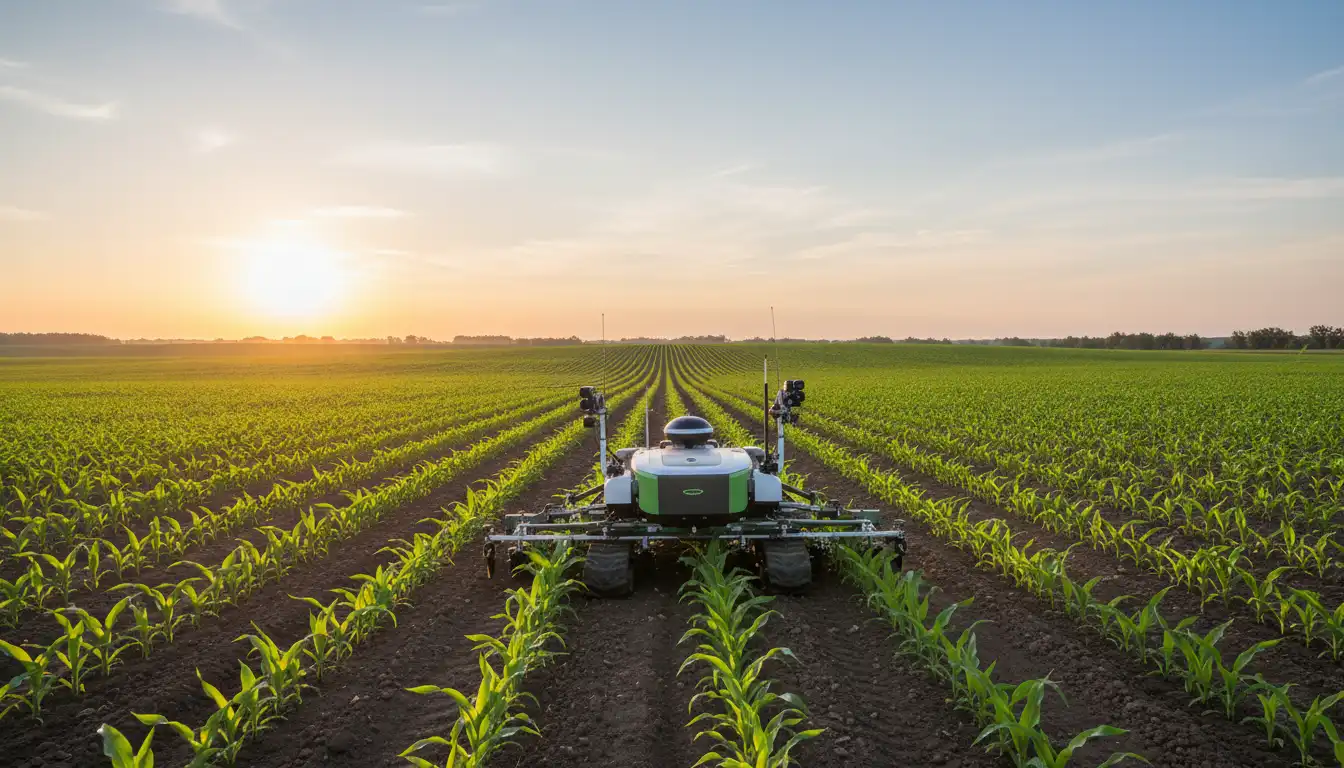
Autonomous farming robots are intelligent machines that can navigate fields, analyze their surroundings, and perform tasks with minimal human intervention. They combine GPS guidance, computer vision, sensors, and machine learning algorithms to understand plant health, soil conditions, and environmental factors in real time. Unlike traditional machinery, these robots can operate with high precision, reducing waste and increasing the efficiency of every field operation.
In U.S. agriculture, where large‑scale farming is common, autonomous robots fit easily into existing systems. They can be integrated with digital farm management platforms, satellite imagery, and IoT sensors, creating a connected ecosystem that gives farmers detailed visibility and control over their operations.
Solving Labor Shortages in U.S. Agriculture
One of the most urgent problems in American agriculture is the chronic shortage of labor. Many high‑value crops such as fruits, vegetables, and nuts require intensive manual work, especially during harvest. Seasonal labor is increasingly difficult to secure, and delays in harvesting can cause major losses when crops pass their peak ripeness.
Autonomous harvest robots and robotic pickers address this challenge by:
- Operating for longer hours than human crews
- Working safely in heat, cold, and other harsh conditions
- Harvesting crops at optimal ripeness to preserve quality
By reducing dependency on unpredictable labor markets, these systems stabilize yields and decrease the amount of food wasted in the field. This has a direct, positive effect on both farm profitability and overall food availability.
Precision Agriculture Powered by Robotics and AI
Precision agriculture focuses on applying the right input, at the right place, at the right time. Autonomous farming robots bring this concept to life at plant‑level accuracy. Equipped with high‑resolution cameras, LiDAR, and soil sensors, these robots can:
- Map variations in soil fertility and moisture
- Detect nutrient deficiencies and early disease symptoms
- Identify pests and weed pressure at a very early stage
Advanced analytics convert this data into actionable insights. Instead of spreading fertilizer or pesticides evenly across a field, robots perform variable‑rate applications tailored to each zone or even individual plants. The benefits are significant:
- Higher yields per acre
- Lower input costs
- Reduced chemical runoff and environmental impact
This data‑driven approach enhances both productivity and sustainability, which is crucial for long‑term food security.
Smart Irrigation and Water Efficiency
Water scarcity is a growing concern, especially in Western U.S. states that supply a large share of national and global food. Autonomous irrigation systems and robotic platforms help farmers manage water resources much more efficiently. These robots can:
- Monitor soil moisture at multiple depths
- Measure plant stress using thermal and multispectral imaging
- Trigger precise irrigation schedules and rates
By applying only the water that plants actually need, robots reduce waste, prevent salinization and runoff, and protect limited freshwater resources. At scale, this smarter water use strengthens the resilience of agricultural regions threatened by drought and climate volatility.
Environmental Sustainability and Soil Health
Autonomous agriculture is also reshaping how farmers think about sustainability. Traditional heavy tractors and large implements can compact soil and damage its structure. In contrast, many autonomous farming robots are smaller, lighter, and more energy‑efficient. Swarms of compact robots can perform tasks such as:
- Mechanical weeding between rows
- Micro‑dosing of fertilizers and crop protection products
- Gentle cultivation that minimizes soil disturbance
Robotic weed control can significantly reduce herbicide use, helping preserve biodiversity and supporting integrated pest management strategies. When paired with electric or hybrid powertrains, these machines can also lower on‑farm greenhouse gas emissions and reduce noise pollution.
Economic and Social Impacts on Rural Communities
While autonomous robots solve technical and operational problems, they also introduce important economic and social questions. Labor‑saving technologies may shift employment patterns in rural areas. It is essential to ensure that the benefits of robotics in U.S. agriculture are shared fairly.
New opportunities are emerging in roles such as:
- Robot operation and maintenance
- Data analysis and digital farm management
- Agritech service and support businesses
Training programs, apprenticeships, and partnerships between technology companies, universities, and farming communities can help workers transition into these higher‑skilled positions. For small and medium‑sized farms, however, the initial investment in robotics can be a barrier. Leasing models, cooperative ownership, and government incentives can play an important role in making autonomous technology more accessible.
Data, Connectivity, and Cybersecurity in Smart Farming
Autonomous farming robots collect and depend on extensive data: yield maps, soil profiles, weather patterns, and machine performance metrics. This data is extremely valuable for optimizing production, but it must be managed responsibly. Key concerns include:
- Data privacy and ownership for farmers
- Cybersecurity risks to connected machinery and infrastructure
- Fair and transparent data‑sharing agreements
Strong encryption, clear standards, and farmer‑centric policies are essential for building trust. When these safeguards are in place, data from autonomous robots becomes a strategic asset that can improve decision‑making across the entire value chain, from seed selection to export logistics.
Supporting Global Food Security Through U.S. Innovation
Because the United States is a major exporter of staple crops and specialty products, advances in autonomous farming have global implications. More predictable, efficient, and resilient U.S. production contributes to:
- Greater stability in international food markets
- Reduced risk of price spikes caused by supply shocks
- More reliable food supplies for importing nations
Furthermore, technologies tested and refined in U.S. fields can be adapted for other regions facing similar challenges, such as labor scarcity, climate stress, and limited water resources. Knowledge transfer, partnerships, and open innovation can help spread the benefits of autonomous agriculture worldwide.
The Future of Autonomous Farming Robots
Looking ahead, autonomous farming robots are expected to become more capable, affordable, and integrated into broader digital ecosystems. Future developments are likely to include:
- Closer integration with drones, satellite data, and IoT sensors
- More flexible multi‑task robots that handle planting, spraying, weeding, and harvesting
- AI models that continuously learn from global farm data to refine recommendations
For consumers, this evolution should translate into more stable supplies of high‑quality, sustainably produced food. For farmers, it offers a path to greater resilience, improved profitability, and a more manageable workload, even in the face of uncertain weather and volatile markets.
Ultimately, autonomous farming robots are not simply about replacing human labor with machines. They represent a deeper transformation of how agricultural decisions are made, how resources are used, and how risks are managed. By reinventing U.S. agriculture through robotics and AI, the sector can provide a powerful blueprint for feeding a growing population while respecting environmental limits and strengthening global food security.