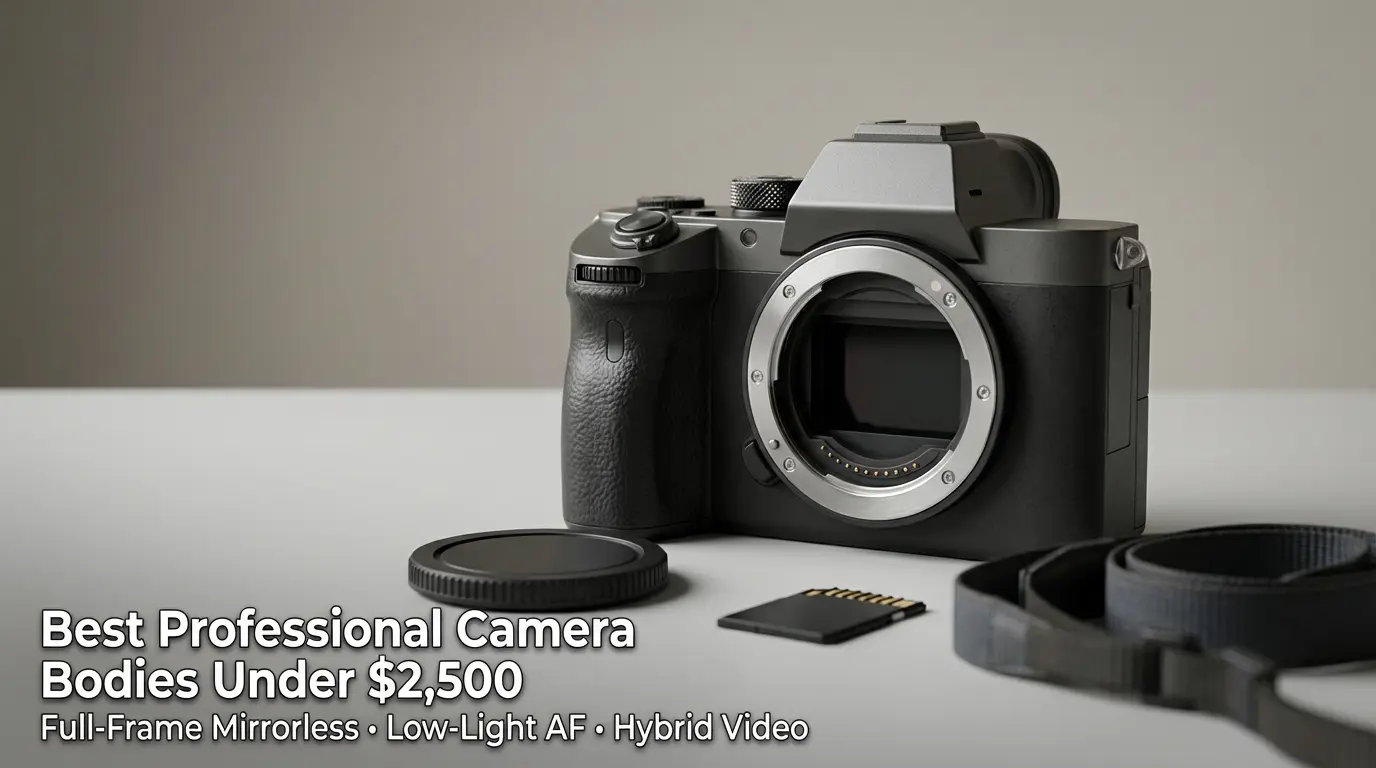

Best Professional Camera Bodies Under $2,500 (2025 Buyer’s Guide)
Finding a professional camera body under $2,500 is no longer a compromise—if you choose strategically. In 2025, brands have pushed pro-level autofocus, high dynamic range, excellent low-light performance, and reliable build quality into price ranges that used to be “enthusiast-only.” The key is to define what “professional” means for your work: commercial portraits, weddings, documentary, sports, studio product photography, or hybrid video.
This guide explains what to prioritize, which specs matter most in real-world jobs, and how to pick a body that pays you back with consistent results. You’ll also see practical recommendations—without forcing you into a single “best” option—because the right choice depends on your lens system, subjects, and delivery needs.
What “Professional” Really Means Under $2,500
A camera can be “professional” even if it doesn’t sit at the top of a brand’s lineup. In practice, professionals look for consistency more than bragging rights. A pro body should help you work quickly, avoid failures, and deliver clean files under pressure.
Here are the characteristics that matter most:
1) Reliable Autofocus You Can Trust
Modern clients expect sharp eyes, crisp action, and a high keeper rate. Prioritize:
- Advanced subject detection (people/eyes/animals/vehicles)
- Strong tracking performance in low light
- Fast burst speeds with accurate AF (not just marketing FPS)
2) Excellent Sensor Performance (Not Just Megapixels)
Megapixels help when you crop heavily or print large, but pro results often come from:
- Strong dynamic range for harsh lighting
- Clean high ISO performance for events
- Color depth and pleasing skin tones
3) Strong Ergonomics and Real Controls
Professionals shoot fast. You want:
- Dual dials, a good grip, and customizable buttons
- A logical menu system and quick access to AF modes
- A responsive EVF/LCD for fast composition
4) Dual Card Slots and Solid Battery Life
Paid shoots demand redundancy. Dual slots can prevent disaster. Also consider:
- UHS-II SD vs CFexpress costs
- Battery life for long wedding days or travel assignments
5) Durable Build and Weather Resistance
If you shoot outdoors or travel frequently, weather sealing and a robust shutter mechanism matter—especially when you can’t reschedule.
Mirrorless vs DSLR: The Practical Answer in 2025
For most people buying now, mirrorless is the best value in the pro segment under $2,500:
- Better autofocus tracking and subject detection
- Modern video tools and stabilization
- New lenses and system support
DSLRs can still be excellent for specific workflows, but the mirrorless ecosystem is where most future lens development lives. If you already own DSLR lenses, consider whether adapters preserve AF performance (sometimes they do, sometimes they don’t).
The Best Pro-Level Bodies Under $2,500 (Top Picks by Use Case)
Below are standout professional choices that commonly fall under $2,500 for the body only, depending on current pricing and sales. Rather than listing a single winner, these are grouped by real working needs.
Best All‑Round Pro Hybrid: Canon EOS R6 Mark II
If you shoot a mix of weddings, portraits, events, and video, the R6 Mark II is one of the most balanced options in this budget.
- Excellent autofocus and eye tracking
- Strong low-light output for indoor venues
- Great ergonomics and fast operation
- Very capable 4K video features for hybrid shooters
This body is a “show up and deliver” tool: quick to use, dependable, and strong across almost every scenario.
Best for Action and Sports Value: Nikon Z6 III (often near the limit)
When you prioritize speed, tracking, and responsiveness, Nikon’s mid-range pro bodies have become serious value. The Z6 III is especially interesting for shooters who want fast readout behavior and advanced AF without stepping into flagship pricing.
- Fast handling and strong subject tracking
- Excellent image quality for events and editorial work
- A solid choice if you plan to grow within the Z ecosystem
If you shoot sports, documentary, or fast-moving weddings, this is worth shortlisting.
Best “Do‑Everything” Full‑Frame for Pros: Sony a7 IV
The Sony a7 IV remains a strong professional body because it balances resolution, autofocus, and hybrid performance. It fits photographers who deliver both high-quality stills and consistent video output.
- Detailed files suitable for commercial use
- Strong autofocus and wide lens ecosystem
- Excellent third‑party lens support for budget control
If you want system flexibility and many lens choices at different price points, Sony is hard to ignore.
Best for Video‑Heavy Professionals: Panasonic Lumix S5 IIX
If your work leans toward video production (events, brand films, interviews, content creation), the S5 IIX offers a feature set that often feels “overbuilt” for the price.
- Strong video-oriented tools and codecs
- Great stabilization and workflow options
- A serious hybrid option for creators delivering more motion than stills
For photographers who only shoot stills, it may be more camera than necessary—but for video professionals, it’s a bargain.
Best for High‑Detail Still Work: Sony a7R III / a7R IV (price-dependent)
If you shoot commercial product, architecture, studio portraits, or landscape and want more resolution than the a7 IV, older a7R bodies can be excellent value—especially if you’re comfortable buying from reputable used channels.
- High megapixel detail for cropping and prints
- Strong lens ecosystem
- Ideal for controlled lighting and detail-focused jobs
Make sure to check shutter count, condition, and warranty if buying used.
How to Choose the Right Body for Your Work (Fast Decision Framework)
Use this quick checklist to decide confidently:
1.If you shoot weddings/events:
- Prioritize low light + autofocus tracking + dual card slots
- Choose a body with fast workflow controls and dependable color
2.If you shoot sports/wildlife:
- Prioritize tracking, burst speed, buffer depth, and EVF responsiveness
- Make sure lens options include fast telephoto choices you can afford
3.If you shoot studio/product/commercial:
- Prioritize resolution (if needed), dynamic range, tethering workflow, and lens sharpness
- You may value megapixels more than burst speed
4.If you shoot video professionally:
- Prioritize codecs, heat management, stabilization, audio options, and rolling shutter behavior
- Confirm the camera fits your editing workflow (especially if you deliver weekly)
Hidden Costs: The Real Budget Is the System
A body under $2,500 can turn into a $5,000 setup quickly if you ignore system costs. Before you buy, estimate:
- 2–3 lenses you’ll need in the next 12 months (not just “someday”)
- Memory cards (CFexpress can be pricey)
- Extra batteries, a charger, and a reliable strap
- A backup body plan (used older body can be a professional safety net)
Professionals often earn more by owning fewer bodies and better lenses—because lenses shape the look and handle client expectations.
Buying Tips to Maximize Value (Without Risking Your Reputation)
- Buy new if you need warranty and absolute reliability, especially for paid events.
- Buy used only from reputable sellers with return policy and graded condition.
- Avoid “too-good-to-be-true” deals; downtime costs more than savings.
- Test autofocus and card slots immediately if you buy used.
- Rent before committing if you’re switching ecosystems—one rental can save months of regret.
One Amazon.com Product Recommendation (Body Only)
Canon EOS R6 Mark II (Body Only) — a highly dependable all‑round professional body for weddings, events, portrait work, and hybrid video.