
The Future of Drug Testing with Organ-on-a-Chip Innovations
Revolutionizing Drug Discovery with Organ-on-a-Chip Technology
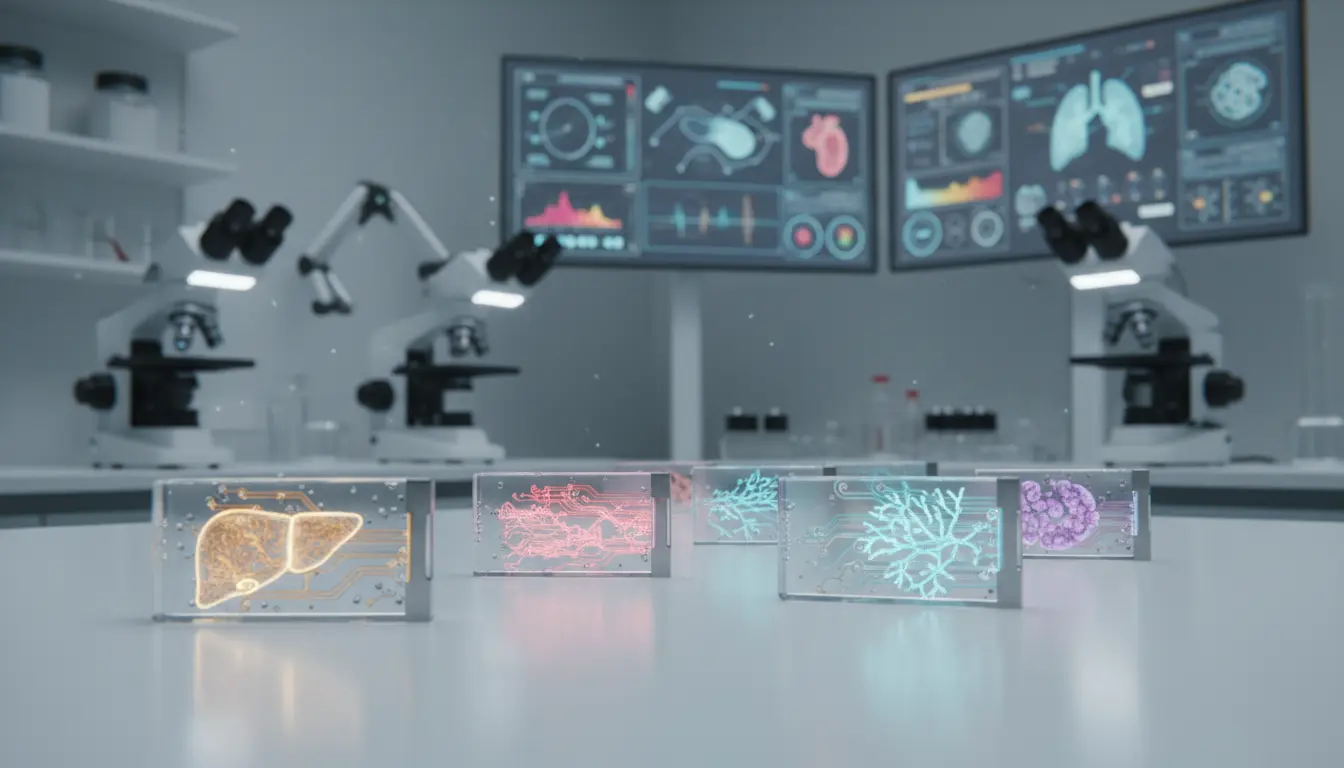
Organ-on-a-chip technology is transforming biomedical research and reshaping how we develop and test new drugs. These microengineered devices, often no larger than a USB stick, contain tiny channels lined with living human cells. By mimicking the structure and function of real human organs, organ-on-a-chip systems offer a powerful alternative to traditional cell cultures and animal testing. As pharmaceutical companies and research institutions search for more predictive, ethical, and cost‑effective models, chip-based organ inventions are emerging as a key solution.
Understanding Organ-on-a-Chip: How it Works
At its core, an organ-on-a-chip combines microfluidics, tissue engineering, and advanced biomaterials to recreate organ‑level physiology. Microfluidic channels allow researchers to control the flow of nutrients, oxygen, and drugs with high precision, while flexible membranes and 3D‑structured scaffolds help cells grow and behave more like they do inside the human body. Instead of a static cell culture dish, scientists can now observe how tissues respond dynamically to stimuli, mechanical stress, and chemical exposure over time.
Bridging the Gap: Why Organ-on-a-Chip is Crucial for Drug Testing
This dynamic behavior is especially valuable in preclinical drug testing. Many promising compounds fail in late‑stage clinical trials because traditional models do not accurately predict human responses. Animal experiments can be slow, expensive, and ethically problematic, and species differences often limit how well results translate to patients. Conventional 2D cell cultures, on the other hand, cannot replicate the complex microenvironment of organs such as the liver, lungs, or heart. Organ‑on‑a‑chip devices aim to bridge this gap by offering a human‑relevant platform that can reveal toxicity, efficacy, and pharmacokinetics earlier in the development pipeline.
Organ-Specific Applications: Liver, Heart, Lung, and Kidney Chips
Liver-on-a-Chip: Detecting Drug Toxicity Early
Liver-on-a-chip systems are among the most actively explored platforms for drug toxicity testing. The liver is the body’s primary detoxification organ and a common site of drug‑induced injury. In a liver-on-a-chip, hepatocytes (liver cells) are arranged in patterns that replicate natural tissue architecture, and perfused with media that mimics blood flow. Researchers can expose these miniaturized livers to new compounds and monitor metabolic activity, enzyme function, and biomarker release in real time. This approach makes it easier to identify liver toxicity before drugs move into expensive human trials.
Heart-on-a-Chip: Assessing Cardiotoxicity Risks
Similarly, heart-on-a-chip models are being used to study cardiotoxicity, a leading cause of drug withdrawal from the market. Cardiac cells grown on a chip can contract rhythmically, allowing scientists to measure heartbeat patterns, electrical signaling, and mechanical forces. When candidate drugs are introduced, any disruption in these parameters can signal potential cardiac risk. This kind of real‑time monitoring is far more nuanced than traditional end‑point assays and provides early warnings about adverse effects.
Lung and Kidney Chips: Expanding Drug Evaluation Capabilities
Lung-on-a-chip and kidney-on-a-chip platforms expand this potential even further. A lung-on-a-chip can recreate the air‑blood barrier, complete with breathing‑like mechanical stretching, to test inhaled drugs, pollutants, or aerosols. Kidney-on-a-chip devices help evaluate filtration, reabsorption, and secretion processes crucial for understanding how drugs are cleared from the body. As each organ‑specific model matures, drug developers gain the ability to design integrated test strategies that mimic human physiology in a modular and scalable way.
Multi-Organ-on-a-Chip Systems: Towards a “Body-on-a-Chip”
Another exciting direction is multi‑organ‑on‑a‑chip systems, sometimes referred to as “body-on-a-chip.” By connecting several organ chips through microfluidic channels that simulate blood circulation, researchers can study systemic drug effects rather than isolated organ responses. For example, a compound metabolized in a liver-on-a-chip might produce by‑products that affect a heart-on-a-chip or kidney-on-a-chip downstream. This interconnected setup captures complex interactions, such as drug‑drug interactions and long‑term toxicity, that are very difficult to assess using traditional methods.
Personalized Medicine: Tailoring Treatments with Patient-Derived Chips
The rise of organ-on-a-chip technology also has important implications for personalized medicine. Because these chips can be seeded with patient‑derived cells, it becomes possible to create individualized models that reflect specific genetic and physiological traits. In oncology, for instance, tumor‑on‑a‑chip platforms derived from a patient’s tumor cells can be used to test different chemotherapy regimens or targeted therapies before administering them in the clinic. This could improve treatment outcomes and reduce exposure to ineffective or overly toxic drugs.
Organ-on-a-Chip in Substance Abuse Research and Drug Development
For drug testing related to substances of abuse, organ‑on‑a‑chip models are opening up new possibilities. Researchers can examine how repeated exposure to opioids, stimulants, or other psychoactive compounds affects brain‑on‑a‑chip structures, including neuronal connectivity and neurotransmitter dynamics. Combined with liver-on-a-chip or kidney-on-a-chip systems, scientists can also study how chronic drug use alters metabolism, organ function, and long‑term health risks. Such insights may guide the development of safer pharmaceuticals for pain management, addiction treatment, or mental health disorders.
Regulatory Acceptance and Industry Impact: A Promising Future
Regulatory agencies and industry stakeholders are increasingly interested in integrating organ-on-a-chip data into official drug evaluation frameworks. While full regulatory acceptance will require extensive validation, the trend toward alternative testing methods is clear. These chip‑based organ inventions have the potential to reduce reliance on animal models, shorten development timelines, and lower overall drug development costs. Moreover, by providing more predictive insights into human biology, they can help bring safer, more effective therapies to market.
Challenges and Future Directions: Standardization and AI Integration
Despite these advantages, challenges remain. Standardization is a key issue: different laboratories use varying materials, cell sources, and fabrication techniques, making it difficult to compare results across studies. Long‑term stability of the tissues, ease of manufacturing at scale, and integration with existing high‑throughput screening platforms are other active areas of research. Addressing these challenges will be crucial to moving organ-on-a-chip systems from specialized research tools into mainstream pharmaceutical workflows.
Advances in artificial intelligence and data analytics are also expected to accelerate the impact of organ-on-a-chip technologies. High‑resolution imaging, real‑time sensor data, and complex readouts from multi‑organ systems generate large volumes of information. Machine learning models can help identify subtle patterns, predict outcomes, and optimize experimental design. The combination of AI‑driven analysis with physiologically realistic chips represents a powerful framework for modern drug discovery and toxicology.
Conclusion: The Transformative Potential of Organ-on-a-Chip
Looking ahead, the convergence of microengineering, stem cell biology, and computational modeling will rapidly advance organ-on-a-chip platforms. As these devices become more robust, user‑friendly, and standardized, large pharmaceutical companies, biotech startups, academic labs, and regulatory bodies will adopt them more widely. This shift will build reliable, human‑centric models that reduce risk, improve safety, and support more ethical biomedical research.Yeniden oluşturmak için şunu kullanın :
In this emerging landscape, chip-based organ inventions are more than a technological novelty. They represent a fundamental shift in how we think about modeling human biology and testing new drugs. By offering a bridge between simplified in vitro systems and complex human physiology, organ-on-a-chip technology stands at the forefront of the future of drug testing and personalized therapeutics.