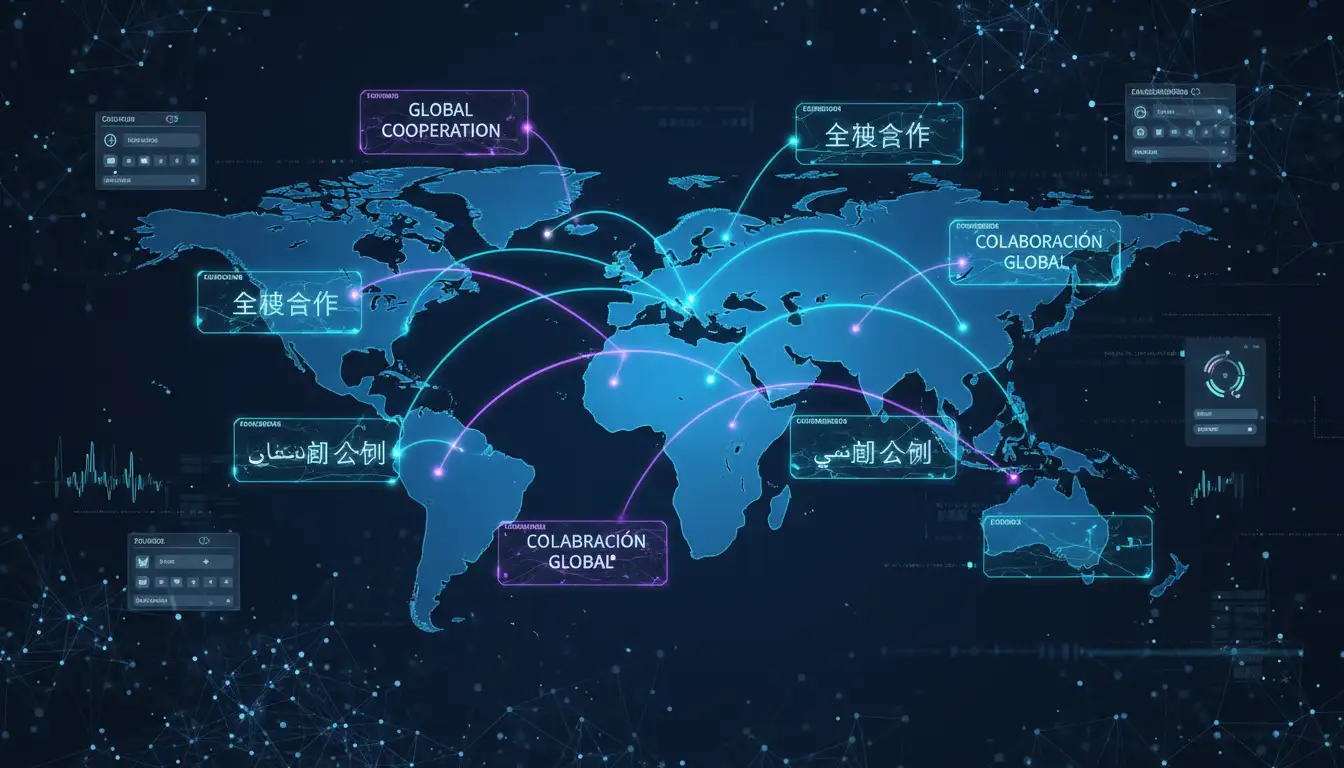

How AI‑Powered Translation Systems Are Transforming Global Collaboration
In an increasingly interconnected world, language is no longer the insurmountable barrier it once was. AI‑powered translation systems are rapidly reshaping how individuals, companies, and institutions communicate across borders. From real‑time multilingual meetings to localized digital marketing campaigns, these intelligent tools are making global collaboration faster, more accurate, and more inclusive.
This article explores how AI translation technologies work, where they excel, how they support international business and remote work, and what challenges still need to be addressed for truly seamless global communication.
What Are AI‑Powered Translation Systems?
AI‑powered translation systems are software solutions that use artificial intelligence, particularly machine learning and neural networks, to convert text or speech from one language to another. Unlike traditional rule‑based translation tools, which rely on manually coded grammar rules and dictionaries, modern systems learn from massive multilingual datasets.

Neural Machine Translation (NMT) models analyze billions of sentence pairs to identify patterns in how ideas are expressed across languages. As a result, they can generate more natural, context‑aware translations that sound closer to how native speakers actually write or speak.
Popular examples include AI translation APIs integrated into websites and apps, real‑time speech translation tools used in online meetings, and AI‑driven localization platforms for global content.
How AI Translation Facilitates Global Collaboration
1. Real‑Time Multilingual Communication
One of the most visible benefits of AI translation is real‑time communication. Teams spread across different continents can now collaborate without hiring full‑time interpreters or waiting for manual translations.
- Video conferences can be supported with live captions and instant translation of chat messages.
- Customer support teams can respond to inquiries in multiple languages through AI‑assisted chatbots.
- Remote collaboration platforms embed translation features directly into their interfaces, minimizing friction in daily communication.
By reducing delays and misunderstandings, AI translation enables faster decision‑making and more fluid teamwork across time zones and cultures.
2. Removing Barriers for Small and Medium‑Sized Businesses
Globalization used to be a game reserved for large enterprises with the budget to localize websites, marketing materials, and legal documents. AI‑powered translation systems are fundamentally changing this picture.
Today, small and medium‑sized businesses can:
- Translate product catalogs and e‑commerce listings into dozens of languages in hours instead of weeks.
- Localize email campaigns and social media posts to resonate with international audiences.
- Test new markets quickly by translating landing pages and advertising creatives at low cost.
This democratization of language technology allows smaller companies to compete globally, explore new regions, and build international partnerships that would have been out of reach just a decade ago.
3. Enhancing Cross‑Cultural Understanding
Translation is about more than words; it’s about meaning and culture. Modern AI translation solutions are increasingly able to account for context, idioms, and domain‑specific language.
For example:
- Business idioms, industry jargon, and technical terminology can be handled with higher accuracy thanks to domain‑adapted models and custom glossaries.
- Sentiment analysis combined with AI translation can help organizations understand how their messages are likely to be perceived in different cultures.
- Localization engines can recommend style and tone adjustments to align with local expectations, such as formality levels or politeness norms.
While human translators are still essential for high‑stakes content, AI systems significantly accelerate and improve everyday cross‑cultural communication.
4. Supporting Remote and Hybrid Work
The shift to remote and hybrid work has underscored the importance of flexible, scalable communication tools. For globally distributed teams, AI translation is rapidly becoming a core infrastructure component.
- Multilingual documentation: Internal knowledge bases, HR policies, and technical manuals can be automatically translated and updated as content evolves.
- Onboarding and training: New hires from different regions can access training materials in their preferred language without waiting for manual translation cycles.
- Asynchronous collaboration: Written communication in project management tools, emails, and shared documents is easier to follow when translation is integrated at the platform level.
By making information accessible in multiple languages, AI translation reduces the risk of misalignment and strengthens team cohesion.
Key Advantages of AI‑Driven Translation
Speed and Scalability
AI translation systems can process huge volumes of content in seconds. This is critical for organizations that publish frequently or manage large multilingual datasets, such as global news outlets, international NGOs, or e‑commerce platforms.
Cost Efficiency
Automating the bulk of translation work drastically reduces costs. Human linguists can then focus on reviewing high‑value or highly sensitive content, such as legal agreements, branding campaigns, or technical documentation that demands expert oversight. This hybrid approach balances quality and affordability.
Continuous Improvement
Modern AI systems continuously improve as they are exposed to more data. Through active learning and feedback loops—such as human post‑editing or user corrections—models adapt to:
- New vocabulary and emerging terminology
- Company‑specific language and product names
- Shifts in tone and style preferences
This ongoing refinement leads to better long‑term translation quality and more consistent communication.
Challenges and Limitations
Despite their rapid progress, AI‑powered translation systems are not flawless. Organizations need to understand their limitations to deploy them responsibly.
- Context sensitivity: Complex legal, medical, or literary texts often require nuanced interpretation that current AI models may misread.
- Cultural subtleties: Humor, sarcasm, and culturally specific references can still be mistranslated or lost entirely.
- Data privacy: Sending sensitive documents to cloud‑based translation services raises security and compliance concerns, especially in regulated industries.
- Bias and fairness: AI models trained on biased data may inadvertently reproduce stereotypes or unequal treatment across languages and cultures.
Mitigating these challenges requires careful vendor selection, robust data governance, and human oversight for critical content.
Best Practices for Using AI Translation in Global Collaboration
To get the most value from AI‑powered translation systems, organizations should:
- Adopt a human‑in‑the‑loop model
Combine machine translation for speed with professional translators or bilingual staff for quality assurance, especially for external‑facing or legally binding material. - Create and maintain terminology glossaries
Define preferred translations for brand names, technical terms, and industry vocabulary. Feed these glossaries into your translation tools to improve consistency. - Customize models for your domain
Many enterprise solutions allow fine‑tuning on your own data, such as past translations, product documentation, or support tickets. This customization significantly increases accuracy for specialized topics. - Integrate translation into existing workflows
Embed AI translation APIs into content management systems, collaboration platforms, and customer support tools so that multilingual communication becomes a natural, frictionless part of daily operations. - Monitor quality and collect feedback
Regularly review translations, measure error rates, and gather feedback from local teams and customers. Use these insights to refine your models and workflows.
The Future of AI‑Powered Global Collaboration
The next wave of AI translation innovation will likely bring even more natural, conversational capabilities. Multimodal models that understand text, audio, and images together will be able to interpret context more deeply, reducing ambiguities and improving clarity.
We can expect:
- More sophisticated real‑time speech translation with voice preservation and better handling of accents.
- Context‑aware conversation agents that can track long dialogues across languages.
- Closer integration between translation, summarization, and content generation, allowing teams to co‑create documents, presentations, and reports in multiple languages simultaneously.
As these technologies mature, language differences will become less of a barrier and more of an asset. Organizations that embrace AI‑powered translation systems today will be better positioned to build resilient international networks, access new talent pools, and foster inclusive global cooperation.
By combining the speed and scale of AI with the judgment and cultural insight of human experts, it is possible to achieve communication that is both efficient and deeply human—unlocking new levels of global collaboration.