
Low-Cost Educational Robots Empowering STEM Learning in the U.S. and Emerging Economies
STEM education (Science, Technology, Engineering and Mathematics) is at the heart of innovation, economic growth, and social mobility. Yet in many schools in the United States and in emerging economies, students still struggle to access modern, hands-on learning tools. High‑priced lab equipment, limited teacher training, and unequal funding can make active STEM learning feel out of reach. Low‑cost educational robots are beginning to change this picture, offering schools and communities a practical, scalable way to bring 21st‑century skills into the classroom.
Educational robots are small, programmable devices designed specifically for teaching concepts such as coding, electronics, physics, and problem‑solving. Unlike traditional lectures or textbook exercises, robots encourage students to experiment, test hypotheses, and learn from real‑time feedback. When these robots are affordable and easy to use, they can dramatically expand access to quality STEM learning in both the Global North and Global South.
Why Low-Cost Matters for STEM Access
In the U.S., funding gaps between districts mean that some schools boast advanced robotics labs while others lack even basic computer science courses. Low‑cost educational robots help narrow this divide by making high‑impact tools affordable for under‑resourced schools, after‑school clubs, and community centers. Open‑source hardware and software platforms also allow schools to avoid expensive licensing fees and to customize lessons freely.
In emerging economies, cost barriers are even more visible. Many schools operate with limited infrastructure, large class sizes, and tight budgets. Importing high‑end robotics kits can be impractical because of shipping costs, customs fees, or the need for constant replacement parts. Locally assembled, low‑cost educational robots—often built from off‑the‑shelf components or 3D‑printed parts—offer a realistic alternative. Governments, NGOs, and social enterprises can deploy these affordable systems at scale, reaching rural areas and underserved urban communities.
By focusing on low‑cost design, educational robotics initiatives can support inclusive, equitable STEM education instead of reinforcing existing inequalities.
Hands-On Learning and 21st-Century Skills
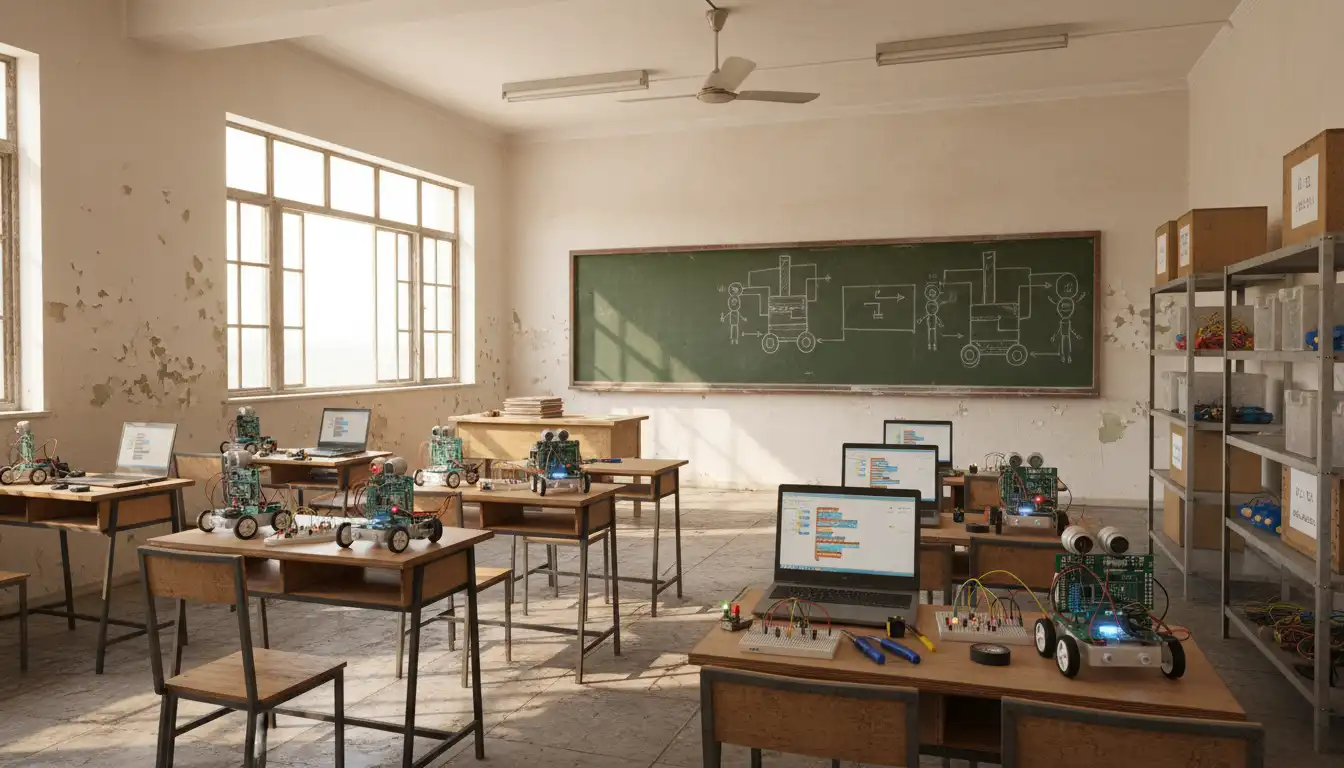
Low‑cost educational robots are powerful because they turn abstract concepts into concrete experiences. When a student writes a simple program and watches a robot move, avoid obstacles, or follow a line, they immediately see the connection between code and behavior. This kind of tangible feedback helps:
- Build computational thinking and logical reasoning
- Strengthen problem‑solving and creativity
- Improve persistence in the face of failure
- Foster collaboration through team‑based projects
In both U.S. classrooms and schools across developing regions, students often work in small groups to design, program, and test their robots. This collaborative, project‑based approach mirrors real engineering and research environments. Learners develop not only technical proficiency but also communication skills, leadership, and project management—competencies that are essential for future careers in a digital economy.
Adapting Robots to Local Contexts
One of the key strengths of low‑cost educational robots is their adaptability. Educators and local innovators can tailor robot designs and learning activities to fit cultural, economic, and infrastructural realities.
In the United States, schools may integrate educational robots into existing STEM curricula or advanced placement courses. Teachers can connect robotics activities to topics such as physics (force, motion, energy), environmental science (monitoring air quality or soil moisture), or mathematics (measurement, geometry, statistics). Robotics competitions, hackathons, and maker‑space projects offer additional pathways for motivated students.
In emerging economies, low‑cost robotics programs often align STEM learning with community needs. For example, students might:
- Program robots to simulate agricultural tasks, such as monitoring irrigation
- Use basic sensors to model environmental monitoring in regions facing climate risks
- Explore simple automation scenarios that reflect local industry or small‑business processes
Because many low‑cost robots rely on open‑source microcontrollers and widely available components, local universities, makers, and entrepreneurs can repair, modify, and improve them. This encourages the growth of local innovation ecosystems rather than dependence on imported, closed‑box solutions.
Teacher Training and Curriculum Integration
Even the most affordable educational robot is only as effective as the learning experience around it. Comprehensive teacher support is crucial for success in both the U.S. and developing countries. Effective programs usually include:
- Professional development – Workshops and online courses that help teachers learn basic programming, electronics, and robotics concepts, as well as classroom management strategies for hands‑on activities.
- Ready‑to‑use lesson plans – Step‑by‑step guides aligned with national or regional STEM standards, so educators can easily integrate robots into math, science, and technology courses.
- Multilingual resources – In emerging economies, localized content in native languages can significantly improve accessibility and comprehension.
- Assessment tools – Rubrics, project checklists, and reflective exercises that help teachers evaluate not only technical skills but also collaboration, creativity, and critical thinking.
In the U.S., teacher support often comes from a mix of nonprofit organizations, educational companies, and university outreach programs. In developing countries, partnerships with NGOs and international agencies can play a bigger role, especially when internet access or local expertise is limited.
Bridging the Digital Divide and Inspiring Future Careers
The long‑term impact of low‑cost educational robots extends beyond individual classrooms. By giving students from diverse backgrounds the chance to experiment with robotics, coding, and engineering, schools help demystify technology. Young people start to see themselves not just as consumers of technology but as potential creators and innovators.
This mindset shift is especially powerful for students who may be the first in their family to consider STEM careers. Exposure to robots and programming can spark interest in fields such as software development, electrical engineering, data science, or artificial intelligence. In emerging economies, this can help build local talent pools that drive digital transformation and economic resilience. In the U.S., it can diversify the STEM pipeline by engaging more girls, students of color, and learners from low‑income communities.
At the same time, low‑cost robotics projects often encourage entrepreneurial thinking. Students learn how to identify real‑world problems, design prototypes, and iterate on solutions—skills that translate directly into startup culture, social innovation, and community‑driven projects.
Building Sustainable, Scalable Programs
For low‑cost educational robots to have a lasting impact in the U.S. and emerging economies, programs must be sustainable and scalable. Key success factors include:
- Robust hardware that withstands frequent use in crowded classrooms
- Open, well‑documented software that can be maintained and updated over time
- Local repair and fabrication capacity to reduce downtime and dependency on imports
- Strong partnerships among schools, universities, NGOs, and the private sector
- Continuous feedback loops, where educators and students share experiences that drive design improvements
Scalable initiatives focus not only on deploying robots but also on building networks: teacher communities, regional robotics clubs, and national competitions that keep students engaged year after year. When governments adopt supportive policies—such as recognizing robotics as part of official STEM curricula—programs can reach millions of learners.
Conclusion: A Shared Opportunity for the U.S. and Developing Nations
Low‑cost educational robots offer a common solution to shared challenges in the United States and in emerging economies: limited resources, unequal access to quality STEM education, and the urgent need to prepare young people for a rapidly changing technological world. By putting simple, affordable, and adaptable robotic tools into classrooms, educators can create more engaging learning experiences, foster critical 21st‑century skills, and open new pathways into high‑value careers.
As more schools, policymakers, and organizations invest in low‑cost robotics initiatives, the benefits will extend far beyond test scores. Students will gain the confidence, creativity, and problem‑solving abilities needed to build more inclusive, innovative, and resilient societies—whether they are growing up in a major U.S. city or a small town in a developing nation.