
Choosing an Exercise Bike: What to Know About Magnetic, Air, and Spin Bikes
Buying an exercise bike looks simple—until you compare magnetic, air, and spin models and realize each one trains your body differently. The right choice saves money, protects your joints, and keeps you consistent. The wrong choice becomes an expensive clothes rack.
In this guide, you’ll learn how each bike type works, who it fits best, and what features truly matter for home training. I’ll keep it practical, use active sentences, and weave related terms naturally so the article stays organic and SEO-friendly.
1) Start With Your Goal (Not the Brand)
Before you compare frames and screens, define your training outcome:
- You want fat loss and daily movement: you need comfort, low noise, and steady pacing.
- You want HIIT and performance: you need strong resistance, stability, and high max output.
- You want indoor cycling classes: you need a true spin geometry, responsive resistance, and a good riding feel.
When you match the bike to your goal, you also reduce injury risk and improve long-term adherence. This is where most buyers win or lose.
2) Magnetic Exercise Bikes (Quiet, Smooth, Low Maintenance)
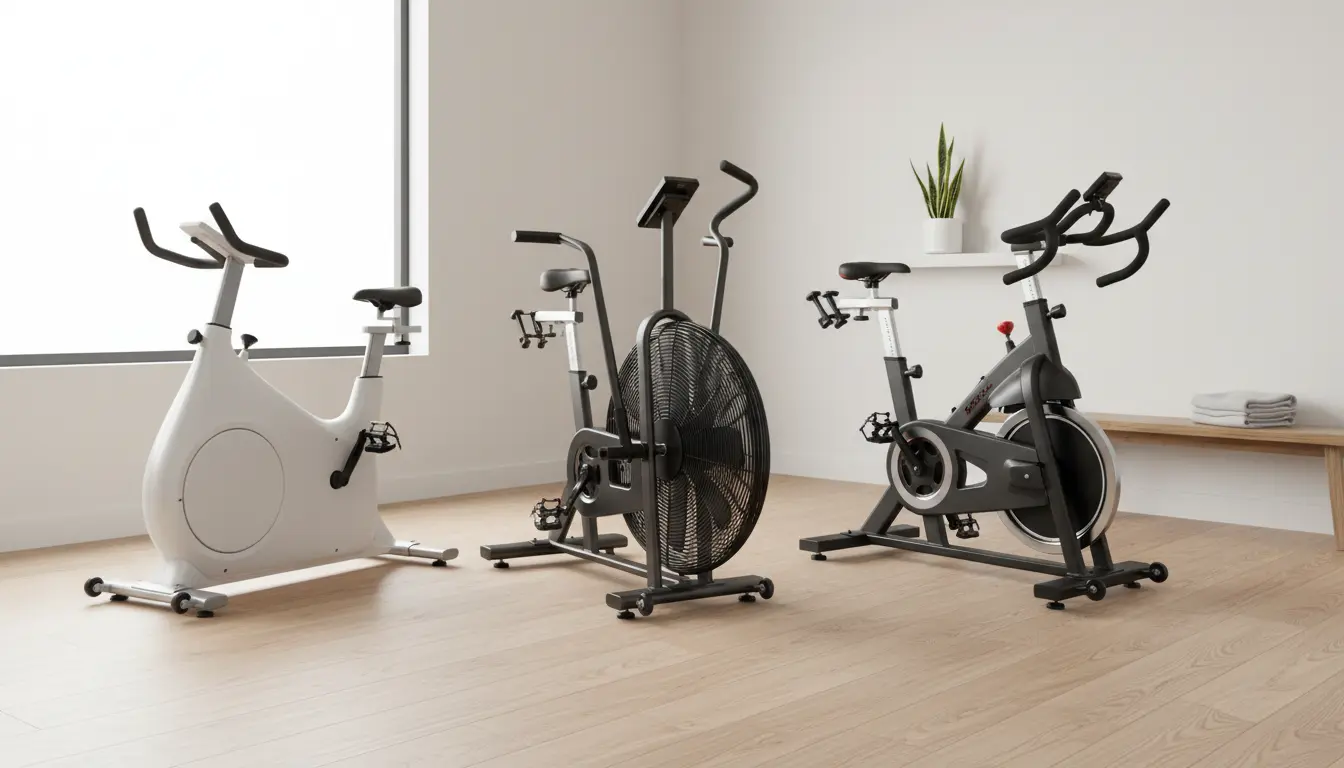
A magnetic resistance bike uses magnets near a flywheel to create resistance. You change difficulty by moving magnets closer or farther (manually or electronically). This design produces a smooth feel and usually stays quiet—perfect for apartments and late-night workouts.
Why people choose magnetic bikes
- They run with low noise exercise equipment performance.
- They suit home cardio machine use for steady sessions.
- They require minimal upkeep because there is less friction wear.
- They often include training modes and basic tracking.
Best for
- Beginners building consistency
- People who prioritize quiet workouts
- Users who want moderate intensity with controlled progression
Watch-outs
Magnetic bikes vary widely. Some cheap models wobble, feel light, and don’t fit taller riders. If you plan to ride often, prioritize stability and adjustability over fancy console features.
3) Air Bikes (Self-Regulating Resistance, High Output)
An air resistance bike uses a large fan. The faster you pedal, the more resistance the fan creates. This makes intensity self-regulating: your body sets the pace, and the bike responds instantly. Air bikes work extremely well for short bursts, intervals, and conditioning.
Why people choose air bikes
- They deliver serious effort for HIIT cardio bike sessions.
- They raise heart rate quickly and support full conditioning.
- They naturally scale intensity without complicated controls.
Best for
- Athletes and advanced trainees
- People who love intervals and measurable suffering (in a good way)
- Anyone training for conditioning, not comfort
Watch-outs
Air bikes create more sound and airflow. That’s not a problem, but it surprises some home users. Also, the experience is more “workout tool” than “leisure ride.”
4) Spin Bikes (Indoor Cycling Feel, Class-Style Training)
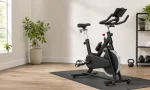
A spin bike is designed to replicate road-bike posture and indoor cycling workouts. It typically uses a heavier flywheel and lets you adjust resistance via a knob or lever. Many people love spin bikes because they feel stable, responsive, and “real.”
Why people choose spin bikes
- They support long rides and standing climbs.
- They pair well with interactive cycling classes.
- They deliver a connected feel when the frame is solid.
Best for
- Riders who enjoy structured class workouts
- Users who want a bike-like geometry and cadence work
- People who value rhythm and technique
Watch-outs
Some budget spin bikes use basic friction systems that wear faster and require more maintenance. Also, comfort depends heavily on saddle quality and fit. A small setup mistake can turn “fun cardio” into knee pain.
5) The Key Differences: Magnetic vs Air vs Spin
Here’s the practical comparison that matters most:
- Noise level: Magnetic is usually quietest, spin can be quiet (depending on drive), air is loudest.
- Intensity ceiling: Air and spin can push harder for most users; magnetic is often moderate.
- Training style: Magnetic suits steady rides, air dominates intervals, spin excels in class-style sessions.
- Maintenance: Magnetic tends to be easiest; friction-style spin needs more attention; air is durable but can be louder and bulkier.
6) What to Check Before You Buy (Non-Negotiables)
A great exercise bike is not defined by marketing. It’s defined by fit and durability.
Fit and adjustability
- Make sure the seat height covers your inseam range.
- Prefer models with both vertical and horizontal saddle adjustment.
- Handlebar adjustment matters if you share the bike.
Stability and weight
A stable frame changes everything. If the bike rocks during a sprint, you lose power and confidence. Look for a strong base, good leveling feet, and a reasonable overall weight.
Drive system
A belt drive vs chain drive choice affects sound and feel. Belt drives are quieter and lower maintenance. Chain drives can feel more “bike-like” but may require more care.
Flywheel
A heavier flywheel can smooth the pedal stroke, especially on spin bikes. For many riders, flywheel weight influences comfort and cadence stability more than the screen does.
Comfort
Don’t underestimate comfort. A better saddle or padded shorts can make you consistent. This matters for anyone chasing a weight loss workout bike routine.
7) Metrics and Training Features: What Actually Helps
Marketing loves “smart” dashboards, but not all data helps.
Useful metrics:
- cadence (RPM)
- heart rate (if accurate)
- time, distance, and estimated calories (with realistic expectations)
If you enjoy coaching, choose a bike that works well with workout tracking metrics and your preferred training style. Some people stay consistent because they love numbers. Others stay consistent because the ride feels good. Know which one you are.
8) Space, Noise, and Home Reality
Home workouts succeed when the bike fits your life.
- If you live in an apartment or have sleeping kids nearby, prioritize low noise.
- If you have limited space, check footprint and transport wheels.
- If you plan to ride daily, choose a sturdy build even if it costs more.
A small upgrade in stability often creates a big upgrade in motivation.
9) How to Choose Based on Your Profile
Use these quick matches:
- Beginner + quiet home + steady cardio → magnetic resistance bike
- Performance + intervals + conditioning → air resistance bike
- Class workouts + road-bike feel + long sessions → spin bike
If you still feel stuck, decide based on the workout you will do most often. Consistency beats “perfect specs.”
10) One Amazon Product Recommendation
A widely recommended, home-friendly spin option is:
- Schwinn IC4 Indoor Cycling Bike on Amazon.com (spin-style, strong build, good adjustability, and popular for at-home class workouts)