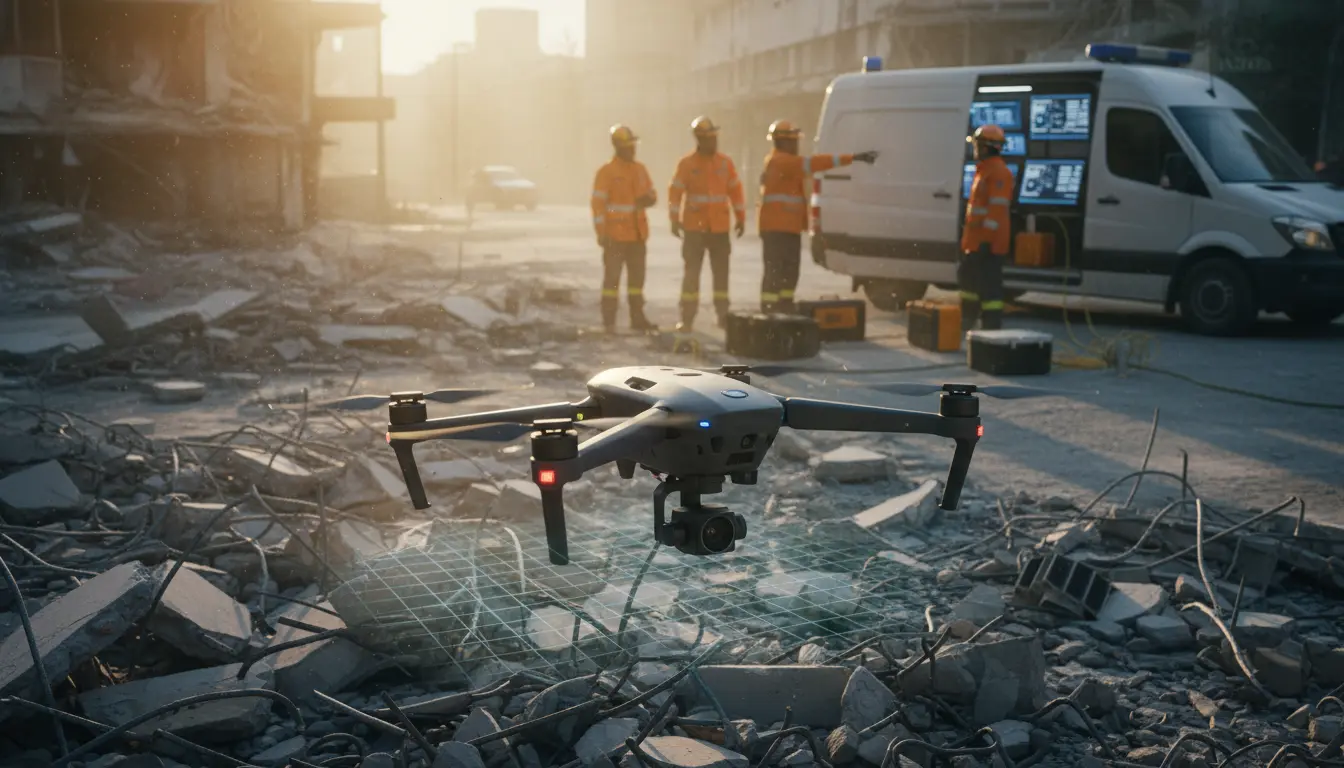

AI-Powered Next-Generation Drones for Search and Rescue Operations
Introduction: A New Era in Search and Rescue Technology
Search and rescue operations demand speed, accuracy, and reliability. In recent years, AI-powered navigation drones have emerged as a transformative force in emergency response scenarios. These next-generation unmanned aerial vehicles (UAVs) combine artificial intelligence, autonomous flight systems, and advanced sensor technologies to locate survivors faster and operate in environments too dangerous for human teams.
As natural disasters, industrial accidents, and wilderness emergencies increase worldwide, rescue agencies now rely on intelligent aerial systems to enhance situational awareness and reduce response times. This article explores how AI-driven drones revolutionize search and rescue missions and why they represent the future of life-saving operations.
What Are AI-Navigation Drones?
AI-navigation drones use machine learning algorithms, real-time data processing, and autonomous decision-making to navigate complex environments without constant human control. Unlike traditional drones, these systems analyze terrain, obstacles, and movement patterns instantly.
By integrating computer vision, GPS-denied navigation, and sensor fusion, AI-powered drones can:
- Identify human shapes and heat signatures
- Avoid debris and unstable structures
- Adapt flight paths dynamically
- Operate in low-visibility conditions
This level of autonomy allows rescue teams to focus on strategy while drones handle high-risk reconnaissance tasks.
The Role of Artificial Intelligence in Search and Rescue Missions
Artificial intelligence enhances drone capabilities far beyond basic aerial imaging. During search and rescue missions, AI enables drones to interpret vast amounts of data in seconds.
Key AI contributions include:
- Thermal imaging analysis to detect body heat
- Pattern recognition to identify survivors among debris
- Real-time mapping of disaster zones
- Predictive modeling to prioritize high-probability search areas
These features significantly improve mission efficiency and survival outcomes, especially during the critical first hours after a disaster.
Autonomous Navigation in Challenging Environments
Search and rescue operations often occur in unpredictable and hazardous terrains. AI-powered drones excel in environments such as:
- Collapsed buildings
- Dense forests
- Flooded urban areas
- Mountainous regions
Through autonomous navigation systems, drones can fly indoors, underground, or in GPS-denied locations. They build real-time 3D maps using LiDAR and visual sensors, ensuring precise maneuvering even in total darkness or smoke-filled spaces.
This capability reduces risks to human rescuers and accelerates victim discovery.
Key Benefits of AI-Powered Rescue Drones
1. Faster Response Times
AI drones deploy within minutes and scan large areas rapidly, saving valuable time when every second matters.
2. Enhanced Accuracy
Advanced algorithms reduce false positives and increase detection accuracy, even in complex disaster scenes.
3. Improved Rescuer Safety
Drones access unstable or dangerous locations without exposing rescue teams to harm.
4. Cost-Effective Operations
Automated aerial assessments lower operational costs by minimizing manpower and resource usage.
5. Continuous Operation
Many next-generation drones support extended flight times and automated battery-swapping systems.
Use Cases Across Different Rescue Scenarios
AI-powered navigation drones play a critical role in multiple emergency situations:
- Earthquakes: Locating trapped survivors under rubble
- Wildfires: Mapping fire spread and identifying isolated individuals
- Maritime rescues: Detecting people lost at sea
- Avalanches: Finding victims buried under snow
- Urban disasters: Assessing damage and guiding rescue teams
Each use case demonstrates how intelligent UAV technology adapts to diverse rescue demands.
Integration with Emergency Response Systems
Modern rescue drones integrate seamlessly with emergency response infrastructure. They transmit real-time video feeds, maps, and survivor coordinates directly to command centers.
Using AI-assisted decision support systems, authorities can:
- Coordinate multi-team rescue efforts
- Allocate resources efficiently
- Monitor mission progress live
This integration transforms drones from standalone tools into essential components of smart emergency ecosystems.
Challenges and Ethical Considerations
Despite their advantages, AI-powered rescue drones face certain challenges:
- Regulatory limitations on autonomous flight
- Data privacy concerns during surveillance
- High initial investment costs
- Dependence on AI accuracy
However, ongoing advancements in drone regulations, ethical AI frameworks, and hardware affordability continue to address these concerns.
The Future of AI-Powered Search and Rescue Drones
The future points toward fully autonomous rescue fleets capable of collaborating as swarms. These drones will share data, divide search areas, and adapt collectively in real time.
Emerging innovations include:
- Swarm intelligence
- AI-driven emotional recognition
- Self-repairing drone systems
- Satellite-assisted navigation
As technology evolves, AI-powered drones will become indispensable allies in saving lives worldwide.
Recommended Product from Amazon
For professionals and advanced users interested in search and rescue technology, the DJI Mavic 3 Thermal available on Amazon.com stands out as a powerful option. It features advanced thermal imaging, obstacle avoidance, and extended flight time, making it suitable for emergency response and inspection missions.
Conclusion
AI-powered navigation drones redefine how search and rescue missions operate. By combining autonomy, intelligence, and precision, these next-generation UAVs save time, reduce risk, and most importantly, save lives. As adoption grows and technology matures, intelligent rescue drones will shape the future of emergency response on a global scale.